
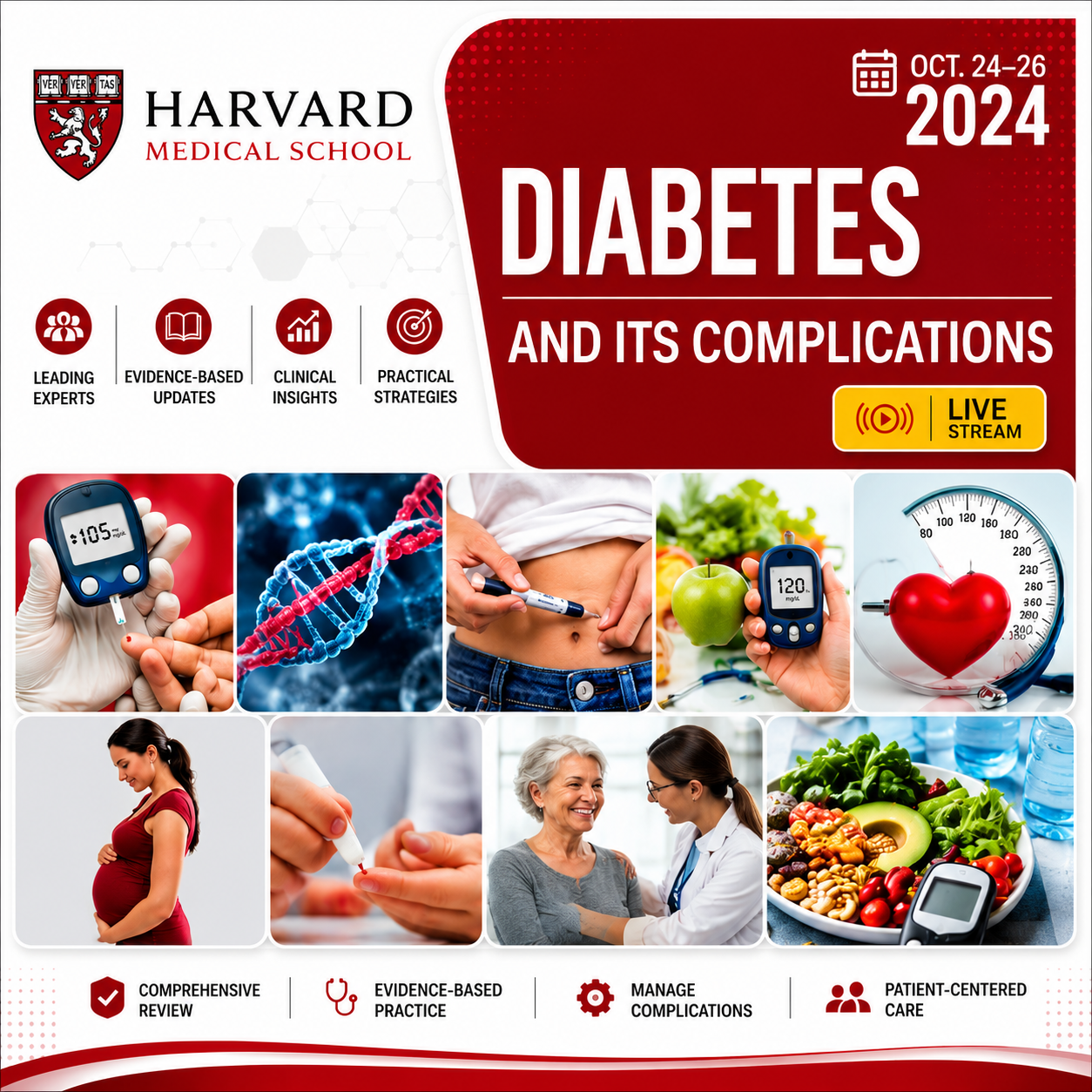
Harvard Diabetes and Its Complications 2024
A comprehensive Harvard medical course focused on modern diabetes care, screening, treatment selection, glucose monitoring, diabetes technology, cardiometabolic risk reduction, and prevention of complications across outpatient and clinical practice.
Harvard Diabetes and Its Complications 2024 is a recorded medical course designed to help clinicians stay current with practical diabetes management, updated treatment strategies, complication prevention, and individualized patient care.
Focus: Diabetes screening, type 1 diabetes, type 2 diabetes, insulin therapy, non-insulin therapies, glucose monitoring, insulin pumps, obesity, hypertension, dyslipidemia, cardiovascular disease, kidney disease, liver disease, diabetic foot care, pregnancy, older adults, lifestyle interventions, and health equity.
About This Course
Diabetes care continues to evolve rapidly with new medications, expanded use of continuous glucose monitoring, insulin delivery technologies, obesity treatment strategies, and stronger evidence for cardiovascular and kidney risk reduction.
This course provides a practical update for healthcare professionals who manage patients with diabetes and its complications. It emphasizes diagnosis, treatment planning, monitoring, prevention, risk reduction, and patient-centered care.
Why Choose This Course
Key Highlights
- Comprehensive Harvard update in diabetes care and complications
- Practical focus on screening, diagnosis, treatment, and prevention
- Covers type 1 diabetes, type 2 diabetes, insulin therapy, and non-insulin treatment options
- Reviews glucose monitoring, continuous glucose monitoring, and insulin pump therapy
- Includes cardiovascular, kidney, liver, foot, pregnancy, obesity, hypertension, and lipid-related complications
- Addresses diabetes care in older adults and complex patient populations
- Useful for endocrinologists, internists, primary care physicians, hospitalists, NPs, PAs, nurses, pharmacists, residents, and fellows
Core Learning Areas
Complete Curriculum
Diabetes Foundations and Screening
- Screening for diabetes and prediabetes
- Classification of diabetes types
- Approach to type 1 diabetes
- Approach to type 2 diabetes
- Identifying patients at high risk of complications
- Building individualized treatment plans
- Patient-centered diabetes care and shared decision-making
Insulin and Non-Insulin Therapies
- Insulin treatment strategies
- Basal and prandial insulin management
- Non-insulin medication options
- Medication selection based on patient risk profile
- Hypoglycemia prevention and management
- Therapeutic adjustments in complex patients
- Practical prescribing considerations for daily practice
Diabetes Technology and Glucose Monitoring
- Glucose monitoring strategies
- Continuous glucose monitoring interpretation
- Insulin pump therapy
- Technology-assisted diabetes management
- Patient education for devices and monitoring
- Using glucose data to guide treatment decisions
- Improving adherence and engagement with therapy
Cardiovascular and Kidney Complications
- Cardiovascular disease prevention in diabetes
- Risk reduction for atherosclerotic cardiovascular disease
- Blood pressure management in diabetes
- Dyslipidemia management
- Diabetic kidney disease
- Cardiorenal risk assessment
- Strategies to reduce long-term vascular complications
Obesity, Lifestyle and Metabolic Health
- Obesity management in patients with diabetes
- Lifestyle interventions
- Medical nutrition therapy
- Physical activity recommendations
- Weight management and metabolic risk reduction
- Behavioral strategies for sustainable change
- Integrating lifestyle care with pharmacologic therapy
Liver Disease, Foot Care and Other Complications
- Diabetes and liver disease
- Metabolic dysfunction-associated liver disease considerations
- Diabetic foot evaluation and prevention
- Peripheral vascular risk
- Neuropathy-related complications
- Prevention of avoidable morbidity
- Coordinated care for diabetes-related complications
Pregnancy, Older Adults and Special Populations
- Diabetes in pregnancy
- Gestational diabetes considerations
- Diabetes care in older adults
- Balancing treatment intensity and safety
- Complex cases with multiple comorbidities
- Health equity in diabetes care
- Reducing barriers to effective treatment and follow-up
Clinical Cases and Practical Decision-Making
- Challenging diabetes management cases
- Therapy escalation and de-escalation
- Managing patients with low engagement in therapy
- Medication safety and monitoring
- Complication screening and prevention strategies
- Practical approaches for primary care and specialty practice
- Evidence-based care adapted to individual patient needs
Learning Objectives
By Completing This Course, You Will Be Able To:
- Apply updated screening and diagnostic strategies for diabetes and related risk states
- Differentiate practical management approaches for type 1 diabetes and type 2 diabetes
- Select insulin and non-insulin therapies based on patient characteristics and comorbidities
- Use glucose monitoring and diabetes technology to guide clinical decision-making
- Improve prevention and management of cardiovascular, kidney, liver, foot, and vascular complications
- Incorporate obesity treatment, nutrition, physical activity, and lifestyle interventions into diabetes care
- Adapt diabetes management for pregnancy, older adults, and complex patients
- Apply health equity principles to improve access, adherence, and long-term outcomes
Who Should Take This Course
This course is designed for endocrinologists, internists, family physicians, primary care physicians, hospitalists, diabetes educators, pharmacists, nurse practitioners, physician assistants, nurses, residents, fellows, and healthcare professionals involved in diabetes care and complication prevention.
Delivery & Access
This course package is provided for recorded learning access. No CME points are associated with this product.
Reviews
A practical diabetes update with strong coverage of therapy selection, complications, and technology. Very useful for daily clinical care.
Excellent overview of modern diabetes management. The cardiovascular, kidney, obesity, and monitoring sections are especially helpful.
Well organized and clinically focused. The course provides clear strategies for managing complex patients with diabetes and related complications.
FAQ
Who is this course best suited for?
It is ideal for endocrinologists, internists, family physicians, primary care physicians, hospitalists, diabetes educators, pharmacists, NPs, PAs, nurses, residents, fellows, and clinicians involved in diabetes care.
What topics are covered?
The course covers diabetes screening, type 1 diabetes, type 2 diabetes, insulin therapy, non-insulin therapies, glucose monitoring, insulin pumps, dyslipidemia, hypertension, obesity, cardiovascular disease, diabetic foot care, kidney disease, liver disease, lifestyle interventions, diabetes in pregnancy, older adults, complex cases, and health equity.
Is this course practical for daily diabetes care?
Yes. The course focuses on practical diagnosis, treatment selection, complication prevention, glucose monitoring, lifestyle interventions, and individualized patient care.
Does this product include CME?
No. This course package does not include CME points.
Who can I contact for support?
You can contact us at [email protected].


Dr. Lisa M. –
“Essential for Any Diabetes Care Provider!”
“This course is a must for anyone involved in diabetes care. The knowledge gained will significantly enhance my ability to support my patients!”
Dr. David K. –
“Great Networking Opportunities!”
“Connecting with other healthcare professionals and sharing experiences was invaluable. The course fostered a sense of community among attendees.”
Dr. Emily R. –
“Comprehensive and Practical!”
“The course covered both the latest research and practical applications, making it incredibly relevant for busy clinicians like myself.”
Dr. Sarah L. –
“Engaging and Interactive!”
“I loved the interactive discussions and case studies. They made complex topics much easier to understand and apply.”
Dr. James H. –
“Up-to-Date Knowledge!”
“The updates on insulin therapy and new monitoring technologies were particularly helpful. This course kept me current with the latest
advances!”
Dr. Anna P. –
“Focused on Real-World Applications!”
“The practical strategies for managing complications are exactly what I needed. I left feeling equipped to make immediate changes in my practice.”