
ACP CME 165 2025
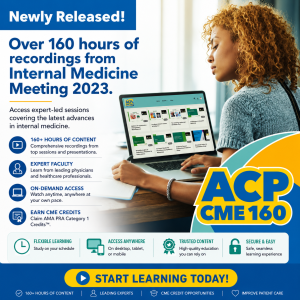
A massive internal medicine recording library featuring more than 165 hours of high-yield sessions from ACP Internal Medicine Meeting 2025. This course gives clinicians a broad, practice-ready update across hospital medicine, primary care, cardiology, infectious diseases, oncology, nephrology, geriatrics, endocrinology, pulmonary and critical care, rheumatology, women’s health, dermatology, ethics, health equity, artificial intelligence, and clinical practice improvement.
Course Details:
ACP CME 165 2025 includes over 165 hours of recorded sessions from Internal Medicine Meeting 2025, offering a wide-ranging update for physicians who want to review major advances, practical clinical pearls, and current issues across modern internal medicine.
Focus: Acute myocardial infarction, hypertension, heart failure, atrial fibrillation, stroke, CKD, kidney transplant care, electrolyte disorders, diabetes, obesity, thyroid disease, liver disease, MASLD, pancreatobiliary disease, respiratory infections, infectious disease cases, immunotherapy toxicities, cancer screening, lung cancer, melanoma, sickle cell disease, dementia, Parkinson’s disease, headache, women’s health, geriatrics, palliative care, opioid use disorder, cannabis safety, AI in internal medicine, health IT, health equity, clinical guidelines, and high-value care.
About This Course
Internal medicine is changing quickly, with new data, new medications, updated guidelines, digital health tools, artificial intelligence, evolving care models, and new expectations for high-value, patient-centered practice.
ACP CME 165 2025 provides a broad recorded library from Internal Medicine Meeting 2025, allowing clinicians to revisit high-yield presentations delivered by expert faculty across inpatient medicine, outpatient practice, subspecialty updates, diagnostic reasoning, medical ethics, patient safety, health policy, and career development.
The course is designed for internists, hospitalists, primary care physicians, subspecialists, residents, fellows, advanced practice providers, and clinicians who want a deep internal medicine update that can be reviewed at their own pace.
Why Choose This Course
- More than 165 hours of high-yield recorded internal medicine sessions
- Includes 176 recorded session topics from ACP Internal Medicine Meeting 2025
- Broad coverage across hospital medicine, primary care, subspecialty updates, prevention, ethics, health equity, AI, and clinical practice improvement
- Includes clinical pearls in cardiology, neurology, nephrology, palliative medicine, women’s health, geriatrics, infectious diseases, men’s health, hepatology, psychiatry, and dermatology
- Reviews current clinical guidelines, adult immunizations, cancer screening, obesity care, lipid management, diabetes care, and CKD management
- Covers inpatient challenges including acute hypoxemia, acute hypertension, perioperative management, telemetry, antibiotic use, respiratory infections, pain, alcohol withdrawal, and opioid use disorder
- Includes technology-focused sessions on AI, health IT, patient apps, digital health tools, and clinician burden reduction
- Flexible recorded format for busy physicians who want a large internal medicine learning library
Core Learning Areas
Hospital Medicine
Acute hypoxemia, inpatient diabetes, inpatient atrial fibrillation, perioperative care, telemetry, antibiotics, decompensated HFpEF, alcohol withdrawal, pain, and patient deterioration.
Primary Care Updates
Adult immunizations, annual wellness visits, cancer screening, obesity care, prediabetes, sexual histories, wellness, chronic pain, hypertension, insomnia, and ambulatory guidelines.
Subspecialty Medicine
Cardiology, nephrology, infectious disease, gastroenterology, hepatology, oncology, hematology, pulmonary and critical care, rheumatology, endocrinology, neurology, and dermatology.
Modern Practice Issues
AI in internal medicine, health IT, digital tools, health equity, high-value care, medical education, ethics, health policy, climate change, drug shortages, and value-based payment.
Complete Curriculum
- More than 165 hours of recorded internal medicine sessions
- Large library of 176 high-yield topics
- Clinical updates for both inpatient and outpatient medicine
- Broad review of subspecialty medicine and primary care practice
- Practical sessions focused on patient care, diagnostic reasoning, and guideline updates
- Technology and systems-based sessions including AI, health IT, and value-based payment
- Flexible access for reviewing sessions at your own pace
- Acute myocardial infarction management: what’s new in 2025
- Clinical Triad: atherosclerotic cardiovascular disease
- Cardiac rehabilitation and getting patients back on track
- Hypertension in 2025: getting to the goal
- Inpatient and outpatient atrial fibrillation management
- Heart failure management and keeping patients out of the hospital
- Management of decompensated heart failure with preserved ejection fraction
- Management of antithrombotic therapy
- Noninvasive imaging of coronary artery disease
- Peripheral arterial disease evaluation and treatment
- Strategies for lipid management beyond statins
- Clinical pearls in cardiology and neurology
- Acute hypoxemia from nasal cannula to mechanical ventilation
- Acute hypertension in hospitalized patients
- High-value inpatient physical examination
- High-value inpatient telemetry
- Volume assessment and fluid management in the hospital
- Approach to common electrolyte disorders in the hospital
- Early diagnosis of patients at risk for rapid decompensation
- Inpatient perioperative management
- Inpatient management of diabetes: goals, challenges, and implications
- Antibiotic use in the hospital: when and when not to prescribe
- Health care-associated infections
- Avoiding common noninfectious hospital-acquired complications in older patients
- Update in pulmonary and critical care medicine
- Acute hypoxemia and escalation of oxygen support
- Noninvasive ventilation for the internal medicine physician
- Managing common respiratory infections
- The inpatient with wheezing
- Review of bronchiectasis for the internal medicine physician
- Sleep medicine: what’s new
- The highs and lows of managing pulmonary disease at depth and high altitude
- Climate change and ICU contribution to environmental impact
- Respiratory care issues across inpatient and ambulatory settings
- Update in endocrinology
- Individualizing glycemic goals and choosing medication therapy based on patient characteristics
- Inpatient management of diabetes
- Prediabetes for internal medicine physicians: screening, diagnosis, and management
- The changing world of obesity management
- Confronting misinformation in obesity care
- TSH high and low levels in clinical practice
- Polycystic ovarian syndrome as an internal medicine disease
- Newly approved medications in primary care
- Clinical guidelines affecting endocrine and metabolic practice
- CKD management: what every internal medicine physician should know
- Clinical pearls in nephrology and palliative medicine
- My patient had a kidney transplant: what do I do?
- Rock on with urology and nephrology
- Approach to common electrolyte disorders in the hospital
- Volume assessment and fluid management
- Kidney disease considerations in hospitalized and ambulatory patients
- Nephrology update for internal medicine practice
- Urologic topics relevant to internal medicine clinicians
- Integration of nephrology, primary care, and hospital medicine decision-making
- Update in gastroenterology
- Abnormal liver enzymes in the inpatient setting
- Acute and chronic liver disease in the hospital
- Multiple small feedings of the mind: infectious diseases, men’s health, and hepatology
- Managing pancreatobiliary pathology
- The journey from NAFLD to MASLD: screening and treatment
- Irritable bowel syndrome
- Evaluation and management of common anorectal disorders
- Colon cancer screening: colonoscopy, stool testing, and serology
- Clinical approach to digestive disease in internal medicine practice
- Challenging infectious disease cases for the internal medicine physician
- Antibiotic use in the hospital: when and when not to prescribe
- Optimal duration and route of treatment for common infections
- Sexually transmitted infections from prevention to treatment
- Skin and soft tissue infections in the hospital
- Managing common respiratory infections
- Common variable immunodeficiency
- Common allergic and hypersensitivity disorders in the hospital
- Update in allergy and immunology
- Team-based approaches to increase vaccine uptake
- A new era in sickle cell disease
- Autoimmune hemolytic anemias: diagnosis, work-up, and management
- Cancer biomarkers: what they are and why they matter
- Clinical Triad: advances in cancer screening
- Clinical Triad: lung cancer in 2025
- Immunotherapy toxicities in inpatient and outpatient settings
- Management of common oncologic emergencies
- Melanoma in 2025
- Survivor primary care after cancer treatment
- Update in hematology and update in oncology
- Assessment and treatment of headache
- Clearly thinking about dementia diagnosis and management
- The pathophysiology of dementia
- A Parkinson’s disease update for the clinician
- The internal medicine physician’s role in evaluation and management of seizures
- TIA and stroke management in 2025
- Syncope: high-value evaluation and management
- Difficult anxiety and depression treatment
- Evaluating and treating ADHD in adults
- Insomnia and parasomnias evaluation and management
- Avoiding common hospital-acquired complications in older patients
- Deprescribing: “Doc, I take too many medications!”
- Driving in older persons: on the road again or not
- Hearing impairment and hearing aids: what’s the latest in 2025
- The 5 Ms to guide the care of complex older adults
- The impact of loneliness on health
- Continence management in low-mobility patients
- Palliative care for the medical inpatient
- Clinical pearls in nephrology and palliative medicine
- Update in geriatric medicine
- Clinical pearls in women’s health and geriatrics
- Diseases of the vulva
- Female sexual dysfunction
- Let’s talk about sex: taking modern sexual histories
- Hypertensive disorders of pregnancy
- Medical emergencies in the peripartum period
- Managing pelvic floor disorders
- Polycystic ovarian syndrome
- Bioidentical hormones: to prescribe or not to prescribe
- Update in women’s health
- Beyond gout: calcium-based arthropathies
- Common rheumatologic conditions in hospitalized patients
- Diagnosing and managing spondyloarthritides
- The basics of biologics for the primary care physician
- Common shoulder symptoms for the internal medicine physician
- Foot and ankle pain for the internal medicine physician
- Wound care for the ambulatory internal medicine physician
- Dermatology, allergy and immunology updates
- Melanoma in 2025
- Update in rheumatology
- Acute pain management in the inpatient setting
- Management of chronic pain in the ambulatory environment
- Opioid use disorder inpatient management
- Alcohol withdrawal in inpatient and detoxification unit settings
- The safety of cannabis: smoke or fire
- Medical myths revealed
- Practical pain management and risk reduction strategies
- Behavioral health integration and sustainable implementation
- Substance-related clinical issues for internal medicine practice
- Patient communication around pain, addiction, and safety
- The implications of AI in internal medicine
- How AI can reduce clinician burden
- Evaluating patient apps and digital health tools
- Apps on the wards for physicians and patients
- Hot topics in health IT
- Leveraging health IT for health equity
- Multiple small feedings of the mind: artificial intelligence
- Digital health evidence appraisal
- AI opportunities and limitations in clinical workflow
- Practical technology use in internal medicine care
- Ethical case challenges: slow codes, show codes, and partial codes
- Hot topics in ethics
- Follow the money: ethics and business practices in medicine
- High-value care strategies to advance health equity
- Health-related social needs in cancer care
- Gender-affirming care: health policy and practice
- Gun safety in primary care
- Hot issues in health policy
- Supporting the health needs of rural communities
- Solutions for health equity in regulatory and accreditation requirements
- Current clinical guidelines
- Adult immunization recommendations
- Best practices for maximizing the annual Medicare wellness visit
- Alternative models for primary care
- Update in ambulatory general internal medicine
- High-value care and preventive services
- Colon cancer screening strategies
- Advances in cancer screening
- Prediabetes screening and management
- Team-based approaches to vaccine uptake
- High-value practices in medical education
- Presentation skills for physicians
- Writing and publishing case reports
- Practical strategies for positive learning environments
- How to be a powerful speaker
- Fertility and family planning for early career physicians
- Navigating career transitions
- Thriving during early career as an IMG
- Supporting IMG colleagues for success
- Strategies for maintaining balance and meaning throughout a medical career
- Outpatient coding and getting paid for what you do
- Succeeding in value-based payment
- Quality improvement basics for the early career hospitalist
- How to minimize negative impacts of drug shortages
- Consult talk and care coordination
- Alternative primary care models
- Supporting clinicians to stay and thrive in practice
- Medical practice sustainability and administrative challenges
- Patient-centered improvement strategies
- Systems-based internal medicine practice updates
Learning Objectives
- Review more than 165 hours of recorded internal medicine updates from ACP Internal Medicine Meeting 2025
- Strengthen clinical knowledge across hospital medicine, primary care, and major internal medicine subspecialties
- Apply updates in cardiology, nephrology, infectious disease, endocrinology, gastroenterology, oncology, hematology, pulmonary medicine, rheumatology, geriatrics, neurology, and women’s health
- Improve inpatient decision-making for acute hypoxemia, acute hypertension, atrial fibrillation, diabetes, perioperative care, telemetry, infections, and heart failure
- Review current guideline updates, adult immunizations, cancer screening strategies, obesity care, lipid management, and CKD care
- Understand the role of AI, patient apps, digital health tools, and health IT in modern internal medicine practice
- Address health equity, medical ethics, patient safety, policy, value-based payment, and high-value care challenges
- Improve patient communication around pain, substance use, sexual health, survivorship, chronic disease, and preventive care
- Use clinical pearls and specialty updates to refresh practice-ready internal medicine knowledge
- Review a broad internal medicine learning library at your own pace
Who Should Take This Course
This course is designed for internists, hospitalists, primary care physicians, subspecialists, residents, fellows, advanced practice providers, and healthcare professionals who want a broad internal medicine update from ACP Internal Medicine Meeting 2025.
It is especially useful for clinicians seeking a large recorded library covering inpatient care, outpatient medicine, cardiology, infectious disease, nephrology, endocrinology, oncology, geriatrics, pulmonary and critical care, gastroenterology, rheumatology, women’s health, neurology, dermatology, palliative care, ethics, health equity, AI, and practice improvement.
Delivery & Access
165+ Hours
Large recorded library with more than 165 hours of internal medicine sessions.
176 Sessions
Broad session list covering clinical updates, subspecialty medicine, hospital medicine, primary care, and practice issues.
2025 Edition
Recorded sessions from Internal Medicine Meeting 2025 for flexible review at your own pace.
Support
Course Highlights
Massive IM Library
Includes more than 165 hours of recorded sessions across 176 internal medicine topics.
Broad Clinical Coverage
Covers hospital medicine, primary care, subspecialty updates, prevention, ethics, health equity, AI, and practice management.
Flexible Recorded Access
Review expert internal medicine sessions at your own pace and focus on the topics most relevant to your practice.
FAQ
Who is this course best suited for?
This course is best suited for internists, hospitalists, primary care physicians, subspecialists, residents, fellows, advanced practice providers, and clinicians who want a broad internal medicine update.
What is included in this course?
The course includes more than 165 hours of recorded sessions from Internal Medicine Meeting 2025, with a broad library of 176 session topics.
What topics are covered?
Topics include cardiology, hospital medicine, pulmonary and critical care, nephrology, endocrinology, infectious diseases, gastroenterology, hepatology, oncology, hematology, geriatrics, palliative care, neurology, psychiatry, dermatology, rheumatology, women’s health, preventive medicine, ethics, health equity, AI, digital health, medical education, and practice management.
Does this course include hospital medicine topics?
Yes. The course covers inpatient atrial fibrillation, inpatient diabetes, acute hypoxemia, acute hypertension, perioperative management, telemetry, antibiotic use, respiratory infections, volume assessment, alcohol withdrawal, pain management, and early recognition of decompensation.
Does this course cover AI and digital health?
Yes. It includes sessions on AI in internal medicine, reducing clinician burden with AI, patient apps, digital health tools, health IT, and leveraging technology for health equity.
Is this a recorded course?
Yes. This product is provided as recorded course access so you can review the material at your own pace.
Does this course include CME or a certificate?
No. CME credits and certificates are not included with this course package.
Who can I contact for support?
You can contact support at [email protected].
Reviews
There are no reviews yet.