
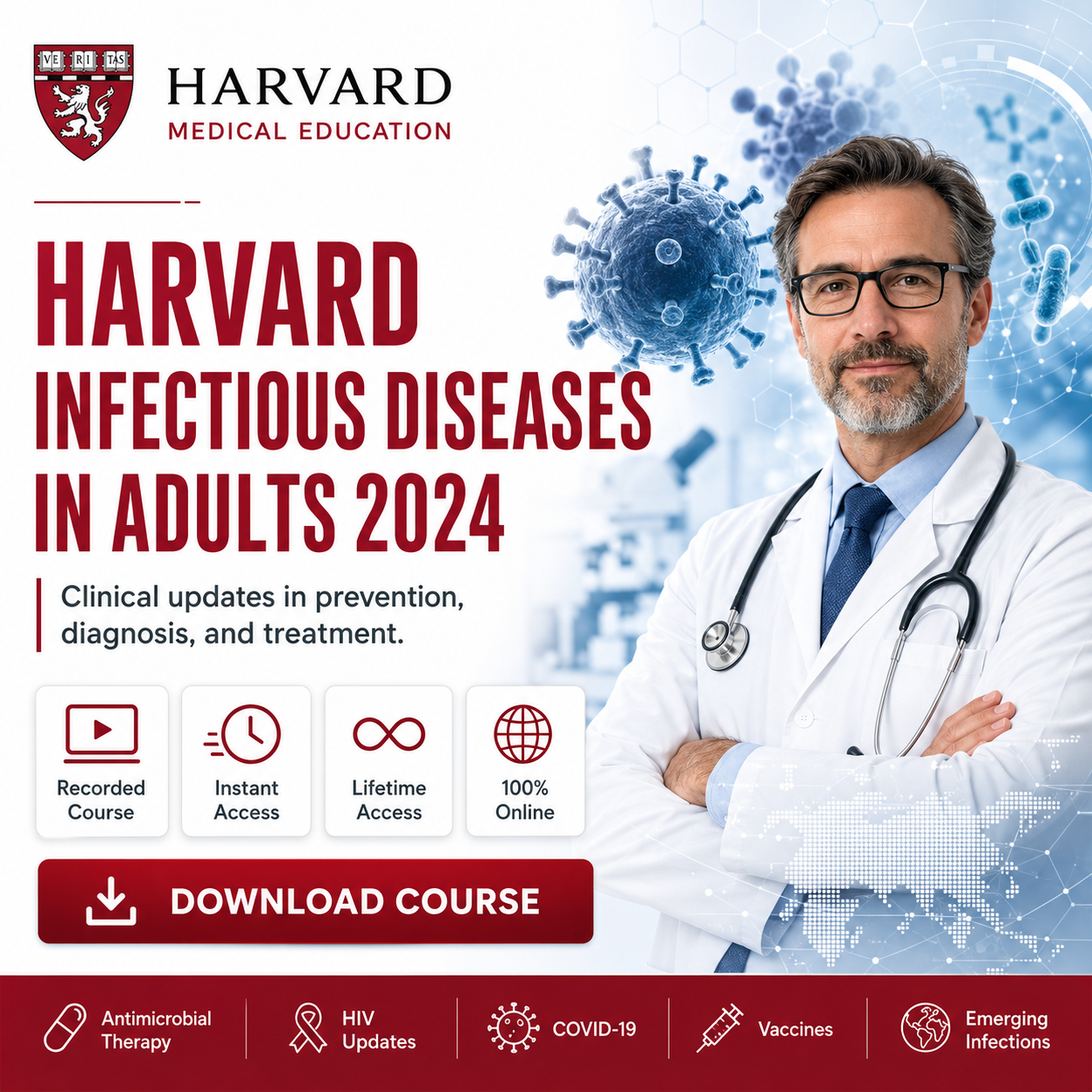
Harvard Infectious Diseases In Adults 2024
A comprehensive infectious diseases update designed to help clinicians stay current with state-of-the-art approaches to prevention, diagnosis, and treatment of adult infections, including resistant organisms, HIV, viral infections, fungal disease, immunocompromised hosts, complex infections, and antimicrobial stewardship.
Harvard Infectious Diseases In Adults 2024 is a recorded medical course focused on practical updates in adult infectious diseases. The course reviews prevention, diagnosis, treatment, new guidelines, resistant pathogens, immunocompromised hosts, emerging infections, HIV care, fungal disease, and multidisciplinary management of complex infections.
Focus: Antimicrobial decision-making, highly resistant infections, COVID-19 and long COVID, HIV prevention and management, STIs, hepatitis, fungal infections, endocarditis, orthopedic infections, complicated UTI, intra-abdominal infections, NTM, infection control, and antimicrobial stewardship.
About This Course
Infectious diseases practice continues to evolve with new diagnostics, emerging pathogens, changing resistance patterns, updated guidelines, novel antimicrobials, vaccine developments, and expanded strategies for prevention and treatment.
This course provides practical, results-driven education for clinicians who manage adult infections in outpatient, inpatient, immunocompromised, travel-related, substance-use-related, and complex multidisciplinary settings.
Why Choose This Course
Key Highlights
- Comprehensive 2024 update in adult infectious diseases
- Practical focus on prevention, diagnosis, treatment, and updated guidelines
- Covers newer antimicrobials and treatment strategies for resistant infections
- Includes COVID-19, long COVID, HIV, STIs, hepatitis, fungal disease, and emerging infections
- Case-based and problem-solving education with multidisciplinary clinical context
- Useful for infectious disease specialists, internists, hospitalists, primary care physicians, pharmacists, residents, fellows, and advanced practice clinicians
Core Learning Areas
Complete Curriculum
State-of-the-Art Infectious Disease Care
- Prevention, diagnosis, and treatment of infectious diseases
- New guidelines and best practices in adult infectious disease care
- Optimal clinical decision-making for common and complex infections
- Rapid detection and empiric treatment of life-threatening infectious diseases
- Choosing inpatient versus outpatient treatment
- Choosing intravenous versus oral antimicrobial therapy
- When to narrow, stop, or change antimicrobial therapy
Highly Resistant and Difficult-to-Treat Infections
- MRSA and VISA infections
- ESBL-producing gram-negative rods
- Carbapenemase-producing gram-negative rods
- NDM-1 metallo-beta-lactamase-producing organisms
- Vancomycin-resistant enterococci
- Candida auris
- Aspergillus and non-aspergillus mold infections
- Nontuberculous mycobacteria
Common Infectious Diseases in Adults
- Respiratory viral infections including COVID-19
- Long COVID updates
- Bronchiectasis and pneumonia
- Central nervous system infections
- ENT and eye infections
- Clostridioides difficile infection
- Complicated urinary tract infections
- Intra-abdominal infections
HIV, STIs, Hepatitis and Prevention
- HIV prevention and management
- HIV infectious and noninfectious complications
- PEP and PrEP to prevent HIV infection
- Sexually transmitted infections including mpox
- PEP for prevention of STIs
- Hepatitis B and hepatitis C infections
- New and updated vaccines
- Prevention strategies for high-risk populations
Immunocompromised Hosts, Fungal Disease and Complex Cases
- Infections in immunocompromised hosts
- Antifungal diagnostics and therapy
- Systemic fungal infections
- Clinical approaches to complex and rare infections
- Native and prosthetic valve endocarditis
- Native and device-related orthopedic infections
- Musculoskeletal infections
- Multidisciplinary case-based infection management
Emerging, Re-Emerging and Global Infectious Diseases
- Rare and emerging infectious diseases including Rift Valley Fever
- Re-emergence of vaccine-preventable diseases including poliomyelitis
- Travel-related infections
- Infections in foreign-born persons
- Tick-borne infections
- Mosquito-borne infections
- Pulmonary and extrapulmonary atypical mycobacteria
- Global infectious diseases of clinical importance
Stewardship, Infection Control and Systems of Care
- Antimicrobial stewardship to prevent resistance and reduce cost
- Optimizing empiric antimicrobial therapy
- Infection control strategies
- Early inpatient infectious disease consultation to improve outcomes
- Management of infection in persons who inject drugs
- Infections in persons with substance use disorder
- Safety, quality, and practice improvement in infectious diseases
Learning Objectives
By Completing This Course, You Will Be Able To:
- Apply updated approaches to prevention, diagnosis, and treatment of adult infectious diseases
- Select appropriate antimicrobial therapy and treatment duration for common and complex infections
- Use current strategies for highly resistant bacterial, fungal, and mycobacterial infections
- Improve diagnosis and treatment of infections in immunocompromised hosts
- Incorporate updates in COVID-19, HIV, STIs, hepatitis, vaccines, and global infectious diseases
- Apply antimicrobial stewardship and infection control principles in clinical practice
- Recognize complex, rare, emerging, and “don’t-miss” infections in adult patients
Who Should Take This Course
This course is designed for infectious disease specialists, internists, hospitalists, primary care physicians, family physicians, pharmacists, emergency physicians, residents, fellows, nurse practitioners, physician assistants, infection control professionals, and healthcare providers who manage adult infections.
Delivery & Access
This course package is provided for recorded learning access. No CME points or certificate are associated with this product.
Reviews
A very practical infectious diseases update. The resistant infection and antimicrobial stewardship sections are especially useful for daily practice.
Excellent coverage of HIV, fungal infections, COVID-19, vaccines, and complex adult infections. Well organized and clinically relevant.
Strong course for internists and hospitalists. The case-based approach makes difficult infection topics easier to apply.
FAQ
Who is this course best suited for?
It is ideal for infectious disease specialists, internists, hospitalists, primary care physicians, family physicians, pharmacists, emergency physicians, residents, fellows, NPs, PAs, and clinicians who manage adult infections.
What topics are covered?
The course covers resistant infections, MRSA, ESBL, carbapenemase-producing organisms, VRE, Candida auris, fungal infections, NTM, COVID-19, long COVID, immunocompromised hosts, HIV, PrEP, PEP, STIs, mpox, hepatitis B and C, vaccines, endocarditis, orthopedic infections, CNS infections, pneumonia, C. difficile, complicated UTI, intra-abdominal infections, emerging infections, antimicrobial stewardship, and infection control.
Is this course practical for daily clinical care?
Yes. The course focuses on real-world prevention, diagnosis, treatment decisions, antimicrobial selection, case-based learning, and updated infectious disease guidelines.
Does this product include CME or a certificate?
No. This course package does not include CME points or a certificate.
Who can I contact for support?
You can contact us at [email protected].
Reviews
There are no reviews yet.