
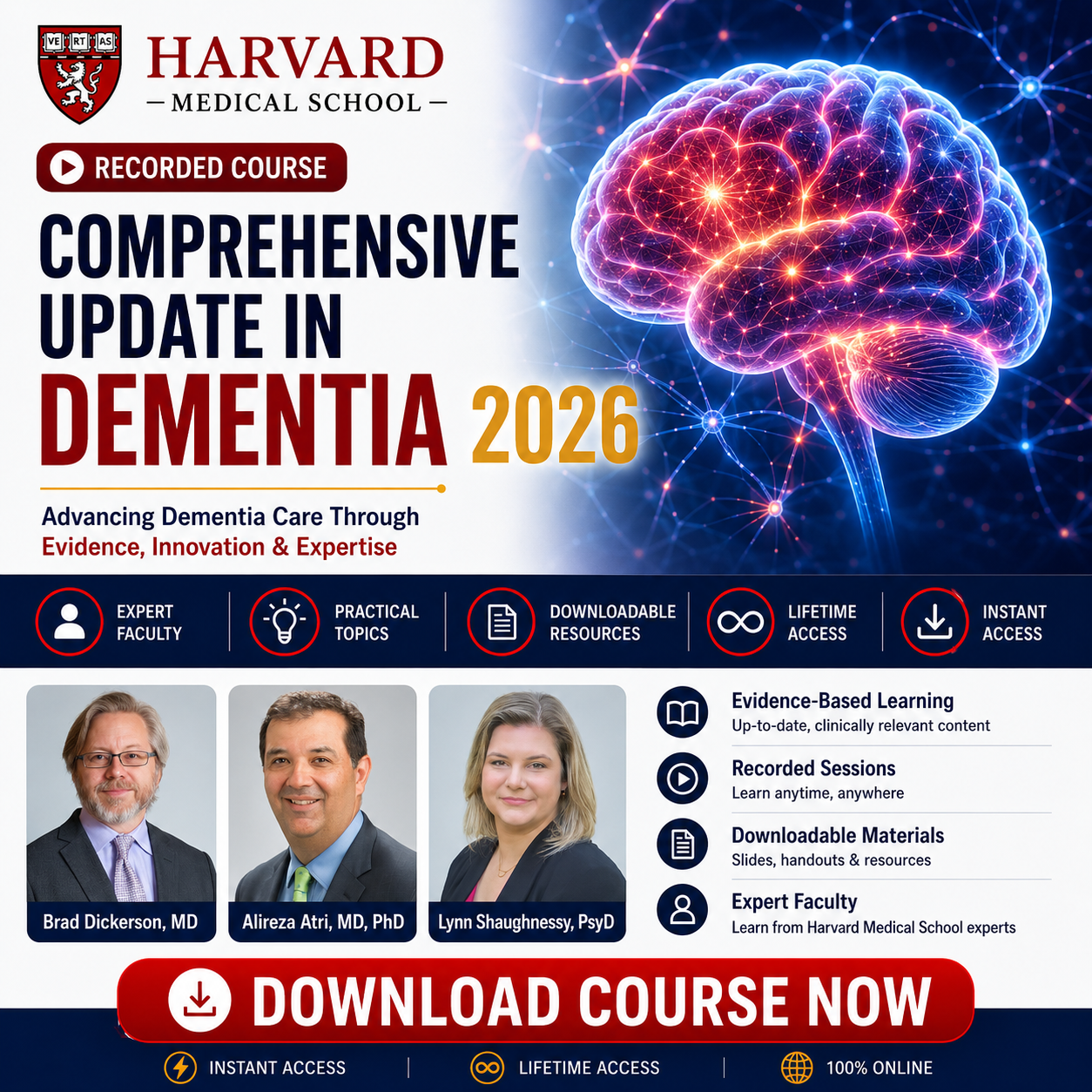
Harvard Dementia: A Comprehensive Update 2026
Comprehensive Advances in Dementia Diagnosis, Biomarkers, Treatment, and Patient Care
Harvard Dementia: A Comprehensive Update 2026 is one of the most respected educational programs dedicated to the diagnosis, management, prevention, and emerging treatment of Alzheimer’s disease and related neurodegenerative disorders. Organized by leading cognitive neurologists and dementia specialists from Harvard Medical School and affiliated institutions, this intensive multidisciplinary course provides clinicians with the latest evidence-based approaches to cognitive impairment, mild cognitive impairment (MCI), Alzheimer’s disease, vascular dementia, Lewy body dementia, frontotemporal degeneration, Parkinsonian dementias, and other neurodegenerative conditions.
Designed for healthcare professionals involved in dementia care, this comprehensive review combines advances in clinical practice, neuroimaging, biomarkers, neuropsychology, disease-modifying therapies, caregiver support, neuroethics, and end-of-life care. Participants gain practical strategies to improve diagnostic accuracy, optimize treatment decisions, and enhance quality of life for patients and families affected by cognitive disorders.
Course Overview
The global burden of dementia continues to rise as populations age, creating an urgent need for clinicians to remain current with rapidly evolving diagnostic technologies, biomarkers, treatment options, and care models.
Now in its 29th year, Dementia: A Comprehensive Update 2026 provides a thorough review of the full spectrum of cognitive disorders, from preclinical Alzheimer’s disease and mild cognitive impairment to advanced dementia. The course integrates foundational neuroscience, clinical diagnosis, biomarker interpretation, pharmacologic and non-pharmacologic therapies, caregiver support strategies, and emerging disease-modifying treatments.
A major focus of the 2026 program is the expanding role of biomarkers and newly approved disease-modifying therapies for Alzheimer’s disease, helping clinicians understand how these advances are reshaping dementia care.
Course Date: May 27–30, 2026
Comprehensive Curriculum
Alzheimer’s Disease
Participants explore:
- Alzheimer’s disease pathophysiology
- Amyloid and tau biology
- Clinical presentations
- Typical and atypical Alzheimer’s syndromes
- Disease progression
- Risk factors
- Prevention strategies
- Early detection approaches
- Disease-modifying therapies
Faculty discuss the latest developments in Alzheimer’s diagnosis and treatment.
Mild Cognitive Impairment (MCI)
Coverage includes:
- Diagnostic criteria
- Clinical evaluation
- Risk stratification
- Progression prediction
- Monitoring strategies
- Biomarker integration
- Management approaches
Participants learn evidence-based approaches to identifying and managing MCI.
Dementia Biomarkers
Extensive instruction covers:
- Cerebrospinal fluid biomarkers
- Amyloid PET imaging
- Tau PET imaging
- MRI applications
- FDG-PET
- Blood-based biomarkers
- Biomarker interpretation
- Appropriate use criteria
Clinicians learn how biomarkers can improve diagnostic precision and treatment planning.
Neurodegenerative Dementias
Detailed reviews include:
Dementia with Lewy Bodies (DLB)
- Clinical features
- Hallucinations
- Cognitive fluctuations
- REM sleep behavior disorder
- Biomarker findings
- Treatment strategies
Frontotemporal Dementia (FTD)
- Behavioral variant FTD
- Primary progressive aphasia
- Clinical phenotypes
- Diagnostic challenges
Parkinson’s Disease Dementia (PDD)
- Cognitive manifestations
- Disease progression
- Management considerations
Vascular Cognitive Impairment (VCI)
- Vascular risk factors
- Imaging findings
- Prevention strategies
- Treatment approaches
Neuropsychological Assessment
Participants review:
- Cognitive screening tools
- Montreal Cognitive Assessment (MoCA)
- Mental Status Examination (MSE)
- Neuropsychological testing
- Cognitive domain assessment
- Interpretation of testing patterns
- Differential diagnosis of cognitive disorders
Practical office-based approaches are emphasized.
Neuroimaging in Dementia
Topics include:
- Structural MRI
- Functional imaging
- Amyloid imaging
- Tau imaging
- Neurodegenerative patterns
- Differential diagnosis using imaging
- Clinical integration of imaging findings
New Disease-Modifying Therapies
A major focus of the course includes:
- Recently approved Alzheimer’s therapies
- Anti-amyloid treatments
- Patient selection
- Monitoring protocols
- Safety considerations
- ARIA management
- Future therapeutic pipelines
Participants gain practical guidance on integrating new therapies into clinical practice.
Behavioral and Neuropsychiatric Symptoms
Coverage includes:
- Agitation
- Aggression
- Depression
- Anxiety
- Apathy
- Psychosis
- Sleep disturbances
- Behavioral interventions
- Pharmacologic management
Faculty emphasize non-pharmacologic strategies as first-line treatment.
Dementia Caregiver Support
Sessions explore:
- Caregiver burden
- Family counseling
- Stress reduction strategies
- Community resources
- Respite care
- Long-term planning
- Improving caregiver resilience
Chronic Traumatic Encephalopathy (CTE)
Participants review:
- Clinical features
- Risk factors
- Neuropathology
- Diagnostic challenges
- Current evidence
Delirium and Encephalopathy
Topics include:
- Recognition of delirium
- Differential diagnosis
- Prevention strategies
- Management approaches
- Relationship between delirium and dementia
Neuroethics and Legal Issues
Important discussions include:
- Capacity assessments
- Financial competence
- Driving safety
- Guardianship
- Advance care planning
- Disclosure of diagnosis
- Informed consent
- Ethical dilemmas in dementia care
Palliative and End-of-Life Care
Coverage includes:
- Advanced dementia management
- Hospice care
- Symptom management
- Pain recognition
- Goals-of-care discussions
- End-of-life decision-making
Learning Objectives
Upon completion of this course, participants will be able to:
- Differentiate normal aging, MCI, Alzheimer’s disease, and other dementias.
- Apply current Alzheimer’s Association clinical practice guidelines.
- Utilize cognitive screening tools and neuropsychological testing effectively.
- Integrate biomarkers into dementia diagnosis and management.
- Interpret MRI, PET, CSF, and blood-based biomarker findings.
- Evaluate newly approved disease-modifying therapies for Alzheimer’s disease.
- Implement evidence-based pharmacologic and non-pharmacologic treatments.
- Recognize and manage neuropsychiatric symptoms of dementia.
- Support caregivers through education and practical interventions.
- Address medico-legal, ethical, and safety concerns in dementia care.
- Apply palliative care principles throughout the dementia continuum.
Educational Features
✔ Harvard Medical School Faculty
✔ Comprehensive Dementia Review
✔ Alzheimer’s Disease Updates
✔ Dementia Biomarker Training
✔ Amyloid & Tau PET Imaging
✔ Disease-Modifying Therapy Updates
✔ Neuropsychology and Cognitive Testing
✔ Behavioral Symptom Management
✔ Caregiver Support Strategies
✔ Neuroethics and End-of-Life Care
Target Audience
This course is designed for:
- Neurologists
- Psychiatrists
- Geriatricians
- Primary Care Physicians
- Internal Medicine Physicians
- Family Medicine Physicians
- Neuropsychologists
- Physician Assistants
- Nurse Practitioners
- Psychologists
- Social Workers
- Memory Clinic Providers
- Healthcare Professionals Involved in Dementia Care
Why This Course Matters
The landscape of dementia care is undergoing a historic transformation driven by advances in biomarkers, neuroimaging, disease-modifying therapies, and precision diagnostics. Clinicians must now integrate emerging technologies with comprehensive patient-centered care strategies that address cognitive symptoms, behavioral challenges, caregiver needs, and long-term planning.
Harvard Dementia: A Comprehensive Update 2026 provides a practical, evidence-based framework for diagnosing and managing dementia across its entire spectrum, helping clinicians deliver more accurate diagnoses, individualized treatment plans, and improved outcomes for patients and families facing cognitive disorders.
Topics
-
Introduction to the Course
-
Human Cognition An Overview
-
Memory Systems & Amnesia
-
Neuropathology of AD ADRD A Guide forPracticing Clinicians
-
From Proteinopathies to Neuroimaging & Biomarkers in AD ADRD Primer on Practice and Advances
-
Alzheimer’s Disease & Related Dementias Global Perspectives and Opportunities
-
Clinical Use of Blood Biomarkers in 2026 and Beyond
-
Panel Discussion and Q&A Alireza Atri; Brad Dickerson
-
AD Dementia Practical Evaluation & Managementin Clinical Practice
-
Mild Cognitive Impairment Prodromal AD and Beyond
-
Advances in AD Experimental Therapeutics + Panel Discussion and Q&A
-
Neuropsychology of Aging
-
Attentional and Executive Systems – Don’t Leave Home without Them
-
Frontotemporal Dementias Focus on Behaviorall Executive Variants
-
Language Systems & Aphasia-predominant Dementia Syndromes
-
Updates on Vascular Cognitive Impairment & Dementia
-
Panel Discussion and Q&A
-
Lewy Body Disease, and Parkinsonian & Sensorimotorpredominant Dementias
-
Assessment of Cognition in Clinical Practice
-
Practical Compensatory Strategies for Cognitive Decline
-
Assessment of Daily Function and Neuropsychiatric Symptoms Behavior and Staging of Dementia in Practice
-
Cased-based Discussion of Lecanemab and Donanemab
-
Panel Discussion and Q&A
-
Non-Pharmacological Approaches to Neuropsychiatric Symptoms and Problem Behaviors in Dementia
-
Pharmacological Management of Behavioral Problems in Dementia
-
Practical & Ethical Considerations for Disclosure of Demetia-Related Diagnosis and Risk
-
Caregiving in Dementia Impact, Consequences & Opportunities
-
Panel Discussion and Q&A
-
Community Advocacy and Activism For Dementias
-
Chronic Traumatic Encephalopathy (CTE) & Dementia
-
Delirium, Encephalopathies and Uncommon Dementias
-
Panel Discussion, Q&A and Conclusions
-
Dementia & The Law Clinical Pearls on Testamentary Capacity and Undue Influence
-
Principles & Practice of Mental Capacity and Competence in Dementia From Finances to Firearms
-
Driving, Home & Community Safety and Dementia
-
Advance Care Planning & Management of End-stage Dementia, Pain, Palliation & Hospice in Long-Term Care
-
Panel Discussion, Q & A, and conclusions


Dr. Sarah Mitchell, Neurologist –
“The dementia diagnosis, cognitive assessment, and management updates are very practical. This course is valuable for clinicians caring for patients with memory concerns.”
Dr. James Carter, Geriatrician –
“A clear and well-organized course. The content helps clinicians better understand dementia care in older adults.”
Dr. Emily Rodriguez, Primary Care Physician –
“The course provides useful guidance for evaluating cognitive decline and supporting patients and families in real clinical practice.”
Dr. Michael Anderson, Internal Medicine Physician –
“Very practical update on dementia care. I appreciated the focus on diagnosis, behavioral symptoms, and patient-centered management.”
Dr. Laura Bennett, Neurology Specialist –
“The lectures are clear, evidence-based, and easy to follow. A helpful course for anyone managing cognitive disorders.”
Dr. David Thompson, Geriatric Medicine Physician –
“This course gives a strong overview of dementia assessment and care planning. Very relevant for daily practice.”
Dr. Rachel Morgan, Family Medicine Physician –
“I found the sections on cognitive assessment and behavioral symptoms especially helpful for primary care.”
Dr. Daniel Brooks, Psychiatrist –
“The dementia and neuropsychiatric symptom updates are clinically useful. The course connects science with practical patient care.”
Dr. Olivia Harris, Memory Care Physician –
“Excellent course for improving confidence in dementia evaluation and management. The material is well structured.”
Dr. Jonathan Lee, Internal Medicine Consultant –
“The course explains complex dementia topics in a practical and accessible way. Very useful for clinicians.”
Dr. Amanda Wilson, Geriatric Care Clinician –
“I appreciated the focus on real-world dementia care, caregiver support, and long-term management strategies.”
Dr. Mark Reynolds, Neurologist –
“A valuable update for clinicians who want to stay current in dementia diagnosis and treatment approaches.”
Dr. Priya Nair, Family Physician –
“The course is practical, clear, and highly relevant for patients with cognitive decline seen in outpatient practice.”
Dr. Kevin Martin, Primary Care Physician –
“Very helpful for improving clinical decision-making in dementia care. The recorded format makes it easy to review.”
Dr. Sophia Clark, Geriatrician –
“The topics are well selected and clinically meaningful. I especially liked the focus on dementia assessment and management.”
Dr. Thomas Evans, Hospital Medicine Physician –
“This course is useful for clinicians who manage older adults with confusion, cognitive impairment, and behavioral changes.”
Dr. Natalie Green, Neurology Physician –
“The course provides practical updates on dementia diagnosis and care. The explanations are clear and evidence-based.”
Dr. Andrew Miller, Internal Medicine Specialist –
“A strong review of dementia care for clinicians. The content is focused, practical, and easy to apply.”
Dr. Rebecca Adams, Family Medicine Physician –
“This course helped me improve my approach to cognitive screening, counseling, and follow-up planning.”
Dr. Christopher Young, Geriatric Medicine Physician –
“Excellent learning resource for dementia care. The lectures are clinically focused and very useful.”
Dr. Hannah Lewis, Nurse Practitioner –
“The course offers practical strategies for managing dementia symptoms and supporting older adult patients.”
Dr. Benjamin Scott, Neurologist –
“I found the course helpful for reviewing dementia subtypes, evaluation tools, and treatment considerations.”
Dr. Maria Gonzalez, Primary Care Clinician –
“Very relevant for primary care. The course helps clinicians recognize cognitive decline and manage care more confidently.”