
Harvard Sleep Medicine 2025
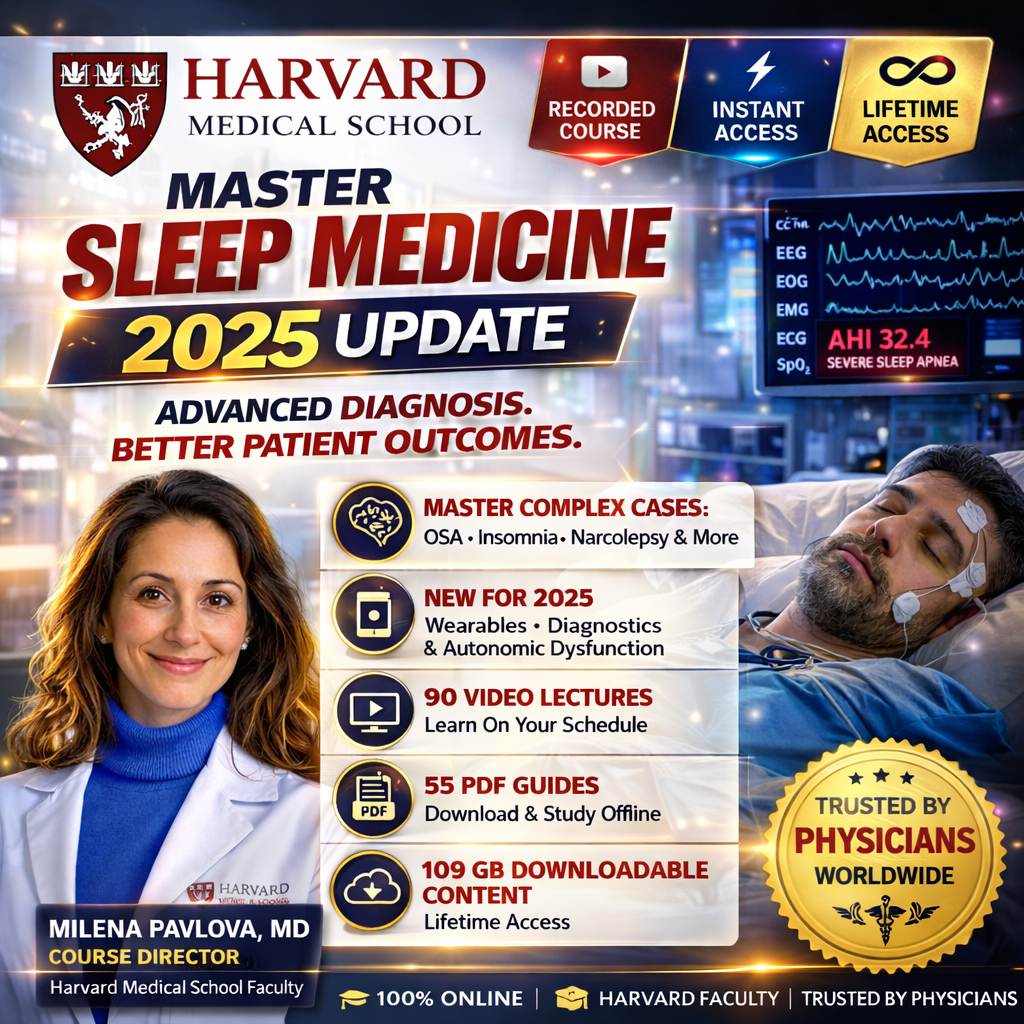
A comprehensive sleep medicine update covering sleep physiology, circadian rhythm, obstructive sleep apnea, central sleep apnea, insomnia, narcolepsy, hypersomnia, restless legs syndrome, parasomnias, sleep testing, and modern treatment strategies.
Harvard Sleep Medicine 2025 is a recorded medical course focused on sleep disorders, sleep physiology, clinical evaluation, sleep testing, and up-to-date treatment approaches for common and complex sleep conditions.
About This Course
Harvard Sleep Medicine 2025 explores the critical role of sleep in medical and psychiatric conditions, while addressing the growing need for structured sleep education in clinical practice.
The course covers rapidly evolving treatment options and updated practice approaches in sleep medicine, helping clinicians recognize sleep disorders, evaluate patients, interpret sleep tests, and initiate treatment for common sleep conditions.
Why Choose This Course
Key Highlights
- Comprehensive sleep medicine review for clinical practice
- Sleep apnea, insomnia, narcolepsy, hypersomnia, and parasomnia updates
- Practical guidance on sleep evaluation and sleep testing
- Coverage of circadian rhythm, sleep physiology, memory, lifestyle, and weight
- Useful for pulmonology, neurology, psychiatry, primary care, and sleep medicine clinicians
Core Learning Areas
Complete Curriculum
Sleep Evaluation & Basic Sleep Physiology
- Sleep Evaluation and Basic Sleep Physiology
- Circadian Control of Sleep
- Dreaming
- Sleep and Memory
- Sleep, the Blood-Brain Barrier, and Glymphatic Function
Sleep Apnea & Respiratory Sleep Disorders
- Obstructive Sleep Apnea: Presentation and PAP Treatment
- Central Sleep Apnea
- Surgical Treatment for OSA
- Dental Sleep Medicine
- Sleep-Disordered Breathing Management
Insomnia, Hypersomnia & Narcolepsy
- Insomnia: Clinical Presentation and Treatment Options
- Narcolepsy: Diagnosis and Treatment
- Idiopathic Hypersomnia and Other Rare Hypersomnias
- Medication Safety and Treatment Planning
- Sleepiness and Daytime Function
Parasomnias, Movement Disorders & Neurology
- Parasomnias: RBD and NREM Parasomnias
- Periodic Limb Movements of Sleep and Restless Legs Syndrome
- Sleep and Autonomic Dysfunction
- Pain, Opiates, and Sleep
- Sleep and Neurologic Disease Connections
Metabolism, Lifestyle & Modern Sleep Tools
- Circadian Rhythms and Metabolism
- Sleep, Lifestyle, and Weight
- Sleep and Exercise
- Wearables in the Assessment of Sleep Pattern
- Sleep, Climate, and Disease
- Sleep and Music
Learning Objectives
By Completing This Course, You Will Be Able To:
- Recognize common and complex sleep disorders
- Initiate evaluation for common sleep disorders
- Interpret information from sleep tests
- Initiate up-to-date treatment for common sleep disorders
- Understand the relationship between sleep, medical disease, and psychiatric conditions
- Apply practical sleep medicine concepts in clinical practice
Who Should Take This Course
This course is designed for sleep medicine clinicians, pulmonologists, neurologists, psychiatrists, primary care physicians, internal medicine physicians, family medicine clinicians, nurse practitioners, physician assistants, fellows, residents, and healthcare professionals involved in evaluating or treating sleep disorders.
Delivery & Access
Reviews
A very complete sleep medicine update. The sleep apnea and PAP therapy sections were especially useful for clinical practice.
Excellent discussion of insomnia and the overlap between sleep disorders and mood symptoms. Very practical and easy to revisit.
The neurophysiology and parasomnia content was clinically rich while remaining easy to apply in patient care.
FAQ
Who is this course best suited for?
It is ideal for sleep medicine clinicians, pulmonologists, neurologists, psychiatrists, primary care physicians, internists, NPs, PAs, fellows, and residents.
What topics are covered?
The course covers sleep physiology, circadian rhythm, OSA, central sleep apnea, insomnia, narcolepsy, hypersomnia, parasomnias, restless legs syndrome, sleep testing, wearables, lifestyle, and sleep-related medical conditions.
What are the learning objectives?
Key objectives include recognizing sleep disorders, initiating evaluation, interpreting sleep tests, and starting up-to-date treatment for common sleep disorders.
Who can I contact for support?
You can contact us at [email protected].
Reviews
There are no reviews yet.