
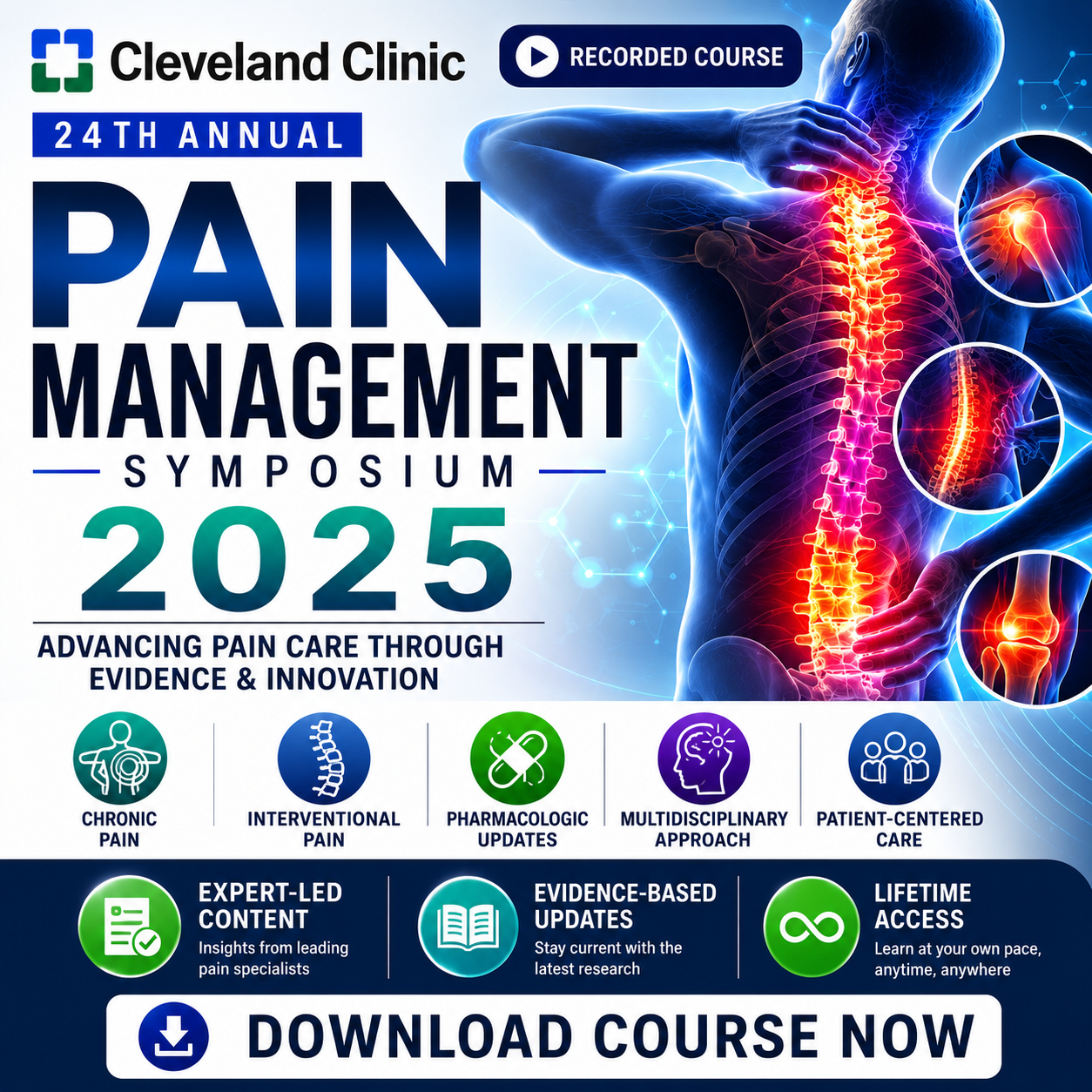

Cleveland Clinic 24th Annual Pain Management Symposium 2025
A comprehensive Cleveland Clinic pain medicine update focused on acute and chronic pain management, interventional pain procedures, neuromodulation, spinal pain syndromes, regenerative medicine, opioids, marijuana, special populations, ethical challenges, documentation, billing, patient communication, and emerging pharmacological and procedural therapies.
Course Details:
Cleveland Clinic 24th Annual Pain Management Symposium 2025 includes 50 recorded videos and 1 PDF agenda/resource, providing an in-depth review of recent advances in acute and chronic pain medicine for clinicians who manage complex pain patients.
Focus: Cervical spine procedures, corticosteroid guidelines, persistent pain after joint replacement, infection control, artificial intelligence in pain treatment, closed-loop spinal cord stimulation, private equity and pain practice, documentation and pre-authorization, advocacy, ethics, interspinous spacers, sacroiliac joint fusion, spinal metastases ablation, intradiscal biologics, Nav 1.8 inhibitors, basivertebral nerve ablation, neuromodulation, PRP, stem cells, persistent spinal pain syndromes, CRPS, thoracic outlet syndrome, geriatric pain, opioid misuse disorders, marijuana, urine drug screening, and patient expectations.
About This Course
Pain medicine continues to evolve with new procedural technologies, neuromodulation systems, regenerative medicine discussions, updated safety guidance, changing opioid prescribing standards, and growing interest in cannabis-related pain care.
Cleveland Clinic 24th Annual Pain Management Symposium 2025 provides a broad and practical update for clinicians involved in acute and chronic pain treatment. The program reviews interventional and non-interventional strategies, diagnostic reasoning, patient selection, procedural safety, pharmacologic options, ethical challenges, and multidisciplinary care.
The symposium is especially valuable for clinicians who manage spinal pain, neuropathic pain, complex regional pain syndrome, post-surgical pain, chronic opioid therapy, neuromodulation procedures, regenerative medicine questions, and difficult patient interactions in pain practice.
Why Choose This Course
- Cleveland Clinic 24th Annual Pain Management Symposium 2025
- Includes 50 recorded videos and 1 PDF agenda/resource
- Comprehensive review of recent advances in acute and chronic pain medicine
- Strong focus on interventional pain procedures, neuromodulation, spinal pain syndromes, opioids, marijuana, and emerging therapies
- Covers practice challenges including documentation, pre-authorization, advocacy, private equity, ethics, infection control, and patient expectations
- Includes procedural updates in cervical spine procedures, SI joint fusion, radiofrequency ablation, basivertebral nerve ablation, spinal metastases treatment, and intradiscal biologics
- Designed for anesthesia providers, interventional pain specialists, PM&R specialists, orthopedic and spine surgeons, neurologists, neurosurgeons, primary care physicians, PAs, NPs, residents, and fellows
Core Learning Areas
Interventional Pain
Cervical spine procedures, steroid guidelines, infection control, SI joint fusion, interspinous spacers, spinal metastases ablation, intradiscal biologics, and basivertebral nerve ablation.
Neuromodulation
Closed-loop spinal cord stimulation, high-frequency stimulation, DRG stimulation, peripheral nerve stimulation, intrathecal therapy, device selection, and long-term outcomes.
Spinal & Special Pain Syndromes
Persistent spinal pain syndromes, vertebrogenic and discogenic pain, pseudoarthrosis, sagittal and coronal balance, CRPS, thoracic outlet syndrome, and geriatric pain.
Opioids, Marijuana & Practice Issues
Opioid misuse disorders, CDC prescribing guidelines, chronic marijuana use, urine drug screening, documentation, billing, advocacy, ethics, and difficult patient interactions.
Complete Curriculum
- Percutaneous cervical spine procedures: guidelines, technical aspects, and safety
- Guidelines for use of corticosteroids in chronic pain interventions
- Persistent pain after joint replacement surgery
- Infection control guidelines for chronic pain procedures
- ACDF versus ACDA: evidence review
- Artificial intelligence and pain treatment
- Closed-loop spinal cord stimulation
- Panel discussion and faculty Q&A
- Private equity and pain practice: challenges, opportunities, and threats
- Optimizing documentation to ease pre-authorization
- Advocacy in pain medicine: at the table or on the menu
- Unethical behavior as encountered by the state medical board
- Regulatory realities affecting modern pain medicine practice
- Billing, documentation, and administrative burden in interventional pain care
- Practical strategies for protecting ethical and patient-centered practice
- Interspinous spacers
- Minimally invasive sacroiliac joint fusion
- Percutaneous thermal radiofrequency ablation of spinal metastases
- Intradiscal biologics for chronic discogenic low back pain
- Nav 1.8 inhibitors
- Basivertebral nerve ablation
- Emerging procedural and pharmacologic options in chronic pain care
- Panel discussion and clinical decision-making review
- High-frequency neuromodulation
- Dorsal root ganglion stimulation
- Long-term outcomes of closed-loop spinal cord stimulation
- Peripheral nerve stimulation: patient selection, technique, and pitfalls
- Intrathecal drug delivery
- Peripheral stimulation for low back pain
- High-frequency bioelectric nerve block
- Matching neuromodulation targets and devices to patient diagnosis
- Matching the diagnosis and the technique/device for the best patient outcome
- Expert case discussion in neuromodulation
- Device selection based on pain generator and patient profile
- Technique selection for complex chronic pain syndromes
- Clinical reasoning for therapy escalation
- Multidisciplinary discussion of neuromodulation strategy
- Practical lessons from expert faculty panelists
- Evidence-based approach to infectious complications of neuromodulation procedures
- Navigating difficult patient interactions in chronic pain
- Evaluating the patient with sacroiliac joint pain
- Topical capsaicin
- Role of advanced practice providers in pain management workflows
- Patient communication and expectation management
- Practical assessment strategies for chronic pain visits
- Platelet-rich plasma in pain medicine
- Stem cells and regenerative medicine discussions
- Regulatory considerations in regenerative medicine
- Evidence review for biologic interventions
- Payment and coverage challenges in regenerative therapies
- Patient counseling around expectations and evidence limitations
- Practical framework for discussing PRP and stem cells in pain care
- Vertebrogenic and discogenic pain
- Pseudoarthrosis
- Biomechanics of sagittal and coronal balance
- Persistent spinal pain after surgical and non-surgical treatment
- Diagnostic reasoning in complex spinal pain syndromes
- Identifying structural contributors to chronic spinal pain
- Panel discussion and expert case-based review
- Optimizing interventional therapy referrals
- Low-dose naltrexone for pain management
- Optimum and appropriate use of urine drug screening in clinical practice
- Setting patient expectations for interventional procedures
- Improving referral quality and procedural readiness
- Medication monitoring and risk mitigation in chronic pain
- Practical care coordination for advanced practice providers
- Pain in complex regional pain syndrome
- Thoracic outlet syndrome
- Pain in the geriatric population
- Special considerations for older adults with chronic pain
- Patient-specific pain treatment planning
- Balancing benefit, risk, function, and quality of life
- Clinical decision-making for complex and vulnerable pain populations
- Chronic pain management in opioid misuse disorders
- Acute pain management in the chronic marijuana user
- Marijuana: between fantasies and realities
- Current opioid landscape and CDC prescribing guidelines
- Balancing pain control, safety, and misuse risk
- Counseling patients about marijuana and pain treatment expectations
- Panel discussion on opioids, marijuana, and clinical practice challenges
- Cervical spine procedure safety considerations
- Technical aspects of percutaneous spine interventions
- Corticosteroid use in chronic pain interventions
- Infection control in chronic pain procedures
- Comparing cervical spine surgical approaches and evidence
- Patient selection and procedural risk reduction
- Practical safety principles for interventional pain care
- Diagnosis and management of acute and chronic pain conditions
- Interventional therapy selection and referral planning
- Non-interventional strategies for pain management
- Medication selection and risk assessment
- Functional improvement and patient-centered outcomes
- Multimodal pain management strategies
- Clinical reasoning across complex pain presentations
- Documentation strategies for pre-authorization
- Billing and regulatory challenges in pain practice
- Ethical concerns in interventional pain medicine
- Advocacy and policy awareness for pain physicians
- Private equity and its impact on clinical practice
- Reducing administrative friction while maintaining quality care
- Protecting patient-centered decision-making in modern pain practice
- Navigating difficult patient interactions in chronic pain
- Setting realistic expectations before procedures
- Explaining benefits, risks, and uncertainty
- Improving patient understanding of interventional options
- Managing frustration, fear, and long-term pain expectations
- Supporting shared decision-making in complex cases
- Building trust in chronic pain care relationships
Learning Objectives
- Review recent advances in acute and chronic pain medicine
- Improve understanding of the pathophysiology and management of complex pain conditions
- Apply updated safety guidance for cervical spine procedures, corticosteroid use, and infection control in chronic pain interventions
- Evaluate interventional therapies including SI joint fusion, interspinous spacers, basivertebral nerve ablation, radiofrequency ablation, and intradiscal biologics
- Understand current neuromodulation strategies including closed-loop SCS, DRG stimulation, peripheral nerve stimulation, intrathecal drug delivery, and device selection
- Discuss evidence, payment, and regulatory issues related to PRP, stem cells, and regenerative medicine
- Recognize and manage persistent spinal pain syndromes, CRPS, thoracic outlet syndrome, and pain in geriatric patients
- Apply safe and practical strategies for opioids, opioid misuse disorders, urine drug screening, marijuana use, and CDC prescribing guidance
- Improve documentation, referral quality, pre-authorization strategy, and ethical decision-making in pain practice
- Strengthen patient communication, expectation setting, and multidisciplinary chronic pain care planning
Who Should Take This Course
This course is designed for anesthesia providers, interventional pain specialists, physical medicine and rehabilitation specialists, orthopedic and spine surgeons, neurologists, neurosurgeons, headache specialists, palliative care specialists, primary care physicians, physician assistants, nurse practitioners, residents, and fellows interested in pain medicine.
It is especially useful for clinicians involved in chronic pain management, interventional pain procedures, spine care, neuromodulation, opioid risk management, regenerative medicine discussions, marijuana-related pain questions, and multidisciplinary care of complex pain patients.
Delivery & Access
50 Videos
Recorded symposium lectures covering acute and chronic pain medicine, procedures, neuromodulation, opioids, and special populations.
1 PDF
PDF agenda/resource included for reference and structured review.
5.32 GB
Complete recorded course package with video and PDF learning materials.
Support
Course Highlights
Comprehensive Pain Update
Covers recent advances in acute and chronic pain medicine, interventional therapy, non-interventional care, and multidisciplinary pain practice.
Neuromodulation & Procedures
Includes closed-loop SCS, DRG stimulation, peripheral stimulation, intrathecal therapy, SI fusion, RFA, basivertebral nerve ablation, and spine procedures.
Real-World Practice Focus
Reviews opioids, marijuana, documentation, pre-authorization, ethics, advocacy, patient expectations, and difficult chronic pain interactions.
FAQ
Who is this course best suited for?
This course is best suited for anesthesia providers, interventional pain specialists, PM&R specialists, orthopedic and spine surgeons, neurologists, neurosurgeons, headache specialists, palliative care specialists, primary care physicians, physician assistants, nurse practitioners, residents, and fellows interested in pain medicine.
What is included in this course?
The course includes 50 recorded videos and 1 PDF agenda/resource, with a complete package size of 5.32 GB.
What topics are covered?
Topics include acute and chronic pain medicine, cervical spine procedures, corticosteroid guidelines, infection control, artificial intelligence in pain treatment, spinal cord stimulation, neuromodulation, SI joint fusion, radiofrequency ablation, intradiscal biologics, Nav 1.8 inhibitors, basivertebral nerve ablation, PRP, stem cells, persistent spinal pain syndromes, CRPS, thoracic outlet syndrome, geriatric pain, opioid misuse disorders, marijuana, urine drug screening, patient expectations, documentation, billing, advocacy, and ethics.
Does this course cover neuromodulation?
Yes. The course covers closed-loop spinal cord stimulation, high-frequency stimulation, dorsal root ganglion stimulation, peripheral nerve stimulation, intrathecal drug delivery, device selection, long-term outcomes, and neuromodulation case discussions.
Does this course cover opioids and marijuana?
Yes. The course includes chronic pain management in opioid misuse disorders, acute pain management in the chronic marijuana user, marijuana realities, CDC prescribing guidelines, and opioid risk management.
Does this course cover regenerative medicine?
Yes. The course includes platelet-rich plasma, stem cells, intradiscal biologics, evidence review, payment issues, and regulatory considerations in regenerative medicine.
Is this a recorded course?
Yes. This product is provided as recorded course access so you can review the material at your own pace.
Does this course include CME or a certificate?
No. CME credits and certificates are not included with this course package.
Who can I contact for support?
You can contact support at [email protected].


Dr. Evan R., Pain Medicine Physician –
“Five stars. The video and audio quality on the Google Drive files are impeccable. I was worried it would be choppy, but it felt like I was in the front row. The ability to pause and rewind complex interventional sections was a game-changer. Far better than attending live.”
Sarah K., NP –
“As a working mom, attending a multi-day conference is impossible. This on-demand access was my only option, and it was perfect. I watched lectures after my kids went to bed and implemented new opioid tapering strategies the very next day. Lifesaver!”
. Michael T., Physical Therapist –
“The way the Drive was organized was so simple. Clearly labeled folders for each day and topic. I could easily find the specific lectures on the biopsychosocial model that were relevant to my practice without wading through hours of content.”
4. Dr. Lena P., Anesthesiologist & Pain Fellow –
“I downloaded the entire Drive to my laptop for a long flight. Was able to get through the entire neuromodulation workshop offline and earn CME credits at 30,000 feet. The convenience is unbeatable.”
Jennifer L., Registered Nurse –
“Instant access is right! I purchased the course and had the link and instructions in minutes. No complicated portal to learn, just a straightforward link to a well-organized Drive. So appreciate the simplicity.”
Dr. Ben W., Physiatrist –
“The value for money is astounding. For the cost of a textbook, I got dozens of hours of world-class lectures. The deep dive on regenerative medicine evidence was worth the price alone. I’ve already referred two colleagues.”
Amanda J., PA-C –
“Being able to control the playback speed was my favorite feature. I could speed up sections I was familiar with and slow down to take detailed notes on new pharmacological protocols. It optimized my learning time perfectly.”
David R., Clinical Psychologist –
“I’ve never learned so much about the interventional side of pain. Watching the procedures with the ability to pause and really understand the anatomy has dramatically improved my collaboration with our interventionalists. Priceless.”
Dr. Imani S., Neurology –
“The PDF syllabi were included in the Drive! I could follow along with the slides on my tablet while watching the video on my monitor. It made the learning experience incredibly effective and immersive.”
Maria G., Nurse Practitioner –
“I was skeptical about a ‘recorded conference,’ but this is superior. No distractions, no missing a point because someone was talking next to you. Just pure, concentrated learning from the best in the field.”
Dr. Alex C., Interventional Pain Physician –
“The panel discussions were fantastic. In a live setting, you might miss a key point. Here, I could re-listen to the expert debates on controversial topics until I fully grasped each argument. Incredible depth of learning.”