
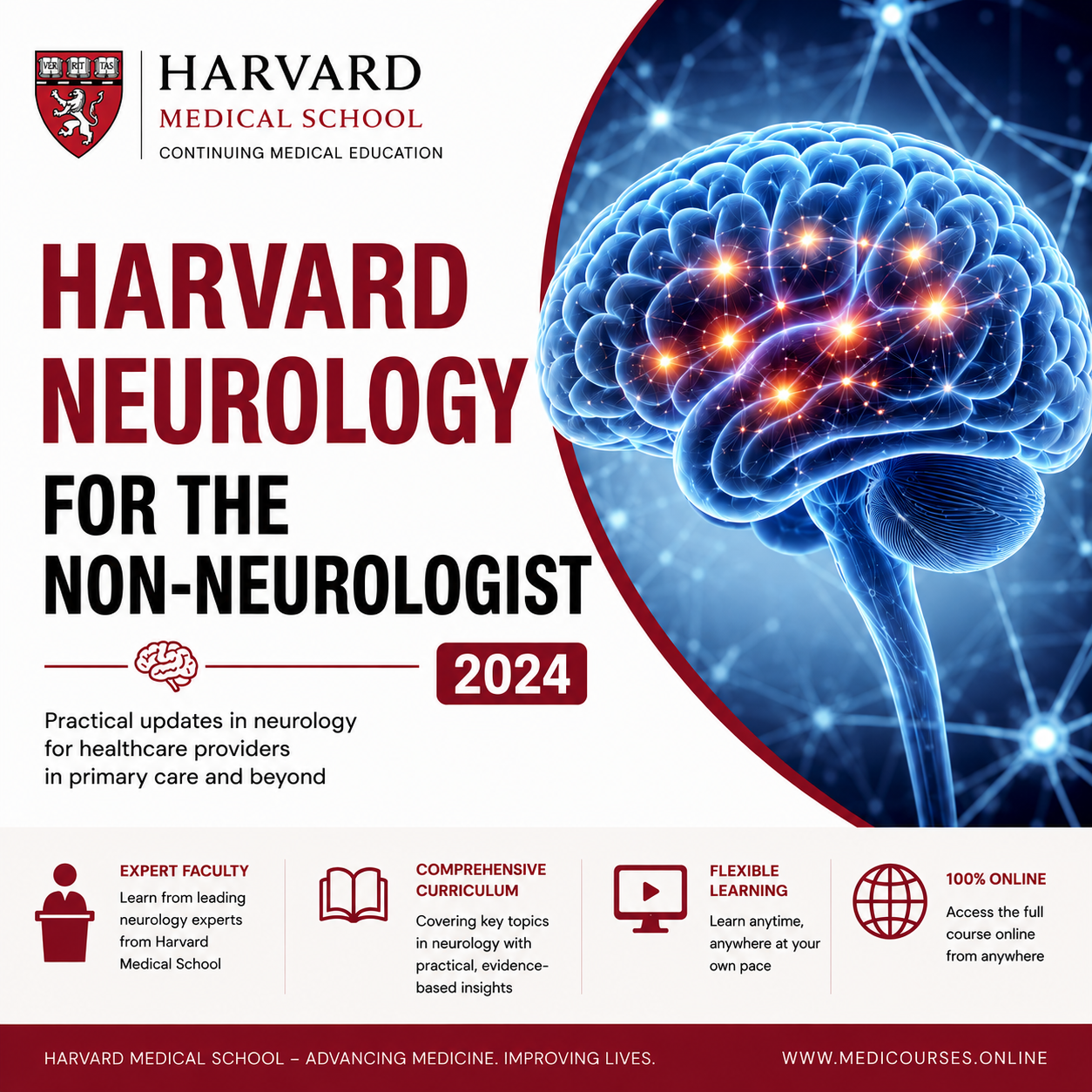
Harvard Neurology for the Non-Neurologist 2024
A practical neurology update designed for clinicians who are not neurologists but frequently evaluate patients with neurological symptoms. This course focuses on neurological history, neurological examination, common neurologic problems, emergency recognition, chronic neurologic disease support, and practical clinical decision-making.
Harvard Neurology for the Non-Neurologist 2024 is a recorded medical course focused on helping non-neurology clinicians improve their ability to diagnose, manage, and triage patients presenting with neurological symptoms and disorders.
Focus: Neurological history, neurological exam, headache, vision changes, weakness, dizziness, cognitive changes, Parkinson’s disease, ischemic stroke, dementia, multiple sclerosis, meningitis, encephalitis, chronic neurologic disease support, and neurological emergencies.
About This Course
Neurological symptoms are common in primary care, psychiatry, internal medicine, emergency care, and specialty practice. Many patients present first to a non-neurologist with headache, dizziness, weakness, cognitive symptoms, visual complaints, gait problems, tremor, seizure-like events, or possible stroke.
This course provides a practical framework for evaluating these presentations, performing a focused neurologic examination, recognizing common disorders, identifying urgent conditions, and deciding which patients can be managed directly and which require neurology referral.
Why Choose This Course
Key Highlights
- Practical neurology update designed specifically for non-neurologists
- Focuses on neurological history, exam skills, diagnosis, and triage
- Covers common presentations such as headache, dizziness, weakness, vision changes, and cognitive concerns
- Includes major neurologic conditions such as Parkinson’s disease, ischemic stroke, dementia, and multiple sclerosis
- Helps clinicians recognize neurological emergencies such as stroke, meningitis, and encephalitis
- Useful for primary care physicians, specialty physicians, APPs, psychiatrists, residents, fellows, NPs, and PAs
Core Learning Areas
Complete Curriculum
Neurology Foundations for Non-Neurologists
- How to approach neurological symptoms in everyday clinical practice
- Neurological history-taking for non-neurology clinicians
- Clinical localization and diagnostic reasoning
- Building a focused neurological differential diagnosis
- Identifying red flags that require urgent evaluation
- Understanding when to manage and when to refer
Neurological Examination
- Approach to the neurological exam
- Basic and advanced neurological exam skills
- Motor, sensory, reflex, coordination, cranial nerve, cognitive, and gait assessment
- Focused exam techniques for headache, weakness, sensory change, cognitive concerns, and gait abnormalities
- Using exam findings to guide workup and differential diagnosis
- Practical examination pearls for non-neurologists
Common Neurological Symptoms
- Approach to headache
- Vision changes and visual symptoms
- Weakness and neuromuscular complaints
- Dizziness and imbalance
- Cognitive changes and memory concerns
- Gait abnormalities
- Sensory symptoms and numbness
- Symptom patterns that suggest urgent neurological disease
Common Neurologic Conditions
- Headache disorders
- Parkinson’s disease
- Dementia and cognitive decline
- Ischemic stroke
- Multiple sclerosis
- Chronic neurologic conditions requiring self-management support
- Neurologic symptoms commonly seen in primary care and specialty practice
Neurological Emergencies
- Recognition and management of ischemic stroke
- Initial approach to acute neurological deficits
- Meningitis and encephalitis recognition
- Urgent neurologic presentations that require immediate referral
- Emergency workup and triage principles
- Communicating with neurology and emergency teams
Chronic Neurological Disease Support
- Supporting patients with chronic neurological conditions
- Self-management strategies for multiple sclerosis
- Self-management strategies for Parkinson’s disease
- Self-management strategies for dementia
- Longitudinal care coordination
- Patient education and practical follow-up planning
Interactive Learning & Case-Based Review
- Presentations from neurology experts
- Question-and-answer learning format
- Multiple-choice style review
- Case-based clinical reasoning
- Practical neurologic exam demonstrations
- Opportunities to connect symptoms, exam findings, and diagnosis
Learning Objectives
By Completing This Course, You Will Be Able To:
- Review the neurological history and approach to the neurological exam
- Recognize how to diagnose common neurological problems such as headache, Parkinson’s disease, ischemic stroke, and dementia
- Apply an approach to common neurological symptoms including headache, vision changes, weakness, dizziness, and cognitive changes
- Apply optimal care to patients with neurological problems who do not require referral to a neurologist
- Identify ways to provide self-management support to patients with chronic neurological conditions such as multiple sclerosis, Parkinson’s disease, or dementia
- Recognize and manage neurological emergencies such as ischemic stroke, meningitis, and encephalitis
- Use neurological exam findings to build a differential diagnosis and guide further workup
Who Should Take This Course
This course is designed for specialty physicians, primary care physicians, psychiatrists, physician assistants, nurse practitioners, internists, family physicians, hospitalists, residents, fellows, and clinicians who evaluate patients with neurological symptoms but are not neurologists.
Delivery & Access
This course package is provided for recorded learning access. No CME points or certificate are associated with this product.
Reviews
A practical course for non-neurologists. The approach to headache, dizziness, weakness, and cognitive symptoms is very useful for daily clinical work.
Excellent neurology refresher for primary care and specialty clinicians. The neurological exam section is clear and clinically relevant.
Strong course for improving confidence with neurologic presentations. The stroke, dementia, and emergency topics are especially helpful.
FAQ
Who is this course best suited for?
It is ideal for specialty physicians, primary care physicians, APPs, psychiatrists, internists, family physicians, hospitalists, NPs, PAs, residents, fellows, and clinicians who evaluate neurological symptoms but are not neurologists.
What topics are covered?
The course covers neurological history, neurological examination, headache, Parkinson’s disease, ischemic stroke, dementia, vision changes, weakness, dizziness, cognitive changes, multiple sclerosis, chronic neurologic disease support, meningitis, encephalitis, and neurological emergencies.
Is this course practical for non-neurologists?
Yes. The course is designed specifically to help non-neurology clinicians diagnose, manage, and triage common neurological symptoms and disorders.
Does this product include CME or a certificate?
No. This course package does not include CME points or a certificate.
Who can I contact for support?
You can contact us at [email protected].
Reviews
There are no reviews yet.