
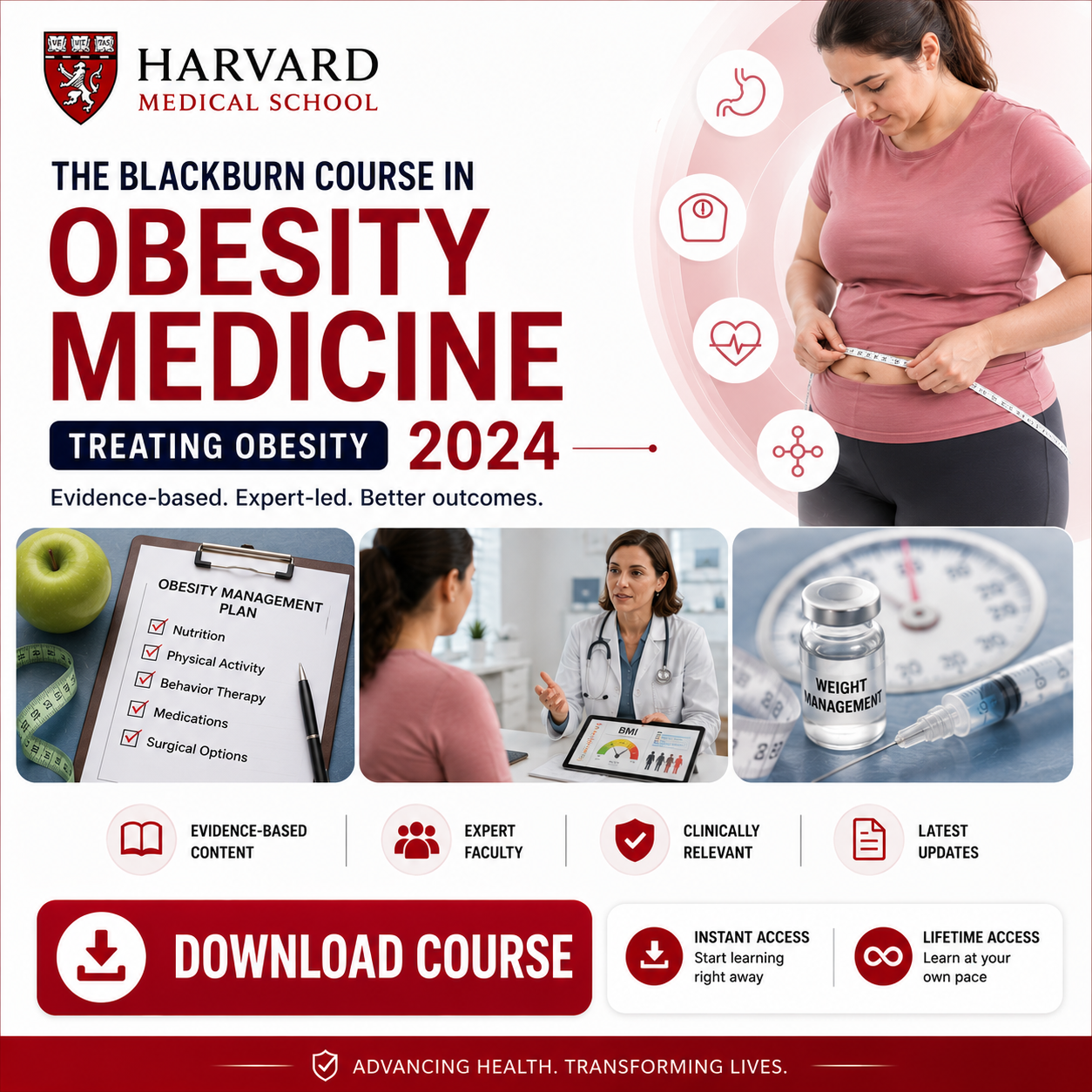
Harvard The Blackburn Course in Obesity Medicine: Treating Obesity 2024
A comprehensive Harvard obesity medicine course designed to help clinicians improve the evaluation, prevention, and treatment of obesity and its complications through updated strategies in lifestyle therapy, pharmacotherapy, GLP-1 based treatments, bariatric surgery, pediatric obesity, genetic obesity, metabolic disease, and patient-centered counseling.
Course Details:
Harvard The Blackburn Course in Obesity Medicine: Treating Obesity 2024 is a recorded medical course focused on practical strategies to optimize the management of obesity, obesity-related complications, and metabolic disorders.
Focus: Comprehensive obesity evaluation, high-risk obesity, lifestyle-based treatment, nutrition, physical activity, behavioral therapy, counseling and motivation techniques, GLP-1 based therapies, anti-obesity pharmacotherapy, bariatric surgery, pediatric obesity, genetic obesity, metabolic disorders, obesity medicine practice development, and ABOM board review preparation.
About This Course
Obesity is one of the most important and complex conditions in modern clinical practice. Effective treatment requires a structured approach that includes medical evaluation, lifestyle therapy, behavioral strategies, pharmacologic treatment, surgical options, and long-term support.
Harvard The Blackburn Course in Obesity Medicine: Treating Obesity 2024 provides practical and up-to-date education for clinicians who manage patients with obesity and related complications.
The program includes didactic lectures, panel discussions, clinical case learning, and board review concepts to help clinicians improve obesity prevention, treatment planning, communication, and long-term patient outcomes.
Why Choose This Course
- Harvard 2024 course focused on obesity medicine and treating obesity
- Comprehensive evaluation of patients with obesity and obesity-related complications
- Updated guidance on newer GLP-1 based therapies and anti-obesity pharmacotherapy
- Practical strategies for lifestyle-based therapy, nutrition, physical activity, and behavioral intervention
- Includes obesity treatment in children and adolescents
- Covers bariatric surgery, post-surgical outcomes, genetic obesity, metabolic disease, and precision medicine approaches
- Includes obesity medicine board review content for clinicians preparing for ABOM certification
- Designed for physicians, advanced practice providers, dietitians, psychologists, surgeons, pediatric clinicians, endocrinologists, internists, and obesity medicine professionals
Core Learning Areas
Obesity Evaluation
Comprehensive assessment of patients with obesity, obesity-related disease burden, high-risk obesity, complications, and individualized treatment planning.
Lifestyle & Behavior
Nutrition, physical activity, behavioral therapy, counseling skills, motivation techniques, patient communication, and long-term support strategies.
Medication & Surgery
GLP-1 based therapies, anti-obesity pharmacotherapy, bariatric surgery evaluation, surgical options, and optimizing outcomes after bariatric surgery.
Board Review & Practice
ABOM board review topics, genetic obesity, pediatric management, obesity comorbidities, practice development, reimbursement, and challenging cases.
Complete Curriculum
- Modern understanding of obesity as a chronic medical condition
- Causes and consequences of obesity
- Clinical evaluation of patients with obesity
- Identifying patients with high-risk obesity
- Understanding obesity-related complications and comorbidities
- Developing individualized treatment plans
- Improving communication about obesity with patients and healthcare teams
- Nutrition assessment and intervention
- Physical activity assessment and intervention
- Intensive lifestyle therapy for obesity
- Behavioral modification techniques
- Effective counseling and motivation strategies
- Building long-term adherence and patient engagement
- Using lifestyle interventions to improve metabolic outcomes
- Current pharmacologic approaches to obesity treatment
- Update on newer GLP-1 based therapies
- Anti-obesity medication selection and treatment planning
- Monitoring medication response and adverse effects
- Using pharmacotherapy as part of comprehensive obesity care
- Clinical considerations for patients with obesity-related metabolic disorders
- Emerging precision medicine approaches to obesity and metabolic disease
- Assessing appropriateness for bariatric surgery
- Understanding bariatric surgical options
- Preoperative evaluation and patient selection
- Optimizing medical outcomes after bariatric surgery
- Managing obesity-related complications after surgery
- Long-term monitoring and nutritional considerations
- Integrating surgical and medical obesity care
- Medical treatment of children and adolescents with obesity
- Surgical treatment considerations for pediatric obesity
- Family-centered obesity care
- Behavioral and lifestyle strategies for children and adolescents
- Pediatric patient management for obesity medicine practice
- Obesity-related comorbidities in young patients
- Long-term prevention strategies for pediatric obesity
- Emerging strategies and therapies for genetic obesity
- Genetic and syndromic obesity concepts
- Precision medicine approaches to obesity and metabolic disorders
- Understanding metabolic pathways and obesity-related disease
- How diet influences metabolic processes
- Clinical implications of genetic obesity recognition
- Applying modern metabolic knowledge to obesity treatment
- Pathophysiology of obesity
- Obesity comorbidities
- Pediatric patient management
- Genetic and syndromic obesity
- Nutrition and exercise assessment and intervention
- Intensive lifestyle and behavioral therapy
- Anti-obesity pharmacotherapy
- Bariatric surgery principles
- Building and maintaining a successful obesity medicine practice
- Obesity medicine in primary care settings
- Multidisciplinary obesity care center models
- Standalone obesity medicine specialty private practice considerations
- Communicating with referring providers, payers, employers, and policymakers
- Understanding the global burden of obesity-associated disease
- Receiving guidance for challenging obesity medicine cases
Learning Objectives
- Identify, evaluate, and manage patients with high-risk obesity
- Provide lifestyle-based therapies for obesity using nutrition, physical activity, and behavioral approaches
- Apply effective counseling and behavioral modification techniques
- Use current pharmacological approaches for the treatment of obesity
- Understand newer GLP-1 based therapies and their clinical role in obesity care
- Assess patients for bariatric surgery and understand available surgical options
- Improve medical outcomes after bariatric surgery through structured follow-up and monitoring
- Recognize pediatric obesity management strategies and special considerations for children and adolescents
- Review genetic obesity, syndromic obesity, and emerging precision medicine strategies
- Strengthen obesity medicine practice development, communication, and board review preparation
Who Should Take This Course
This course is designed for physicians, internists, endocrinologists, family medicine physicians, primary care clinicians, pediatricians, bariatric specialists, surgeons, nurse practitioners, physician assistants, dietitians, psychologists, residents, fellows, and healthcare professionals involved in obesity prevention and treatment.
It is especially useful for clinicians who manage patients with obesity, metabolic disease, diabetes, cardiovascular risk, bariatric surgery needs, pediatric obesity, or complex obesity-related complications.
Delivery & Access
Recorded Course
Review the obesity medicine course material at your own pace.
2024 Edition
Updated obesity prevention and treatment strategies for 2024.
Board Review
Includes obesity medicine board review concepts for ABOM preparation.
Support
Course Highlights
Comprehensive Obesity Care
Covers evaluation, lifestyle therapy, pharmacotherapy, bariatric surgery, pediatric obesity, genetic obesity, and long-term patient management.
GLP-1 & Modern Therapies
Includes updated discussion of newer GLP-1 based therapies, anti-obesity medications, and emerging approaches to metabolic disease.
Board Review Focus
Includes obesity medicine board review concepts covering pathophysiology, comorbidities, lifestyle therapy, pharmacotherapy, and surgery.
FAQ
Who is this course best suited for?
This course is best suited for physicians, primary care clinicians, internists, endocrinologists, pediatricians, obesity medicine clinicians, bariatric specialists, surgeons, nurse practitioners, physician assistants, dietitians, psychologists, residents, fellows, and healthcare professionals involved in obesity care.
What topics are covered?
Topics include obesity evaluation, high-risk obesity, lifestyle therapy, nutrition, physical activity, behavioral therapy, counseling, GLP-1 based therapies, anti-obesity pharmacotherapy, bariatric surgery, pediatric obesity, genetic obesity, metabolic disease, ABOM board review, and obesity medicine practice development.
Does this course include obesity medicine board review?
Yes. The course includes board review concepts useful for clinicians preparing for the American Board of Obesity Medicine certification examination.
Is this course practical for daily obesity care?
Yes. The course focuses on practical strategies for obesity evaluation, treatment selection, lifestyle counseling, medication use, bariatric surgery assessment, and long-term patient care.
Is this a recorded course?
Yes. This product is provided as recorded course access so you can review the material at your own pace.
Does this course include CME or a certificate?
No. CME credits and certificates are not included with this course package.
Who can I contact for support?
You can contact support at [email protected].
Reviews
There are no reviews yet.