
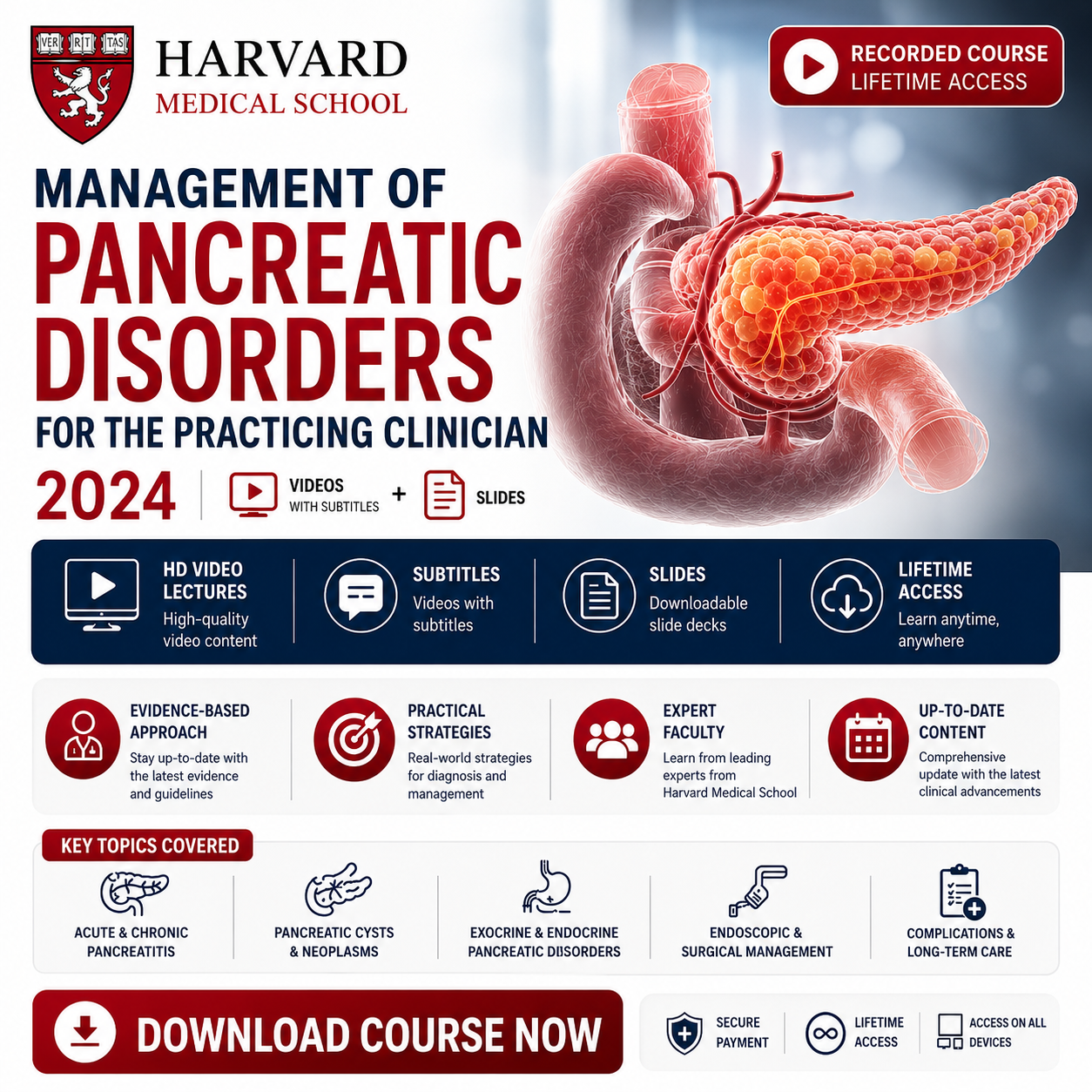
Harvard Management of Pancreatic Disorders for the Practicing Clinician 2024
A practical clinical course focused on the evaluation and management of pancreatic disorders, including acute pancreatitis, chronic pancreatitis, pancreatic cysts, pancreatic cancer, pancreaticobiliary imaging, endoscopic management, nutrition, pain control, complications, and multidisciplinary care.
Harvard Management of Pancreatic Disorders for the Practicing Clinician 2024 is a recorded medical course designed to help clinicians improve diagnosis, treatment, risk stratification, and multidisciplinary management of common and complex pancreatic diseases.
Focus: Acute pancreatitis, chronic pancreatitis, pancreatic cystic lesions, pancreatic cancer, pancreatic duct disorders, pancreaticobiliary imaging, EUS, ERCP, endoscopic interventions, pain management, nutrition, complications, and clinical decision-making.
About This Course
Pancreatic disorders are often complex and require careful integration of clinical presentation, laboratory testing, advanced imaging, endoscopic evaluation, pathology, nutrition, and surgical or oncologic decision-making.
This course provides practicing clinicians with a structured update on pancreatic disease management, helping them recognize high-risk presentations, choose appropriate diagnostic tests, manage complications, and coordinate care across gastroenterology, surgery, radiology, oncology, nutrition, and primary care.
Why Choose This Course
Key Highlights
- Focused 2024 clinical update on pancreatic disorders
- Practical approach for clinicians managing pancreatic disease in daily practice
- Covers acute and chronic pancreatitis, pancreatic cysts, and pancreatic cancer
- Includes diagnostic imaging, EUS, ERCP, endoscopic therapy, and multidisciplinary management
- Addresses pain, nutrition, exocrine insufficiency, diabetes, and long-term complications
- Useful for gastroenterologists, internists, surgeons, oncologists, hospitalists, primary care physicians, fellows, and advanced practice clinicians
Core Learning Areas
Complete Curriculum
Pancreatic Disease Foundations
- Clinical approach to pancreatic disorders
- Pancreatic anatomy, physiology, and disease mechanisms
- Diagnostic evaluation of pancreatic symptoms
- Approach to abdominal pain, jaundice, weight loss, and abnormal imaging
- Choosing appropriate laboratory tests and imaging studies
- When to refer to gastroenterology, surgery, oncology, or advanced endoscopy
Acute Pancreatitis
- Diagnosis and classification of acute pancreatitis
- Determining etiology: gallstones, alcohol, triglycerides, medications, and other causes
- Risk stratification and severity assessment
- Early management and fluid resuscitation
- Nutrition in acute pancreatitis
- Management of infected necrosis and pancreatic fluid collections
- Pseudocysts and walled-off necrosis
- Endoscopic, radiologic, and surgical approaches to complications
Chronic Pancreatitis
- Diagnosis and classification of chronic pancreatitis
- Risk factors and etiologies of chronic pancreatic inflammation
- Pancreatic pain management
- Exocrine pancreatic insufficiency
- Pancreatic enzyme replacement therapy
- Diabetes related to pancreatic disease
- Endoscopic therapy for ductal strictures and stones
- Surgical options for refractory disease
Pancreatic Cysts and Premalignant Lesions
- Evaluation of pancreatic cystic lesions
- IPMN, mucinous cystic neoplasms, serous cystadenoma, and cyst mimics
- Risk stratification for malignancy
- Role of MRI/MRCP, CT, EUS, and cyst fluid analysis
- Surveillance strategies for pancreatic cysts
- When to refer for surgery
- Patient counseling and shared decision-making
Pancreatic Cancer
- Early recognition of pancreatic cancer symptoms and risk factors
- Diagnostic imaging and staging
- EUS-guided tissue acquisition
- Management of biliary obstruction
- Resectable, borderline resectable, locally advanced, and metastatic disease
- Multidisciplinary pancreatic cancer care
- Genetic testing, high-risk screening, and familial pancreatic cancer considerations
Endoscopy, ERCP and Advanced Interventions
- Role of EUS in pancreatic disease
- Role of ERCP in pancreaticobiliary disorders
- Pancreatic duct strictures and stones
- Endoscopic drainage of pancreatic fluid collections
- Biliary obstruction and stenting
- Complication prevention and management in pancreatic endoscopy
- Decision-making between endoscopic, radiologic, and surgical interventions
Nutrition, Pain and Long-Term Care
- Nutritional assessment in pancreatic disease
- Malabsorption and pancreatic enzyme replacement
- Diabetes management in pancreatic disorders
- Chronic pain strategies and opioid-sparing approaches
- Lifestyle counseling and alcohol/tobacco risk reduction
- Long-term surveillance and follow-up care
- Patient education and coordination with multidisciplinary teams
Learning Objectives
By Completing This Course, You Will Be Able To:
- Apply a structured clinical approach to pancreatic disorders
- Diagnose and risk-stratify acute pancreatitis and chronic pancreatitis
- Recognize complications of pancreatic disease and choose appropriate management strategies
- Evaluate pancreatic cysts and identify features that require surveillance or surgical referral
- Improve diagnostic workup and multidisciplinary management of pancreatic cancer
- Use imaging, EUS, ERCP, and advanced endoscopic techniques appropriately
- Manage pancreatic pain, malnutrition, exocrine insufficiency, and pancreatic diabetes more effectively
Who Should Take This Course
This course is designed for gastroenterologists, internists, hospitalists, primary care physicians, surgeons, oncologists, radiologists, advanced endoscopists, nurse practitioners, physician assistants, residents, fellows, and healthcare professionals involved in the diagnosis or management of pancreatic disorders.
Delivery & Access
This course package is provided for recorded learning access. No CME points or certificate are associated with this product.
Reviews
A very practical pancreatic disorders course. The pancreatitis, cyst, and pancreatic cancer sections are highly relevant to clinical practice.
Clear and clinically focused. The endoscopy, imaging, and multidisciplinary management sections were especially useful.
Excellent resource for clinicians managing complex pancreatic disease. The course is organized and practical for daily patient care.
FAQ
Who is this course best suited for?
It is ideal for gastroenterologists, internists, hospitalists, primary care physicians, surgeons, oncologists, radiologists, advanced endoscopists, NPs, PAs, residents, fellows, and clinicians involved in pancreatic disease care.
What topics are covered?
The course covers acute pancreatitis, chronic pancreatitis, pancreatic cysts, pancreatic cancer, pancreaticobiliary imaging, EUS, ERCP, endoscopic therapy, pain control, nutrition, exocrine insufficiency, pancreatic diabetes, biliary obstruction, complications, and multidisciplinary care.
Is this course practical for daily clinical care?
Yes. The course is designed for practicing clinicians and focuses on real-world diagnostic and management decisions in pancreatic disorders.
Does this product include CME or a certificate?
No. This course package does not include CME points or a certificate.
Who can I contact for support?
You can contact us at [email protected].


Dr. Ethan Carter –
"This course provides comprehensive insights into pancreatic management, and having the recordings available on Google Drive makes it incredibly convenient. I appreciate being able to review sessions at my leisure to reinforce my understanding."
Dr. James Patel –
"The expert faculty leading this course are truly outstanding. Their knowledge and experience in the field of pancreatic disorders provide invaluable perspectives that enhance the learning experience."
Dr. Lisa Nguyen –
"Great for Continuing Education!" "This course is great for continuing education. The focus on current research and clinical guidelines ensures that I am equipped with the most relevant information to improve patient care in my practice."
Dr. Kevin Brown –
"The user-friendly format of the course materials makes it easy to navigate and find essential information. The resources provided are practical and will be useful long after the course ends."
Dr. Sarah Thompson –
"Invaluable Insights for Clinicians!" "The Harvard course on pancreatic disorders offers invaluable insights for clinicians. The expert-led sessions and evidence-based guidelines have significantly enhanced my understanding and management of these complex conditions."
Dr. Olivia Johnson –
"The Harvard course on pancreatic disorders is excellent, especially with recorded sessions uploaded to Google Drive. This flexibility allows me to learn at my own pace and revisit complex topics whenever necessary—truly invaluable for my practice!"
Dr. Michael Chen –
"Comprehensive and Up-to-Date!" "This 2024 course is comprehensive and up-to-date, covering the latest advancements in the diagnosis and treatment of pancreatic disorders. The depth of content is impressive and relevant for daily clinical practice."
Dr. Emily Rodriguez –
"The course is engaging and practical, with real-world case studies that help apply theoretical knowledge. The interactive format encourages participation, making it a highly effective learning experience."
Dr. Mia Patel –
"I found the course engaging and informative, and the recorded sessions on Google Drive are a fantastic feature. It allows me to participate actively and then replay lectures to ensure I grasp all the critical details."