
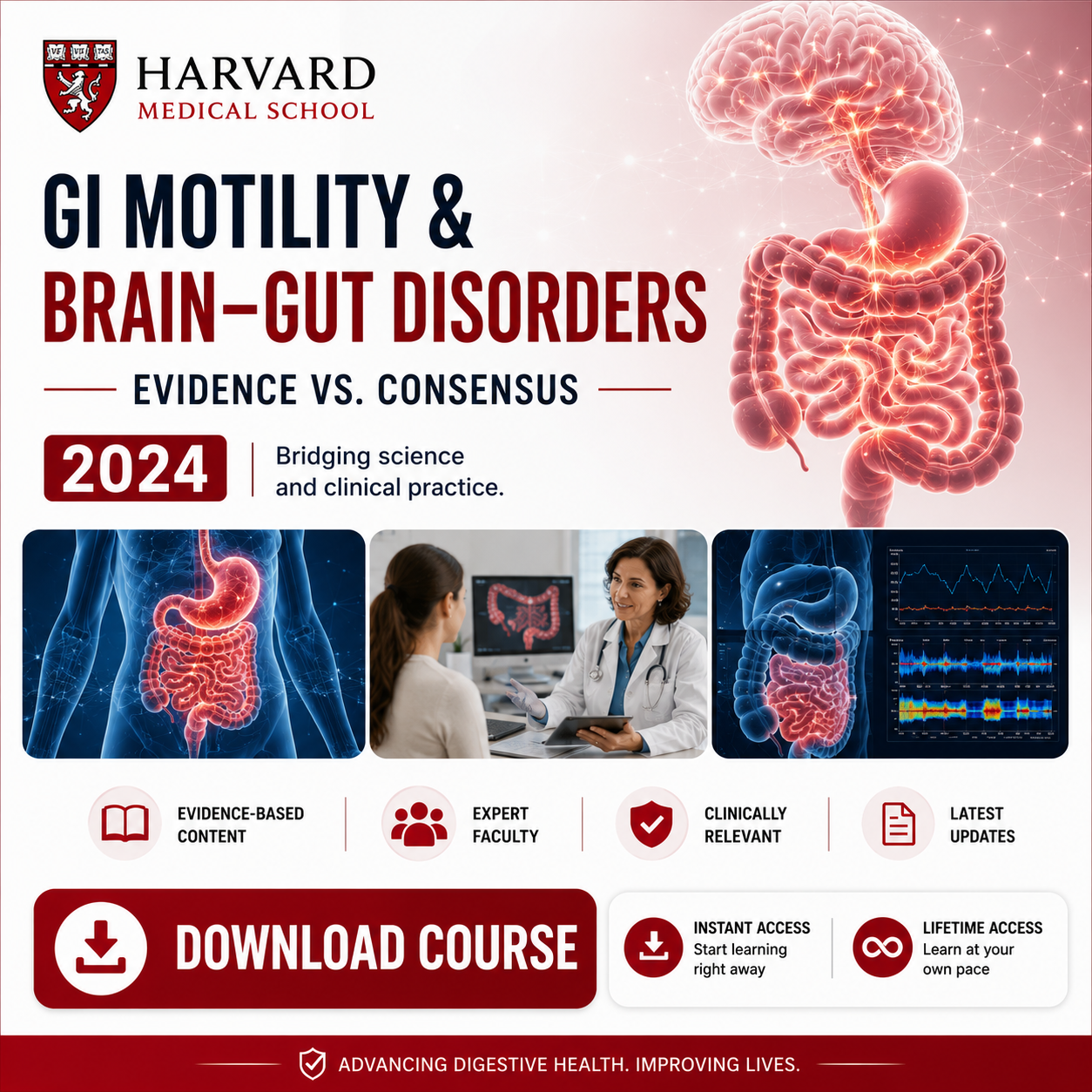
Harvard GI Motility & Brain-Gut Disorders: Evidence vs Consensus 2024
A focused neurogastroenterology and motility course designed to help clinicians evaluate, treat, and manage patients with esophageal disorders, reflux, swallowing problems, gastric and small bowel dysmotility, colonic and anorectal disorders, gut-brain interaction conditions, and emerging GI motility therapies.
Harvard GI Motility & Brain-Gut Disorders: Evidence vs Consensus 2024 is a recorded medical course focused on neurogastroenterology, motility disorders, reflux testing, dysphagia, gastric and small bowel conditions, colonic and anorectal disorders, behavioral therapies, GI technology, and practical case-based clinical management.
Focus: Esophageal conditions, swallowing disorders, acid reflux, gastric motility, colonic function, anorectal testing, motility workshops, digital tools, AI, and behavioral/psychological interventions.
About This Course
GI motility and brain-gut disorders are common, complex, and often challenging in both primary and subspecialty care. New diagnostic techniques and therapies continue to evolve, while many management decisions still require balancing evidence-based medicine with expert clinical judgment.
This course brings together case-based panel discussions, mini-lectures, practical workshops, breakout sessions, and clinically focused teaching to help clinicians develop stronger strategies for diagnosing and managing motility and disorders of gut-brain interaction.
Why Choose This Course
Key Highlights
- Focused 2024 update in neurogastroenterology and GI motility
- Case-based panel discussions and practical clinical sessions
- Covers esophageal, gastric, small bowel, colonic, and anorectal disorders
- Includes workshops on motility testing, reflux monitoring, breath testing, and EndoFLIP
- Explores behavioral and psychological therapies for disorders of gut-brain interaction
- Includes updates on digital apps, virtual reality, AI, and technology for dysmotility care
Core Learning Areas
Complete Curriculum
Morning Case-Based Sessions
- Gastric and small bowel cases
- Esophageal cases
- Colon and anorectal cases
- Panel discussions with multidisciplinary GI experts
- Evidence-based and consensus-based clinical reasoning
- Practical strategies for common and complex motility presentations
Esophageal Conditions & Reflux Disorders
- Evaluation and management of swallowing problems
- How to approach oropharyngeal dysphagia
- Acid reflux disorders and reflux testing
- Esophageal manometry interpretation
- pH/impedance testing and reflux monitoring
- EndoFLIP and FLIP panometry applications
Gastric, Small Bowel & Dietary Therapy
- Gastric and small bowel testing
- Breath testing for GI disorders
- Dietary therapy for GI disorders
- The effect of anti-obesity medications including GLP-1 agonists on the GI tract
- Diagnostic strategies for motility and function disorders
- Emerging therapies in gastric and small bowel dysmotility
Colon, Anorectal & Pelvic Floor Disorders
- Colon and anorectal case discussions
- Anorectal manometry
- Pelvic floor physical therapy for motility and GI issues
- Functional bowel disease management
- Constipation and anorectal dysfunction
- Practical testing and treatment strategies
Advanced Practice Provider Sessions
- The role of advanced practice providers in GI care
- Updates on marijuana therapies for GI disorders
- Identifying appropriate referral candidates
- Red flags for medical stability in ARFID and eating disorders
- What GI APPs should know in complex patient care
- Anal Paps: who, what, and how
Behavioral & Psychological Interventions
- Practical guidance for integrating behavioral interventions into GI practice
- Importance and feasibility of integrated GI care
- Integrating psychology into the GI clinic
- Introduction to common brain-gut behavioral therapies
- Diaphragmatic breathing exercise demonstration
- How and why to teach diaphragmatic breathing
Technology, AI & Advanced Testing
- Digital apps for dysmotility and disorders of gut-brain interaction
- Virtual reality applications in GI care
- Artificial intelligence and emerging technologies
- Motility and reflux testing tracing review
- Fake-out artifacts in motility testing
- Clinical interpretation of GI motility tests
Learning Objectives
By Completing This Course, You Will Be Able To:
- Evaluate, treat, and manage adult and pediatric patients with esophageal conditions
- Improve clinical approaches to swallowing problems and acid reflux disorders
- Implement strategies for gastric, small bowel, colonic, and anorectal motility diseases
- Distinguish between current and emerging diagnostic tests and GI motility therapies
- Interpret clinically available GI motility tests more confidently
- Integrate behavioral and psychological interventions into GI care
- Apply evidence-based and expert-consensus approaches to complex brain-gut disorders
Who Should Take This Course
This course is designed for nurse practitioners, physician assistants, nurses, specialty physicians, primary care physicians, gastroenterologists, surgeons, internists, pediatric and adolescent medicine clinicians, family medicine clinicians, lifestyle medicine professionals, mind-body medicine clinicians, and healthcare professionals involved in GI motility, neurogastroenterology, reflux, dysphagia, and disorders of gut-brain interaction.
Delivery & Access
This course package is provided for recorded learning access. No CME points or certificate are associated with this product.
Reviews
A very practical motility course. The esophageal and anorectal testing sections were especially helpful for real-world GI practice.
Excellent for understanding complex brain-gut disorders. The case discussions and behavioral therapy sessions made the material easier to apply.
The APP-focused sessions and practical testing workshops were extremely useful for daily GI care and patient triage.
FAQ
Who is this course best suited for?
It is ideal for nurse practitioners, physician assistants, nurses, specialty physicians, primary care physicians, gastroenterologists, surgeons, internists, pediatric clinicians, family medicine clinicians, and providers involved in GI motility and brain-gut disorders.
What topics are covered?
The course covers esophageal disorders, dysphagia, acid reflux, gastric and small bowel motility, colonic and anorectal disorders, esophageal manometry, reflux monitoring, breath testing, EndoFLIP, anorectal manometry, pelvic floor therapy, APP GI care, behavioral therapies, diaphragmatic breathing, digital apps, virtual reality, AI, and motility testing interpretation.
Is this course practical for daily GI practice?
Yes. The course uses case-based discussions, practical workshops, breakout classes, and clinically focused sessions to support real-world diagnosis and management of motility and brain-gut disorders.
Does this product include CME or a certificate?
No. This course package does not include CME points or a certificate.
Who can I contact for support?
You can contact us at [email protected].
Reviews
There are no reviews yet.