
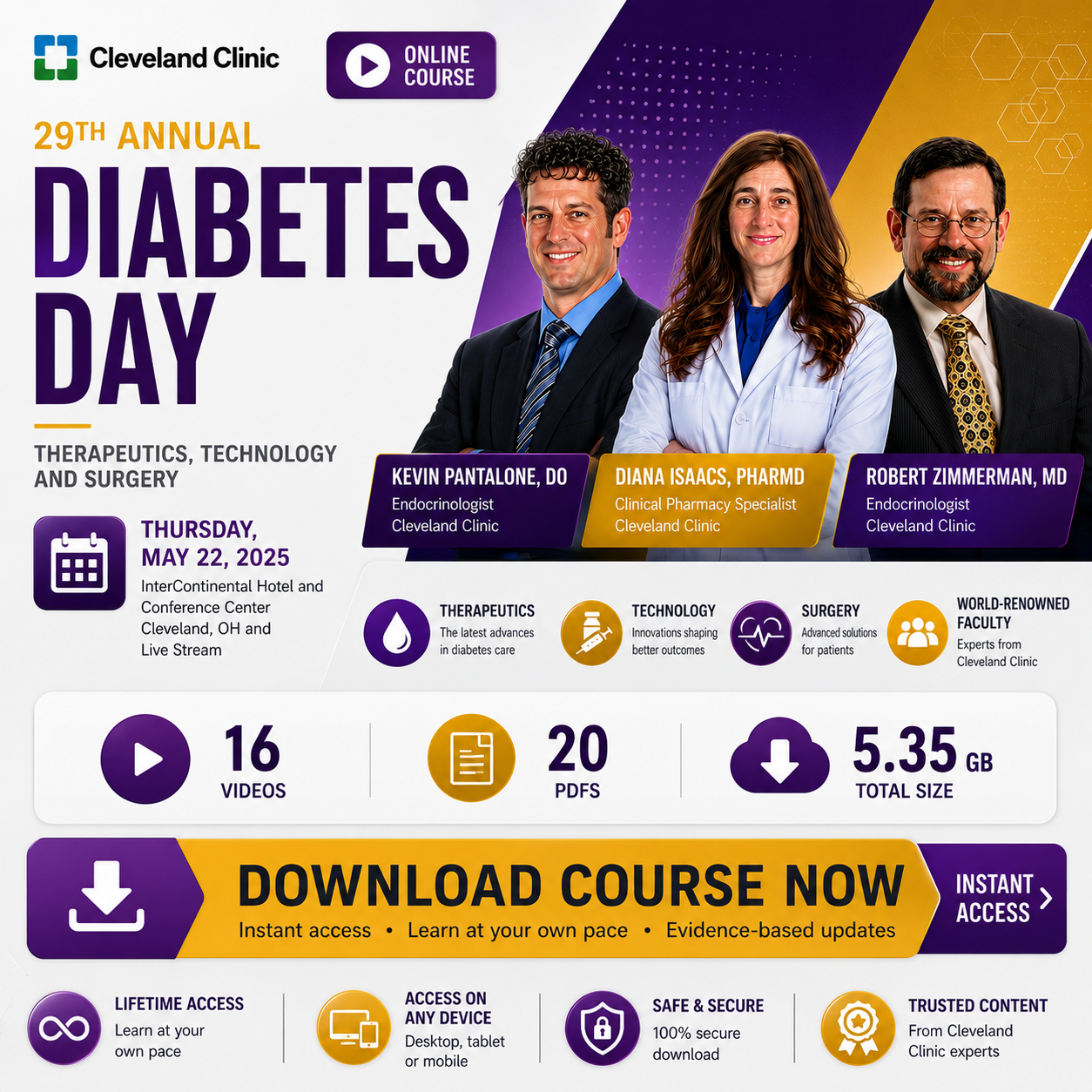
Cleveland Clinic 29th Annual Diabetes Day 2025
A focused Cleveland Clinic diabetes update designed to help clinicians improve the care of patients with type 1 and type 2 diabetes, diabetes technology needs, obesity-related metabolic risk, glucose variability, diabetes complications, GLP-1 therapy questions, insulin pump updates, CGM use, pregnancy-related diabetes management, and complex diabetes treatment decisions.
Course Details:
Cleveland Clinic 29th Annual Diabetes Day 2025 includes 16 recorded videos and 20 PDF resources, providing up-to-date reviews of diabetes management strategies, diabetes technology, therapeutic advances, and complications of diabetes.
Focus: Type 1 diabetes, type 2 diabetes, hybrid closed-loop pumps, insulin pumps in pregnancy, continuous glucose monitoring, glucose variability, prediabetes prevention, nutritional supplements, berberine, oral GLP-1 receptor agonists, multi-agonist therapy, SGLT-2 inhibitors, mineralocorticoid receptor antagonists, GLP-1 complications, dementia risk, intensive blood pressure control, cardiovascular and renal complications, post-gastric bypass hypoglycemia, ultra-long-acting insulin, exercise-induced hypoglycemia, diabetes distress, sleep apnea, muscle preservation during weight loss, and MASLD screening.
About This Course
Diabetes care continues to evolve rapidly with new therapies, new diabetes technologies, updated risk-reduction strategies, and expanding evidence around obesity, cardiovascular disease, kidney disease, glucose variability, and metabolic complications.
Cleveland Clinic 29th Annual Diabetes Day 2025 provides practical clinical updates for healthcare professionals who care for patients with diabetes and its complications. The course emphasizes evidence-based treatment decisions, technology use, metabolic risk reduction, and strategies that can improve clinical performance and patient outcomes.
This program is especially valuable for clinicians who want focused updates on diabetes therapeutics, continuous glucose monitoring, insulin pumps, GLP-1 receptor agonists, diabetes in pregnancy, post-bariatric hypoglycemia, obesity-related care, and complications of diabetes.
Why Choose This Course
- Cleveland Clinic 29th Annual Diabetes Day 2025
- Includes 16 recorded videos and 20 PDF resources
- Designed for endocrinologists, diabetes educators, physicians, nurses, nurse practitioners, pharmacists, physician assistants, residents, fellows, and diabetes care teams
- Reviews therapeutic options for type 1 and type 2 diabetes and their complications
- Includes updates on insulin pumps, hybrid closed-loop systems, continuous glucose monitoring, and new insulin therapies
- Explores GLP-1 receptor agonists, oral GLP-1 therapies, multi-agonist therapy, SGLT-2 inhibitors, and mineralocorticoid receptor antagonists
- Covers key diabetes complications including cardiovascular, renal, dementia-related, sleep apnea, MASLD, and post-gastric bypass hypoglycemia concerns
- Practical clinical focus designed to improve competence, performance, and patient outcomes
Core Learning Areas
Diabetes Technology
Hybrid closed-loop pumps, insulin pump updates, CGM workshops, pregnancy pump considerations, technology equity, access, and practical device management.
Modern Therapeutics
Oral GLP-1 receptor agonists, multi-agonist therapy, SGLT-2 inhibitors, mineralocorticoid receptor antagonists, ultra-long-acting insulin, and new treatment strategies.
Complications & Risk
Cardiovascular and renal complications, intensive blood pressure control, dementia risk, glucose variability, sleep apnea, MASLD, and post-bariatric hypoglycemia.
Lifestyle & Obesity Care
Prediabetes prevention, muscle preservation during weight loss, high-protein diet, high-fat and high-protein diet effects, exercise-related hypoglycemia, and nutrition supplements.
Complete Curriculum
- Up-to-date review of diabetes management strategies
- Research updates on complications of diabetes
- Therapeutic options for type 1 and type 2 diabetes
- Diabetes technology updates for clinical practice
- Clinical performance improvement in diabetes care
- Practical focus on improving patient outcomes
- Case-based and workshop-style learning across key diabetes topics
- New technology in diabetes care
- Equity and access challenges in diabetes technology
- Improving access to modern diabetes tools
- Clinical barriers to technology adoption
- Patient-centered technology selection
- Practical strategies for improving diabetes technology use
- Reducing disparities in device-based diabetes care
- Use of hybrid closed-loop pumps in pregnancy
- Type 1 diabetes and type 2 diabetes pregnancy considerations
- Evidence supporting hybrid closed-loop systems
- Initiation and monitoring of pump therapy during pregnancy
- Maternal and fetal glycemic risk reduction
- Practical device management in pregnancy
- Clinical decision-making for complex pregnancy-related diabetes care
- Preventing type 2 diabetes
- Current management of prediabetes
- Risk stratification for progression to type 2 diabetes
- Lifestyle and therapeutic approaches for prevention
- Patient counseling and early intervention strategies
- Long-term metabolic risk reduction
- Practical prevention strategies for primary care and endocrine practice
- Nutritional supplements in type 2 diabetes management
- Focus on berberine and glycemic control
- Clinical evidence behind supplement use
- Safety considerations and patient counseling
- How supplements fit into evidence-based diabetes care
- Common patient questions about supplements
- Practical guidance for integrating nutrition discussions into diabetes visits
- Oral GLP-1 receptor agonist updates
- Future directions in GLP-1 therapy
- Multi-agonist therapy in diabetes care
- Challenges in developing and implementing oral GLP-1 agonists
- New roles for GLP-1 receptor agonists
- Therapeutic sequencing and patient selection
- Clinical implications of incretin-based therapies in diabetes and obesity care
- Complications of GLP-1 receptor agonists
- Gastroparesis risk and clinical interpretation
- Pancreatitis concerns and evidence review
- Thyroid cancer concerns and available data
- Risk-benefit discussion with patients
- Monitoring and counseling during GLP-1 therapy
- Practical decision-making when adverse effects are suspected
- Increased dementia risk in patients with diabetes
- Mechanisms connecting diabetes and cognitive decline
- Prevention strategies for cognitive complications
- Risk-factor modification in diabetes care
- Patient counseling for long-term brain health
- Integration of cognitive risk into diabetes management
- Clinical strategies to support prevention and early recognition
- Effect of intensive blood pressure control in diabetes
- New insights from BP ROAD
- Cardiovascular complications in diabetes
- Renal complications in diabetes
- Role of SGLT-2 inhibitors and mineralocorticoid receptor antagonists
- Balancing benefit and safety in intensive risk-factor control
- Practical treatment strategies for cardiovascular and renal risk reduction
- Treatment of post-gastric bypass hypoglycemia
- Recognition of post-bariatric hypoglycemia patterns
- Dietary modifications and nutrition strategies
- Pharmacotherapy options
- Other interventions for difficult cases
- Monitoring and patient education
- Evidence-based strategies for improving symptoms and safety
- Ultra long-acting insulin updates
- Focus on efsitora alfa
- Practical considerations for initiation and titration
- Use in different patient populations
- Complex diabetes management scenarios
- Safety, monitoring, and treatment adjustment considerations
- Future directions in long-acting insulin therapy
- Use of insulin pumps in diabetes management
- Latest technology in insulin pumps
- Innovations in the last year
- Comparison of inhaled insulin and insulin pump therapy
- Patient selection for pump therapy
- Troubleshooting and education for pump users
- Practical updates for diabetes care teams using technology
- CGM workshop concepts
- Continuous glucose monitoring updates
- Using CGM data to guide treatment decisions
- Interpreting patterns, trends, and glucose variability
- Patient education and adherence with CGM
- Technology selection and practical workflow integration
- Improving outcomes through data-driven diabetes care
- Diabetes distress simulation and discussion
- Psychosocial burden of diabetes care
- Patient communication around diabetes burnout
- Behavioral support strategies
- Care team approaches to improving engagement
- Identifying barriers to adherence and self-management
- Patient-centered counseling for long-term diabetes care
- Prevention of exercise-induced hypoglycemia
- Metoclopramide and low-dose glucagon concepts
- Exercise planning for patients using insulin
- Risk assessment before physical activity
- Nutrition and medication adjustments around exercise
- Patient education for hypoglycemia prevention
- Practical strategies for safe physical activity in diabetes
- Screening for diabetes-related antibodies
- Prevention of type 1 diabetes progression
- Identifying individuals at risk
- Clinical implications of antibody screening
- Patient and family counseling
- Prevention strategies and monitoring
- Practical application of type 1 diabetes prevention concepts
- Importance of maintaining muscle mass during obesity management
- Preserving muscle mass with weight loss
- High-protein diet considerations
- Body composition and metabolic health
- Nutrition planning during weight reduction
- Balancing fat loss and lean mass preservation
- Practical counseling for patients with diabetes and obesity
- Implications of glucose variability on chronic complications
- Understanding glycemic excursions and risk
- Using CGM metrics to assess variability
- Impact of variability on diabetes outcomes
- Therapeutic strategies to reduce variability
- Patient education around patterns and triggers
- Improving long-term management through better glucose stability
- Effect of GLP-1/GIP agonists on sleep apnea
- Obesity, diabetes, and sleep-disordered breathing
- Clinical implications of weight-loss pharmacotherapy
- Patient selection and monitoring considerations
- Impact of metabolic therapy on sleep-related outcomes
- Coordinating diabetes, obesity, and sleep apnea care
- Practical takeaways for metabolic risk reduction
- MASH, NASH, NAFLD, and MASLD updates
- Who to screen for metabolic liver disease
- How to evaluate metabolic liver risk
- When to treat and when to refer
- Diabetes and obesity links to MASLD
- Risk stratification and practical clinical pathways
- Integrating liver screening into diabetes and metabolic care
Learning Objectives
- Review therapeutic options for managing type 1 and type 2 diabetes and their complications
- Critically appraise clinical evidence and guidelines supporting hybrid closed-loop systems in pregnancy
- Identify key considerations when initiating and monitoring hybrid closed-loop pumps during pregnancy
- Describe the efficacy of inhaled insulin compared with insulin pump therapy in diabetes management
- Discuss nutritional supplements in type 2 diabetes management, including berberine
- Summarize future directions and challenges in oral GLP-1 receptor agonists and multi-agonist therapy
- Review clinical evidence related to gastroparesis, pancreatitis, and thyroid cancer risk with GLP-1 receptor agonists
- Analyze current research on diabetes care challenges including dementia, intensive blood pressure control, cardiovascular risk, and renal complications
- Apply evidence-based treatment strategies for post-gastric bypass hypoglycemia
- Discuss practical considerations for initiating and titrating novel therapies such as efsitora alfa in complex diabetes patients
Who Should Take This Course
This course is designed for physicians, endocrinologists, diabetes educators, nurses, nurse practitioners, pharmacists, pharmacy technicians, physician assistants, residents, fellows, and other healthcare professionals who care for patients with diabetes.
It is especially useful for clinicians who manage type 1 diabetes, type 2 diabetes, prediabetes, obesity-related metabolic disease, diabetes technology, pregnancy-related diabetes, post-bariatric hypoglycemia, glucose variability, MASLD, and cardiovascular or renal complications of diabetes.
Delivery & Access
16 Videos
Recorded diabetes update sessions covering therapeutics, technology, complications, and metabolic care.
20 PDFs
Supporting PDF materials included for review, study, and clinical reference.
5.35 GB
Complete recorded course package with video and PDF learning materials.
Support
Course Highlights
Technology-Focused Update
Covers CGM, insulin pumps, hybrid closed-loop systems, pregnancy use, device access, and practical diabetes technology decisions.
Modern Therapy Review
Includes GLP-1 receptor agonists, multi-agonist therapy, SGLT-2 inhibitors, mineralocorticoid receptor antagonists, and ultra-long-acting insulin.
Complications & Outcomes
Reviews dementia risk, blood pressure control, cardiorenal complications, glucose variability, MASLD, sleep apnea, and post-bariatric hypoglycemia.
FAQ
Who is this course best suited for?
This course is best suited for physicians, endocrinologists, diabetes educators, nurses, nurse practitioners, pharmacists, pharmacy technicians, physician assistants, residents, fellows, and healthcare professionals who care for patients with diabetes.
What is included in this course?
The course includes 16 recorded videos and 20 PDF resources, with a total package size of 5.35 GB.
What topics are covered?
Topics include type 1 diabetes, type 2 diabetes, prediabetes prevention, hybrid closed-loop pumps, insulin pump updates, CGM, diabetes in pregnancy, nutritional supplements, berberine, oral GLP-1 receptor agonists, multi-agonist therapy, GLP-1 complications, dementia risk, intensive blood pressure control, post-gastric bypass hypoglycemia, ultra-long-acting insulin, diabetes distress, exercise-induced hypoglycemia, glucose variability, sleep apnea, muscle preservation, and MASLD.
Does this course cover diabetes technology?
Yes. The course covers insulin pumps, hybrid closed-loop systems, CGM, technology equity and access, pump use in pregnancy, and practical device management strategies.
Does this course cover GLP-1 medications?
Yes. The course covers oral GLP-1 receptor agonists, multi-agonist therapy, GLP-1/GIP agonists, new roles for GLP-1 therapy, and complications such as gastroparesis, pancreatitis, and thyroid cancer concerns.
Is this course practical for diabetes care teams?
Yes. The program is designed to increase clinical competence and performance in treating diabetes and its complications, with practical updates for diabetes care teams.
Is this a recorded course?
Yes. This product is provided as recorded course access so you can review the material at your own pace.
Does this course include CME or a certificate?
No. CME credits and certificates are not included with this course package.
Who can I contact for support?
You can contact support at [email protected].


Dr. Lisa M., Endocrinologist –
“This is the premier annual update for any serious diabetes clinician. The 2025 deep dive on retatrutide and the future of triagonists was worth the entire investment. Cleveland Clinic consistently delivers the frontier of care, not just the standard.”
Dr. David R., Hospital Endocrinology Director –
“The sessions on inpatient diabetes and steroid-induced hyperglycemia are masterclasses. As a hospital-based endocrinologist, these protocols have streamlined our consults and improved glycemic control metrics significantly.”
Dr. Anika P., Obesity Medicine Specialist –
“Finally, a course that treats obesity management as the cornerstone of diabetes care, not an afterthought. The practical algorithms for sequencing pharmacotherapy are what I’ve been searching for.”
Dr. James T., Family Medicine Physician –
“As a PCP, I’m expected to manage 90% of diabetes care. This course empowers me to do it confidently. The ‘Tech in 10 Minutes’ module demystified automated insulin delivery systems, so I can now have informed conversations with my patients.”
– Dr. Maria G., Internist –
“The cardio-renal-metabolic updates are presented with stunning clarity. I left with a clear, prioritized action plan for using SGLT2s and GLP-1s that I implemented in my clinic the very next Monday. Patient outcomes are already improving.”
Dr. Henry W., Geriatric Medicine –
“Managing diabetes in the elderly and frail is a constant challenge. The nuanced framework presented here on deprescribing, hypoglycemia avoidance, and realistic A1c targets is compassionate, evidence-based, and instantly usable.”
Chloe B., NP-C –
“The case-based workshops on ‘difficult-to-control’ diabetes are unparalleled. Walking through complex patient scenarios with Cleveland Clinic experts sharpens clinical reasoning in a way reading guidelines never could.”
Sarah K., RN, CDCES –
“As a Diabetes Care and Education Specialist (DCES), this course keeps me at the top of my game. The latest on smart pens and data interpretation allows me to provide cutting-edge education and truly partner with my patients on tech adoption.”
Mark L., PharmD, BCPS –
“The pharmacist-focused session on drug interactions, access, and titration schedules for new agents was incredibly detailed. It’s transformed how our pharmacy team supports both clinicians and patients.”
Dr. Alex C., Internal Medicine –
“The Google Drive access is a game-changer. I downloaded the PDF algorithms on MASLD management and postoperative care directly to my clinic iPad. They are now my go-to references during patient visits.”
Dr. Priya N., Primary Care Physician –
“I’ve attended many diabetes conferences. This one stands out for its zero-fluff, high-yield format. Every lecture is packed with ‘what to do on Monday’ advice. The production quality is also exceptional.”
Dr. Ben S., Community Health Center Medical Director –
“For clinicians in resource-limited settings, this course is vital. It teaches you how to maximize outcomes with available tools and provides a clear roadmap for when to refer. Incredibly practical and equitable in its approach.”
Dr. Elena V., Medical Director –
“This annual update directly improves our clinic’s quality metrics. After implementing the structured foot exam and neuropathy screening protocol, we identified several ‘silent’ complications early. This course pays for itself in improved patient safety.”
Dr. Tom R., Endocrinologist –
“In a world of information overload, Cleveland Clinic Diabetes Day acts as my trusted filter and synthesis. It tells me what’s truly practice-changing and what’s just noise. An essential investment in my clinical confidence.”
Dr. Karen D., Internal Medicine –
“The focus on health equity and overcoming systemic barriers to technology and medication access was powerful and necessary. It challenged me to audit my own practice and advocate more effectively for my patients.”
Dr. Robert F., Cardiologist with a metabolic focus –
“If you manage diabetes in 2025, you need this update. The pace of change is staggering. This course ensures you won’t be left prescribing yesterday’s regimens with yesterday’s goals.”