
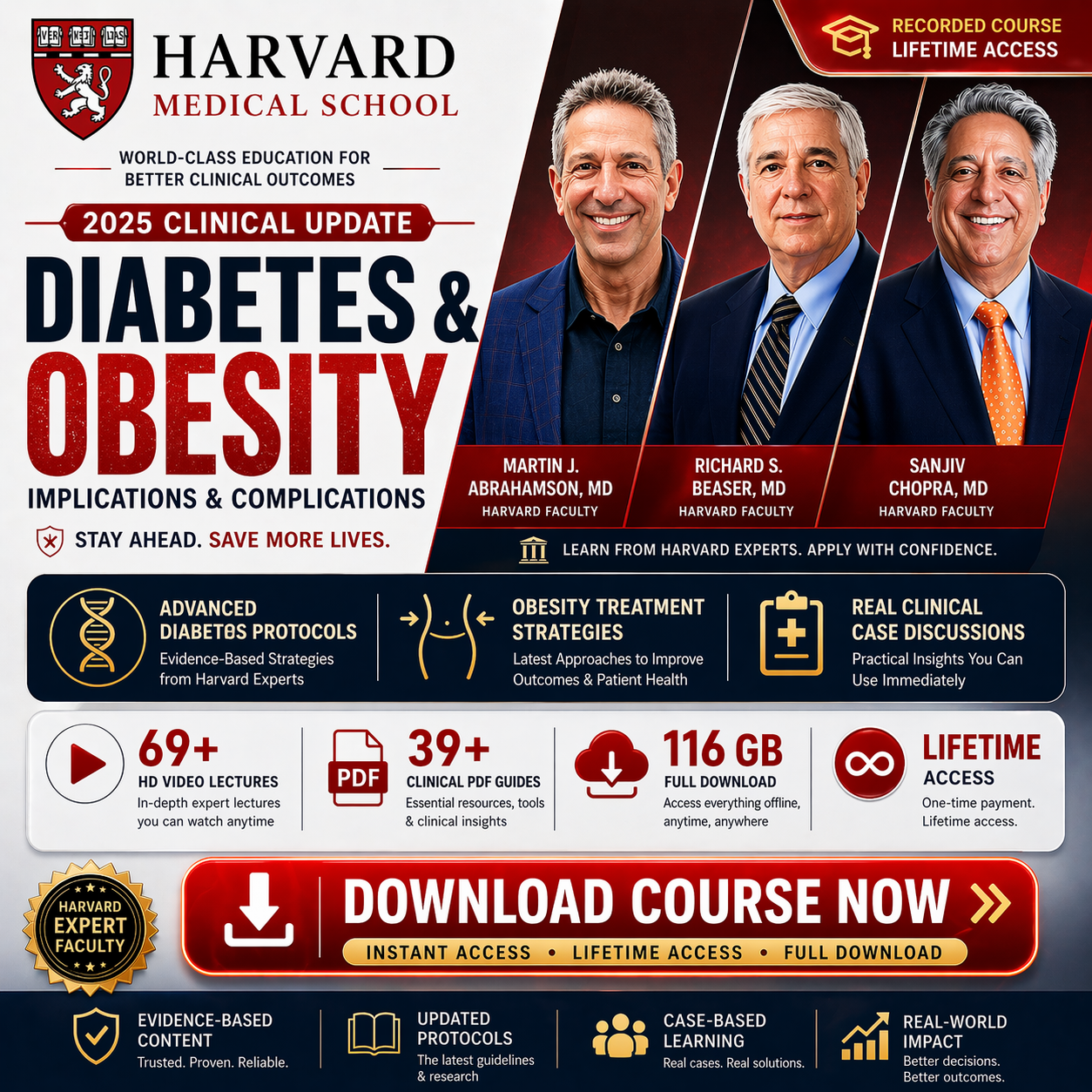
Harvard Diabetes and Obesity: Implications and Complications 2025
A comprehensive clinical update focused on diabetes, obesity, metabolic disease, cardiovascular risk, renal outcomes, lifestyle intervention, pharmacologic therapy, glucose monitoring technologies, insulin management, and diabetes-related complications.
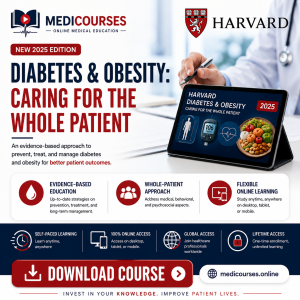
Harvard Diabetes and Obesity: Implications and Complications 2025 is a recorded medical course focused on evidence-based strategies for diabetes, obesity, cardiometabolic risk, complications, technology, and patient-centered care.
Included: 69 videos, 39 PDF resources, total size 116 GB.
About This Course
Diabetes and obesity are closely connected clinical challenges that affect cardiovascular health, kidney disease, liver disease, peripheral vascular disease, neuropathy, foot complications, quality of life, and long-term patient outcomes.
This course provides practical updates for clinicians caring for patients with diabetes, obesity, or related comorbidities. It reviews screening, diagnostic criteria, lifestyle treatment, pharmacotherapy, insulin strategies, glucose monitoring technologies, obesity management, diabetes complications, and real-world case applications.
Why Choose This Course
Key Highlights
- Comprehensive update in diabetes and obesity care
- 69 recorded video sessions with 39 PDF learning resources
- Guidance on GLP-1 receptor agonists, insulin therapy, and non-insulin medications
- Practical coverage of CGM, insulin pumps, glucose monitors, and evolving technologies
- Focus on cardiovascular, kidney, liver, foot, neurologic, and vascular complications
Core Learning Areas
Complete Curriculum
Diabetes Foundations & Treatment Updates
- Screening for diabetes and diagnostic criteria
- Pathophysiology of type 1 and type 2 diabetes
- Pharmacologic management of diabetes
- Insulin initiation and intensification
- Choosing the right insulin strategies
- Treating type 2 diabetes not achieving therapeutic goals
Obesity, Lifestyle & Weight Management
- Clinical approaches to weight management
- Lifestyle interventions for diabetes and obesity
- Personalized nutrition planning
- Exercise prescriptions for metabolic health
- Pharmacotherapy for obesity
- Surgical options and post-bariatric considerations
Modern Medications & Technology
- GLP-1 receptor agonists and emerging medication options
- Insulin and non-insulin therapies
- New insulins and modern delivery systems
- Glucose monitors and continuous glucose monitoring
- Insulin pumps and advanced diabetes technology
- Therapeutic advances ready for clinical practice
Cardiovascular, Renal & Metabolic Complications
- Cardiovascular risk reduction and care
- Renal outcomes and kidney disease prevention
- Dyslipidemia and hypertension in diabetes
- Peripheral vascular disease
- Liver disease and metabolic complications
- Hypoglycemia risk and prevention
Neuropathy, Foot Disease & Special Populations
- Optimal management of neuropathies
- Diabetic foot disease and prevention
- Diabetes care in older adults
- Diabetes and obesity in pregnancy
- Managing diabetes in hospitalized patients
- High-risk populations and individualized care
Patient Communication, Equity & Real-World Practice
- Motivating patients and improving adherence
- Sharing practical resources with patients and families
- Addressing social, racial, sexual, and cultural biases in diabetes care
- Improving equity and reducing disparities
- Challenging patient cases and real-world clinical applications
- Overcoming patient, provider, and practice system barriers
Learning Objectives
By Completing This Course, You Will Be Able To:
- Describe the pathophysiology of type 1 and type 2 diabetes and its relationship to comorbidities
- Improve office-based systems for lifestyle interventions in diabetes and obesity care
- Apply current treatment guidelines for lifestyle, pharmacologic, and technologic therapies
- Use evidence from cardiovascular and renal outcomes trials in clinical decision-making
- Apply preventive, diagnostic, and treatment approaches for diabetes complications
- Recognize barriers in clinical practice and develop strategies to overcome them
- Communicate effectively with patients, families, and care teams to support long-term health
Who Should Take This Course
This course is designed for primary care physicians, endocrinologists, internists, family physicians, hospital medicine physicians, geriatricians, cardiologists, nephrologists, nurse practitioners, physician assistants, registered nurses, pharmacists, diabetes educators, dietitians, and healthcare professionals who care for patients with diabetes, obesity, or related complications.
Delivery & Access
This course package is provided for recorded learning access. No CME points or certificate are associated with this product.
Reviews
A very efficient and comprehensive diabetes update. The GLP-1 and obesity management sections were especially practical for daily patient care.
Excellent depth on advanced therapies, insulin strategies, glucose monitoring, and diabetes technology. Very useful for endocrine practice.
The sections on diabetes in older adults and safety-focused treatment planning were highly relevant and easy to apply.
FAQ
Who is this course best suited for?
It is ideal for primary care physicians, endocrinologists, internists, family physicians, hospital medicine physicians, geriatricians, cardiologists, nephrologists, NPs, PAs, RNs, pharmacists, diabetes educators, dietitians, and clinicians caring for patients with diabetes or obesity.
What is included in the course package?
The package includes 69 recorded videos and 39 PDF resources, with a total size of 116 GB.
What topics are covered?
The course covers diabetes screening, obesity diagnosis, lifestyle treatment, insulin therapy, GLP-1 medications, CGM, pumps, cardiovascular risk, kidney disease, liver disease, neuropathy, diabetic foot, pregnancy, older adults, hospitalized patients, and health equity.
Does this product include CME or a certificate?
No. This course package does not include CME points or a certificate.
Who can I contact for support?
You can contact us at [email protected].


Dr. Sandra L., Internal Medicine –
“As a busy internist, this course was the efficient, comprehensive update I needed. It translated the flood of new data on GLP-1s and obesity management into a clear, actionable protocol for my clinic. My confidence in managing complex type 2 diabetes has skyrocketed.”
Dr. Anika R., Primary Care Physician –
“The Harvard faculty cut through the noise. The guidance on integrating CGM data into primary care visits and navigating insurance for newer medications has been directly applicable. My patients are seeing better results, and my consultations are more focused.”
Dr. Henry T., Geriatric Specialist –
“Managing diabetes in the elderly was always a challenge. This course provided a nuanced, evidence-based framework that prioritizes safety and quality of life. It’s changed how my entire practice approaches geriatric metabolic care.”
Dr. Lisa M., Endocrinologist –
“An exceptional, in-depth update. The deep dives into the mechanisms of new drug classes and advanced technology integration (pumps, hybrid closed-loop systems) were superb. It’s a must for any endocrinologist wanting to stay at the leading edge.”
Dr. David S., Endocrinologist –
“This program doesn’t just review guidelines—it teaches you how to think through complex cases. The sessions on ‘difficult-to-control’ diabetes and managing post-bariatric surgery patients were incredibly valuable for my subspecialty practice.”
Dr. Maria G., Hospital Medicine Director –
“As a hospitalist managing inpatient diabetes, the protocols for steroid-induced hyperglycemia and transitioning to outpatient care are priceless. This course improved our glycemic control metrics and reduced readmission rates.”
Dr. Ben C., Endocrinologist –
“The focus on health equity and overcoming systemic barriers in diabetes care was a powerful and necessary addition. It pushed me to audit and improve my own practice patterns. More than clinical, it’s socially responsible education.”
Sarah K., NP-C, CDE –
“As a Nurse Practitioner in a busy endocrinology clinic, this course gave me the authoritative knowledge to lead patient education on new medications and technologies. The downloadable patient resources are a fantastic bonus.”
Mark T., Physician Assistant –
“The most practical and organized diabetes course I’ve taken. The PDF algorithms and checklists are now part of our standard workflow. It has streamlined our team’s approach and improved patient consistency.”
Julia P., RD, CDE –
“This curriculum is a game-changer for diabetes educators. It moves beyond basics to the ‘why’ behind advanced therapies, empowering us to have more meaningful, motivating conversations with patients about their options.”
Dr. Alex W., Internal Medicine Resident –
“The Google Drive access is a lifesaver. I downloaded the lectures and PDFs to my tablet and reviewed them during downtime at the clinic. The ability to learn at my own pace, with permanent access, made all the difference.”
Dr. Chloe B., Family Medicine –
“The sheer volume of content (69 videos, 39 PDFs) is incredible, yet it’s perfectly organized. You can target your learning gaps or do a complete deep dive. This is a reference I will return to for years.”
Dr. Raj N., Internist –
“For 116 GB of top-tier Harvard education, this is unparalleled value. The video and audio quality are excellent, and having the slides as separate PDFs makes note-taking and reference seamless.”