
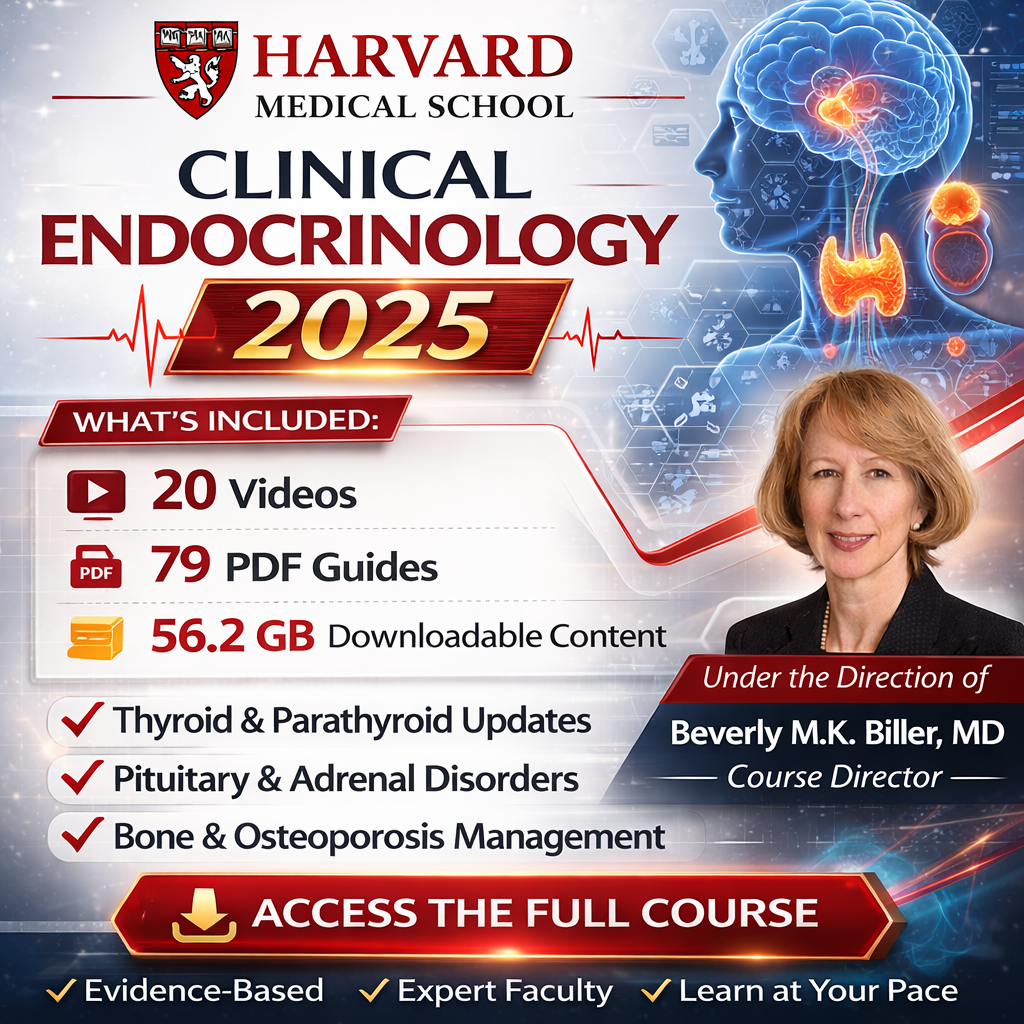
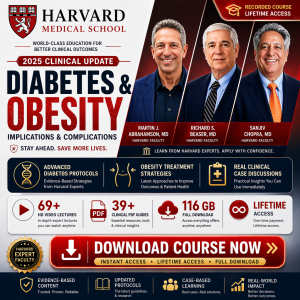
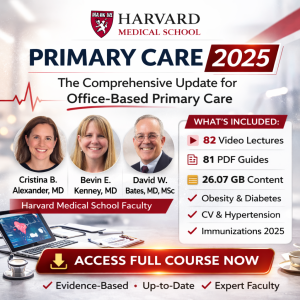
Harvard Clinical Endocrinology 2025
A comprehensive Harvard clinical endocrinology update designed to help clinicians improve screening, evaluation, diagnosis, and treatment of common and complex endocrine disorders, including pituitary, adrenal, thyroid, diabetes, obesity, calcium, bone, reproductive, and metabolic conditions.
Course Details:
Harvard Clinical Endocrinology 2025 is a recorded medical course focused on state-of-the-art endocrine care, updated diagnostic strategies, practical treatment guidance, and clinical decision-making for patients with endocrine disorders.
Focus: Pituitary lesions, pituitary hormone excess, hypopituitarism, adrenal conditions, reproductive conditions, calcium and bone disorders, thyroid nodules, hyperthyroidism, hypothyroidism, diabetes, obesity, lipid disorders, endocrine hypertension, and clinical endocrinology workshops.
About This Course
Harvard Clinical Endocrinology 2025 provides a practical and comprehensive update for clinicians who care for patients with endocrine disorders. The course is designed to strengthen endocrine knowledge and support better diagnostic and management decisions in daily practice.
The program reviews current endocrine diagnostic and treatment strategies, including improved screening for common endocrine conditions, expanded diagnostic options, new clinical guidelines, and evidence-based approaches for complex endocrine cases.
This course also includes updates in diabetes, thyroid disease, pituitary disorders, adrenal disease, calcium and bone disorders, reproductive endocrinology, obesity, lipid disorders, and endocrine technology such as insulin pumps and continuous glucose monitoring.
Why Choose This Course
- Harvard 2025 clinical endocrinology update focused on state-of-the-art endocrine care
- Includes 20 videos and 79 PDF files with a total size of 56.2 GB
- Comprehensive review of common and rare endocrine disorders
- Covers pituitary, thyroid, adrenal, calcium, bone, diabetes, obesity, lipid, and reproductive endocrine topics
- Includes new guideline updates for primary hyperparathyroidism and hypoparathyroidism
- Features practical workshops including thyroid ultrasound, insulin pump management, and continuous glucose monitoring
- Designed for endocrinologists, internists, primary care physicians, fellows, residents, NPs, PAs, and clinicians managing endocrine disorders
Core Learning Areas
Pituitary & Adrenal Disorders
Pituitary lesions, hormone excess, hypopituitarism, Cushing’s disease, acromegaly, adrenal incidentaloma, pheochromocytoma, and primary aldosteronism.
Diabetes, Obesity & Lipids
Type 1 diabetes, type 2 diabetes, diabetes in pregnancy, gestational diabetes, obesity, weight management, lipid disorders, insulin pumps, and CGM.
Thyroid & Reproductive Health
Thyroid nodules, thyroid ultrasound, thyroid cancer, hyperthyroidism, hypothyroidism, thyroid disease in pregnancy, menopause, hypogonadism, and transgender care.
Calcium, Bone & Mineral Disorders
Hyperparathyroidism, hypoparathyroidism, hypo- and hypercalcemia, osteoporosis, glucocorticoid-induced osteoporosis, and bone health management.
Complete Curriculum
- Pituitary lesions and sellar region abnormalities
- Pituitary hormone excess and hypopituitarism
- Adult growth hormone deficiency
- Acromegaly and related clinical management
- Hyperprolactinemia
- Pituitary surgery and radiation considerations
- Diagnostic reasoning for complex pituitary presentations
- Adrenal conditions and adrenal incidentalomas
- Cushing’s disease and hypercortisolism evaluation
- Pheochromocytoma diagnosis and management
- Primary aldosteronism and endocrine hypertension
- Approach to hormone excess and adrenal dysfunction
- Evaluation of incidental adrenal findings
- Clinical decision-making in adrenal disease care
- Type 1 diabetes updates
- Type 2 diabetes management
- Diabetes in pregnancy and gestational diabetes
- Hypoglycemia evaluation and management
- Obesity and weight management strategies
- Lipid disorders and cardiometabolic risk
- Insulin pumps, continuous glucose monitoring, and technology management in type 1 diabetes
- Thyroid nodules and diagnostic evaluation
- Thyroid ultrasound workshop and practical imaging skills
- Hyperthyroidism and hypothyroidism management
- Thyroid cancer updates
- Graves’ eye disease
- Thyroid disease and pregnancy
- Long-term follow-up and patient-centered thyroid care
- Hyperparathyroidism and hypoparathyroidism guideline updates
- Hypocalcemia and hypercalcemia evaluation
- Osteoporosis diagnosis and treatment
- Glucocorticoid-induced osteoporosis
- Calcium and bone disorder management
- Expanded options for diagnosis and treatment planning
- Long-term skeletal health and endocrine follow-up
- Male and female reproductive conditions
- Male and female hypogonadism
- Erectile dysfunction and hormone-related sexual health concerns
- Polycystic ovarian syndrome and hyperandrogenism
- Menopause and endocrine care
- Transgender care considerations
- Practical reproductive endocrine management strategies
- Thyroid ultrasound skills advancement
- Insulin pump management workshop
- Continuous glucose monitoring workshop
- Practical endocrine case discussions
- Guidance for challenging endocrine cases
- Applying new concepts in endocrinology and diabetes
- Pediatric endocrinology updates for clinical awareness
Learning Objectives
- Improve screening, evaluation, diagnosis, and treatment of endocrine disorders
- Apply updated strategies for pituitary, adrenal, thyroid, diabetes, obesity, calcium, and bone conditions
- Use new clinical guidelines for primary hyperparathyroidism and hypoparathyroidism
- Evaluate pituitary lesions, pituitary hormone excess, and hypopituitarism
- Manage adrenal conditions, incidentalomas, and endocrine hypertension
- Improve clinical decision-making for diabetes, obesity, lipid disorders, and endocrine technology
- Review diagnosis and treatment of thyroid nodules, thyroid disease, and thyroid cancer
- Apply updated strategies for calcium disorders, osteoporosis, and bone health
- Strengthen care for reproductive endocrine conditions and hormone-related disorders
- Integrate endocrine updates into practical patient care and challenging case management
Who Should Take This Course
This course is designed for endocrinologists, internists, primary care physicians, family medicine physicians, diabetes care clinicians, pediatricians, residents, fellows, nurse practitioners, physician assistants, and healthcare professionals involved in the diagnosis and treatment of endocrine disorders.
Delivery & Access
Recorded Course
Review the clinical endocrinology sessions at your own pace.
Complete Package
Includes 20 videos and 79 PDF files.
2025 Edition
Updated endocrine diagnosis, treatment, and management content.
Support
Reviews
Dr. Sarah L.
Exceptional course. The insights into the latest advancements in endocrinology were invaluable.
Michael T.
Highly informative. The faculty presented complex endocrine topics in a clear and practical way.
Emily R.
The case discussions were especially helpful and provided practical skills that can be applied immediately.
FAQ
Who is this course best suited for?
This course is best suited for endocrinologists, internists, primary care physicians, family physicians, diabetes care clinicians, pediatricians, residents, fellows, NPs, PAs, and clinicians involved in endocrine care.
What is included in the course package?
The package includes 20 videos and 79 PDF files with a total size of 56.2 GB.
What topics are covered?
Topics include pituitary lesions, adrenal disorders, thyroid nodules, hyperthyroidism, hypothyroidism, thyroid cancer, diabetes, obesity, lipid disorders, calcium disorders, osteoporosis, reproductive endocrinology, endocrine hypertension, insulin pump management, CGM, and thyroid ultrasound.
Is this course practical for clinical endocrine care?
Yes. The course focuses on practical screening, evaluation, diagnosis, treatment strategies, guideline updates, case discussions, and clinical workshops for endocrine practice.
Does this course include CME or a certificate?
No. CME credits and certificates are not included with this course package.
Who can I contact for support?
You can contact support at [email protected].


Dr. Sarah L. –
“Exceptional course! The insights into the latest advancements in endocrinology were invaluable.”
Michael T. –
“Highly informative! The faculty presented complex topics in an easy-to-understand manner.”
Emily R. –
“The case studies were particularly helpful. I gained practical skills I can apply in my practice immediately.”
Dr. James K. –
“Fantastic course! The latest research on hormonal therapies was eye-opening.”
Olivia M. –
“I appreciated the focus on patient-centered care. The discussions about treatment options were very relevant.”
David W. –
“The interactive sessions kept me engaged. Networking with other professionals was a bonus!”
Isabella G. –
“An essential course for anyone working in endocrinology. I feel much more confident in this area now.”
Noah P. –
“Very well organized! The course exceeded my expectations in content and delivery.”
Mia S. –
“The emphasis on the latest treatment protocols was particularly beneficial. Highly recommend!”
Ethan B. –
“I left with a wealth of knowledge and practical tools to help my patients. Excellent learning experience.”
Sophia C. –
“The faculty’s expertise made the course incredibly valuable. I learned so much about endocrine disorders.”
Liam D. –
“Great discussions on ethical considerations in treatment. This course is a must for practitioners!”
Emma F. –
“I found the latest research updates to be very enlightening. I can’t wait to apply what I learned!”
Lucas H. –
“An engaging and informative course! I highly recommend it to anyone in the field of endocrinology.”
Dr. Ava J. –
“Outstanding course! The practical applications discussed are crucial for improving patient outcomes.”