
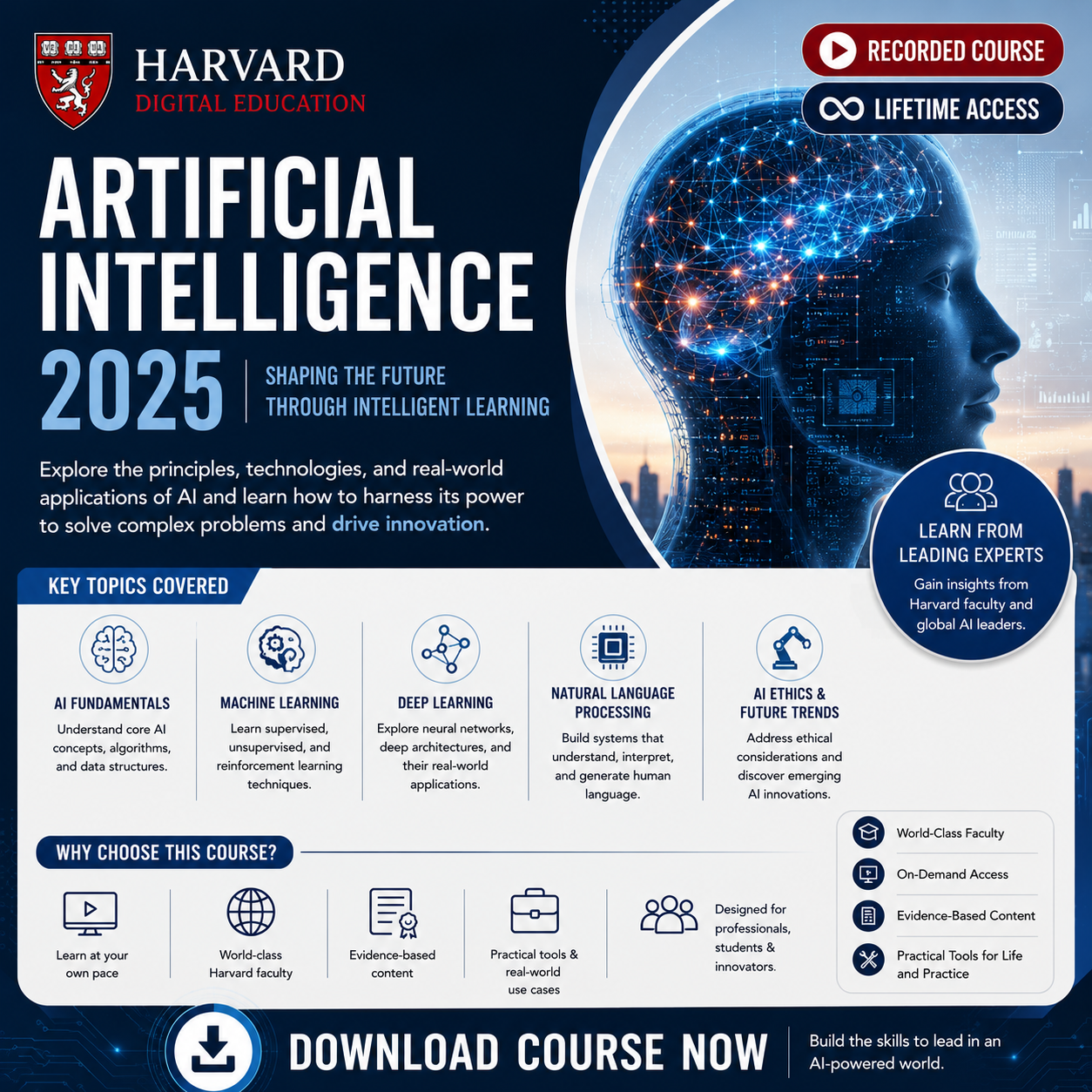
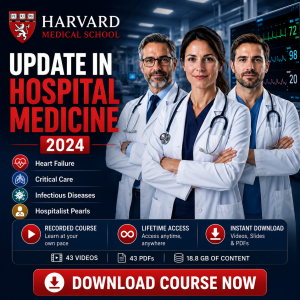
Harvard Digital Education & Artificial Intelligence 2025
A practical Harvard digital education course focused on the future of medical teaching, creative media, generative AI, large language models, communication, multimedia creation, podcasting, visuals, infographics, AI tools, and digital strategies for modern medical educators.
Course Details:
Harvard Digital Education & Artificial Intelligence 2025 is a recorded course designed for medical educators, content creators, clinicians, trainees, and anyone interested in using digital education and AI to improve teaching, communication, and learning experiences.
Focus: Large language models, generative AI, prompt engineering, AI tools for educators, podcasting, YouTube Shorts, whiteboard animations, graphic medicine, infographics, PowerPoint design, science communication, digital education innovation, online teaching, medical content creation, AI ethics, community building, and career integration.
About This Course
Digital education and artificial intelligence are rapidly changing the way medical educators teach, communicate, create content, and support learners. Modern educators now need practical skills in AI, multimedia design, communication, content creation, and online learning strategies.
Harvard Digital Education & Artificial Intelligence 2025 focuses on how educators can use large language models, creative media, digital tools, and communication strategies to increase efficiency and improve learning.
The course combines practical workshops, expert discussions, media training, AI demonstrations, and educator-focused sessions to help participants build skills, create educational content, and integrate AI into medical education responsibly and effectively.
Why Choose This Course
- Harvard 2025 course focused on digital education and artificial intelligence in medical education
- Designed for medical educators of all training levels, from residents to experienced attendings
- Covers large language models, generative AI, prompt engineering, AI tools, and practical educator workflows
- Includes creative media topics such as podcasting, videos, visuals, graphic medicine, infographics, and PowerPoint design
- Helps educators improve communication skills and enhance the learning experience
- Focuses on practical applications, benefits, limitations, and pitfalls of AI and digital media
- Useful for educators, content creators, clinicians, trainees, and anyone interested in the future of medical education
Core Learning Areas
Generative AI for Educators
Large language models, prompt engineering, AI tools, educator workflows, advanced AI cases, and practical use of AI in teaching tasks.
Creative Digital Media
Podcasting, YouTube Shorts, whiteboard animations, videos, visuals, infographics, graphic medicine, and multimedia learning design.
Communication & Teaching
Science communication, learner engagement, presentation improvement, PowerPoint design, digital storytelling, and educational clarity.
Career & Community
Building a digital education career, collaboration, networking, innovation, community building, and using AI to make work-life easier.
Complete Curriculum
- Overview of digital education and artificial intelligence in medical education
- How educators are using large language models to improve efficiency
- Understanding the benefits and limitations of AI tools
- Practical ways to optimize teaching and curriculum development
- Building skills for modern medical education
- Connecting with a community of digital education innovators
- Preparing for the future of teaching and learning in medicine
- Top tips for communicating science clearly
- Improving communication for medical learners and broad audiences
- Program evaluation of educational innovation
- Measuring the effectiveness of digital education projects
- Designing educational content with clear outcomes
- Using communication strategies to improve learner engagement
- Translating complex topics into accessible teaching formats
- Podcasting workshop for medical educators
- Planning educational podcast content
- Improving audio-based learning experiences
- Using podcasting to reach medical learners and clinicians
- Developing engaging educational conversations
- Building consistency and structure in medical podcasts
- Practical skills for launching or improving audio education projects
- Whiteboard animations for medical education
- YouTube Shorts and short-form educational content
- Teaching on social media platforms
- Creating visual explanations for complex medical topics
- Designing content for attention, clarity, and retention
- Using creative media to optimize learning
- Balancing accuracy, accessibility, and engagement in digital content
- Prompathon: getting started with AI prompting for educators
- Using generative AI to support teaching tasks
- Prompt design for educational content creation
- AI tools for curriculum planning and learner support
- Advanced AI tools and practical applications
- Reducing workload while maintaining quality and accuracy
- Recognizing pitfalls, bias, hallucinations, and responsible use concerns
- Graphic medicine as a tool for learning and communication
- Creating infographics for medical education
- Designing visuals that improve understanding
- Leveling up PowerPoint presentations
- Improving slide structure, clarity, and learner engagement
- Using multimedia elements in teaching materials
- Building educational visuals that are practical, memorable, and effective
- AI hacks for making educator work-life easier
- Panel discussion on AI use in education workflows
- Advanced cases using AI for educator tasks
- Using AI for content ideation, drafting, summarization, and planning
- Responsible integration of AI into teaching responsibilities
- Identifying when AI is useful and when human review is essential
- Practical examples of AI-enhanced educator productivity
- Getting paid for what you love in medical education
- Building a career around digital education and creative teaching
- Integrating digital education and AI into your professional identity
- Creating sustainable educational projects
- Collaborating with peers and digital education experts
- Networking with educators, creators, and innovators
- Developing long-term strategies for growth in medical education
Learning Objectives
- Demonstrate practical skills with digital media and generative AI
- Identify the benefits, pitfalls, and limitations of AI tools in medical education
- Create fundamental multimedia elements for teaching and curriculum development
- Incorporate podcasting, videos, visuals, infographics, and AI tools into medical education
- Improve communication skills to create better learning experiences
- Use AI prompts and tools to increase efficiency in educator tasks
- Design more engaging presentations, visuals, and learner-facing educational materials
- Evaluate digital education innovations and their impact
- Develop strategies for integrating digital education and AI into an academic or teaching career
- Connect with a community of experts, colleagues, and potential collaborators in digital medical education
Who Should Take This Course
This course is designed for medical educators of all training levels, including residents, fellows, junior faculty, senior attendings, teaching clinicians, academic physicians, and healthcare professionals interested in digital education and AI.
It is also useful for content creators, podcast hosts, visual educators, curriculum developers, and anyone who consumes or creates digital medical education and wants to learn from leaders in the field.
Delivery & Access
Recorded Course
Review the digital education and AI sessions at your own pace.
2025 Edition
Updated education, AI, and multimedia teaching content.
Practical Skills
Prompting, podcasting, videos, infographics, slides, communication, and digital teaching.
Support
Reviews
Emily R.
A transformative course showing practical ways to integrate AI into education and improve teaching projects.
Michael T.
Excellent real-world insights into the future of digital education and AI-supported teaching.
Sarah L.
Very helpful focus on practical skills, ethical considerations, multimedia education, and AI tools for educators.
FAQ
Who is this course best suited for?
This course is best suited for medical educators, residents, fellows, attendings, academic clinicians, content creators, curriculum developers, and healthcare professionals interested in digital education and artificial intelligence.
What topics are covered?
Topics include generative AI, large language models, prompt engineering, AI tools, podcasting, YouTube Shorts, whiteboard animation, graphic medicine, infographics, PowerPoint design, science communication, social media teaching, digital education innovation, AI ethics, educator workflows, and career development.
Is this course practical for medical educators?
Yes. The course focuses on practical educator skills, multimedia creation, AI-supported workflows, communication strategies, and ways to improve medical teaching and curriculum development.
Does this course cover artificial intelligence tools?
Yes. It includes practical use of generative AI, large language models, prompting, advanced AI tools, and AI applications for educator tasks.
Is this a recorded course?
Yes. This product is provided as recorded course access so you can review the material at your own pace.
Does this course include CME or a certificate?
No. CME credits and certificates are not included with this course package.
Who can I contact for support?
You can contact support at [email protected].


Emily R. –
“This course was transformative! The integration of AI in education is fascinating, and the hands-on projects made it practical.”
Michael T. –
“The instructors are top-notch and provide real-world insights. I learned so much about the future of digital education!”
Sarah L. –
“I appreciated the focus on ethical considerations in AI. It’s crucial for educators to understand these aspects.”
James K. –
“Engaging content and interactive sessions. This course exceeded my expectations and inspired me to implement AI in my teaching.”
Olivia M. –
“The resources provided were invaluable. I feel equipped to leverage digital tools in my educational practice!”
David W. –
“Fantastic course! The blend of theory and practical application made complex concepts accessible.”
Ava J. –
“I loved the collaborative projects. Networking with peers was a highlight, and we learned so much from each other.”
Lucas H. –
“This course opened my eyes to the potential of AI in enhancing student engagement. Highly recommend it!”
Isabella G. –
“Comprehensive and well-structured. The case studies were particularly helpful in understanding AI applications.”
Noah P. –
“An essential course for anyone in education! I gained practical skills that I can apply immediately.”
Mia S. –
“The faculty’s expertise shines through. I felt supported throughout the course and enjoyed every moment.”
Ethan B. –
“Amazing insights into digital education trends. I’m excited to bring these ideas back to my institution!”
Sophia C. –
“Very well organized and informative. The practical assignments helped reinforce learning and application.”
Liam D. –
“This course is a must for educators looking to innovate. The discussions on AI ethics were particularly enlightening.”
Emma F. –
“I walked away with a wealth of knowledge and actionable strategies. Thank you, Harvard, for this incredible learning experience!”