
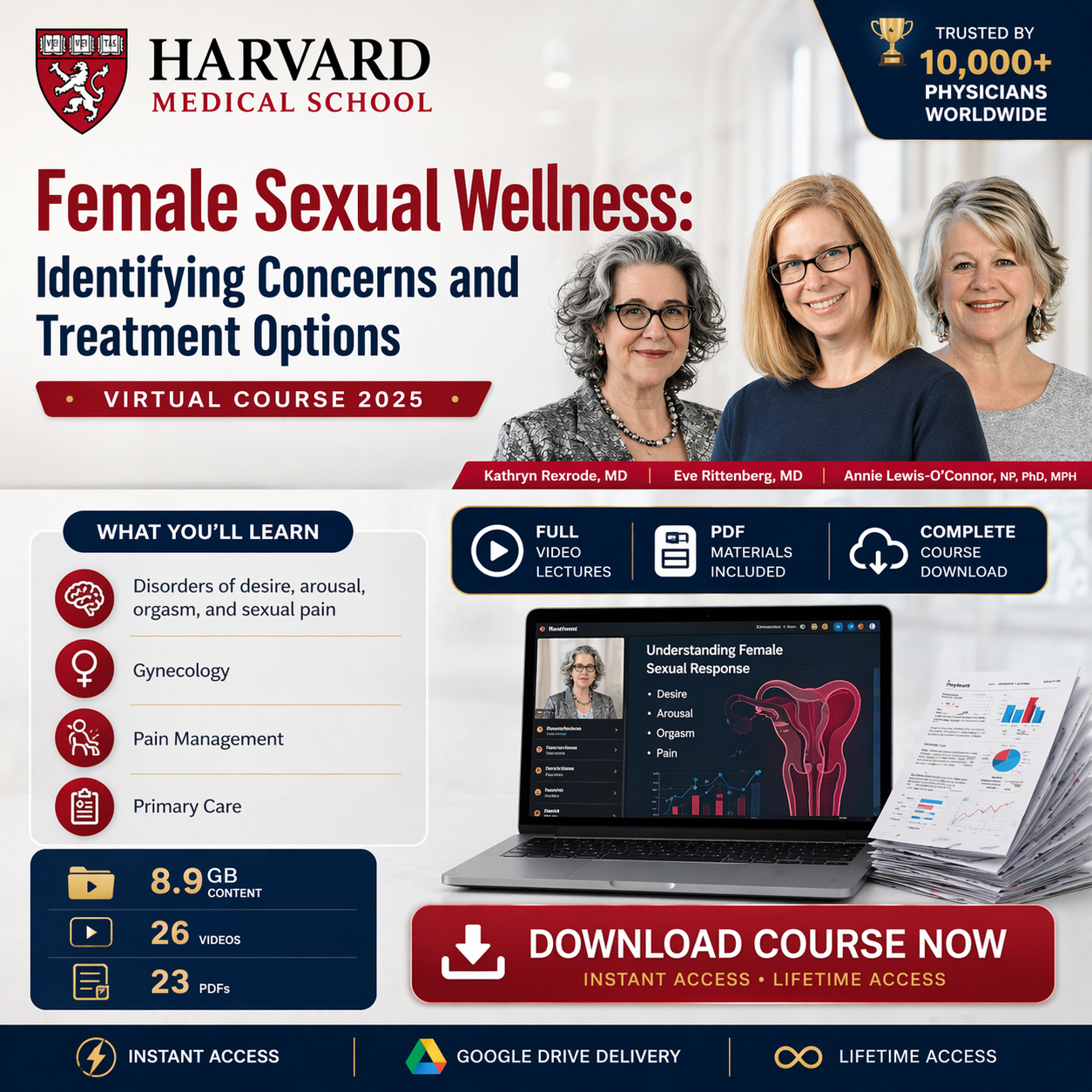
Harvard Female Sexual Wellness: Identifying Concerns and Treatment Options 2025
A focused women’s sexual health course designed to help clinicians identify, evaluate, and manage female sexual function concerns, including disorders of desire, arousal, orgasm, sexual pain, dyspareunia, pelvic floor dysfunction, menopause-related sexual health concerns, trauma-informed care, and medical, behavioral, device-based, and surgical treatment options.
Harvard Female Sexual Wellness: Identifying Concerns and Treatment Options 2025 is a recorded clinical course focused on diagnosing and treating female sexual function concerns. The course uses evidence-based lectures and case-based vignettes to review desire, arousal, orgasm, sexual pain, dyspareunia, pelvic floor dysfunction, menopause-related concerns, and treatment planning.
Included: 26 videos + 23 PDFs.
File Size: 8.9 GB.
About This Course
Female sexual wellness is a highly relevant but often under-addressed area of clinical care. Patients may present with low desire, arousal concerns, orgasmic dysfunction, pain with intercourse, pelvic floor symptoms, vulvar pain, menopause- related sexual changes, trauma history, or concerns after gynecologic surgery.
This course gives clinicians a structured approach to evaluation and treatment. It combines classification frameworks, history-taking strategies, counseling, sex therapy concepts, pharmacologic options, device-based approaches, pelvic floor physical therapy, pain management, procedural options, surgical considerations, and practical case studies.
Why Choose This Course
Key Highlights
- Harvard 2025 female sexual wellness course
- Includes 26 videos and 23 PDF files
- Total package size: 8.9 GB
- Covers disorders of desire, arousal, orgasm, and sexual pain
- Includes sex counseling, sex therapy, pharmacologic treatment options, medical devices, and behavioral strategies
- Reviews dyspareunia, vulvar dermatoses, vulvodynia, menopause, pelvic floor physical therapy, trauma-informed care, and gender diverse care
- Useful for OB/GYN physicians, internists, family physicians, urologists, pain specialists, psychiatrists, psychologists, nurses, social workers, NPs, and PAs
Core Learning Areas
Complete Curriculum
Course Foundations
- Course introduction
- Course overview
- Classification of female sexual dysfunction
- Understanding desire, arousal, orgasm, and sexual pain concerns
- Clinical approach to patient-centered sexual wellness care
- Evidence-based evaluation and treatment planning
- Case-based clinical learning structure
Clinical History, Counseling and Therapy
- Conducting a thorough history for patients with sexual function concerns
- Sex counseling principles
- Sex therapy concepts
- Communication strategies for sensitive clinical conversations
- Patient-centered assessment and shared decision-making
- Behavioral approaches to sexual wellness concerns
- Helping patients understand multifactorial causes of symptoms
Low Desire, Arousal and Orgasmic Dysfunction
- Pharmacologic treatment options for low desire
- Arousal dysfunction evaluation
- Orgasmic dysfunction evaluation
- Sex counseling for arousal and orgasmic dysfunction
- Vibrator therapy and behavioral strategies
- Medication options for arousal and orgasmic dysfunction
- Medical device options for sexual function concerns
Female Sexual Pain and Dyspareunia
- Dyspareunia anatomy and differential diagnosis
- Identifying causes of female sexual pain
- Vulvar, vaginal, pelvic, musculoskeletal, hormonal, and psychological contributors
- Pain management options for dyspareunia
- Pelvic pain treatment planning
- Office-based gynecologic procedures for pain
- Case-based decision-making for sexual pain syndromes
Menopause, Vulvar Disorders and Vulvodynia
- Sexual function in perimenopause and menopause
- Menopause-related sexual health concerns
- Hormonal changes and sexual function
- Vulvar dermatoses
- Vulvodynia
- Diagnosis and treatment planning for vulvar pain
- Integrating dermatologic, hormonal, pain, and pelvic health approaches
Trauma-Informed and Inclusive Care
- Trauma-informed care in sexual wellness consultations
- Building trust during sensitive examinations and discussions
- Care of the gender diverse patient
- Inclusive language and respectful clinical communication
- Addressing patient comfort, consent, and safety
- Supporting patients with complex sexual health histories
- Creating individualized treatment plans for diverse patient needs
Pelvic Floor Physical Therapy and Pain Management
- Pelvic floor physical therapy with focus on pelvic floor muscles
- Musculoskeletal contributors to sexual pain
- Pelvic floor dysfunction assessment
- Non-surgical pain management options
- Multidisciplinary pelvic pain care
- Referral strategies for pelvic floor therapy
- Coordinating care between gynecology, pain management, physical therapy, and mental health
Gynecologic Procedures and Surgical Treatment Options
- Office-based gynecologic procedures for pain
- Surgical management of dyspareunia using a vaginal approach
- Surgical management of fibroids and endometriosis using a laparoscopic approach
- Vaginal lengthening and neovagina creation
- Impact of hysterectomy on sexual function
- Impact of gynecologic surgery on sexual function
- Patient counseling before and after gynecologic surgery
Q&A and Case-Based Learning
- Q&A session 1
- Q&A session 2
- Q&A session 3
- Case studies in female sexual wellness
- Applying treatment options to real-world clinical scenarios
- Integrating behavioral, pharmacologic, device-based, procedural, and surgical care
- Reviewing practical clinical decision-making across sexual function concerns
Learning Objectives
By Completing This Course, You Will Be Able To:
- Conduct a thorough history for patients with female sexual function concerns
- Recognize causes and interactions of desire, arousal, and orgasmic disorders
- Explore behavioral, pharmacologic, and device-based treatment options
- Identify causes and treatments for female sexual pain and dyspareunia
- Evaluate menopause-related sexual function concerns
- Recognize vulvar dermatoses, vulvodynia, and pelvic floor contributors to pain
- Apply trauma-informed and inclusive care principles
- Review procedural and surgical options related to dyspareunia, fibroids, endometriosis, and gynecologic surgery
Who Should Take This Course
This course is designed for obstetricians and gynecologists, primary care physicians, internal medicine physicians, family medicine physicians, urologists, pain management specialists, psychiatrists, psychologists, nurse practitioners, physician assistants, nurses, social workers, researchers, and clinicians involved in women’s sexual health, pelvic pain, reproductive health, and female wellness care.
Delivery & Access
This course package is provided for recorded learning access. No CME points are associated with this product.
Reviews
Very insightful recorded sessions. The course gives a practical framework for evaluating sexual function concerns and discussing sensitive topics with patients.
The content is directly applicable to patient care. The sections on counseling, sexual pain, menopause, and pelvic floor therapy are especially helpful.
Strong coverage of female sexual wellness, dyspareunia, vulvodynia, trauma-informed care, and treatment options. Very useful for women’s health practice.
FAQ
Who is this course best suited for?
It is ideal for OB/GYN physicians, primary care physicians, internal medicine physicians, family medicine physicians, urologists, pain management specialists, psychiatrists, psychologists, NPs, PAs, nurses, social workers, researchers, and clinicians involved in female sexual wellness and pelvic health.
What is included in the course package?
The package includes 26 videos and 23 PDF files, with a total size of 8.9 GB.
What topics are covered?
The course covers female sexual function concerns, desire disorders, arousal disorders, orgasmic dysfunction, sexual pain, dyspareunia, sex counseling, sex therapy, pharmacologic treatments, device-based options, menopause-related sexual function, vulvar dermatoses, vulvodynia, trauma-informed care, care of gender diverse patients, pelvic floor physical therapy, pelvic pain management, gynecologic procedures, surgical treatment options, hysterectomy-related sexual function concerns, and case studies.
Is this course practical for clinical care?
Yes. The course uses evidence-based lectures and case-based discussions to support practical evaluation, counseling, diagnosis, and treatment planning for female sexual wellness concerns.
Does this product include CME?
No. This course package does not include CME points.
Who can I contact for support?
You can contact us at [email protected].


Dr. Sarah K. –
“The recorded sessions were incredibly insightful! Accessing them via Google Drive made it easy to revisit important topics.”
Dr. John M. –
“I loved the direct download link! The information on female sexual wellness is essential for my practice.”
Nurse Emily R. –
“The flexibility to learn at my own pace was fantastic. The course content is directly applicable to my patient interactions.”
Dr. Alex T.: –
“This course provided valuable insights into managing sexual health concerns. Highly recommend it for all healthcare providers!”
Dr. Jenna P. –
“The updates on psychological factors affecting sexual health were invaluable. I’m grateful for this accessible resource!”
Dr. Mark Z. –
“The direct download link was straightforward to use. I’m so glad I invested in this course—it’s worth every penny!”
Dr. Sam O. –
“This course revitalized my approach to female sexual wellness. The Google Drive access made it super convenient.”
Dr. Peter F. –
“This course is a must for anyone in women’s health. The downloadable content is a fantastic reference for future use.”
Nurse Anna W. –
“I learned so much about patient communication strategies. The flexibility of the recordings made it easy to fit into my schedule.”
Dr. Nicole Y. –
“The diversity of topics covered was impressive. I’m excited to apply these strategies in my practice!”
Dr. Eleanor Vance, Gynecologist, Boston, MA –
“An exceptional, comprehensive update. The 2025 deep dive into the latest data on hormone therapy timing, formulations, and non-hormonal options for vasomotor symptoms was worth the entire course. The practical algorithms are invaluable for my practice.”
Dr. Ben Carter, Internal Medicine Resident, Baltimore, MD –
“Filled a massive gap in my medical education. The 2025 protocols for evaluating perimenopause, managing genitourinary syndrome of menopause (GSM), and addressing the long-term health risks after menopause have made me a more confident and effective physician.”
Priya Sharma, MD, Endocrinologist, Chicago, IL –
“A masterclass in the endocrinology of mid-life women. The 2025 updates on the metabolic changes during the menopausal transition and the interplay between menopause, diabetes, and bone health are presented with exceptional depth and clarity.”
Dr. Samuel Cohen, Cardiologist, Denver, CO –
“Essential for any cardiologist. The 2025 sessions on cardiovascular risk stratification in menopausal women, and the nuanced data on hormone therapy and heart disease, provide critical knowledge for managing the leading cause of death in women.”
Amara Johnson, PA-C, Primary Care, Atlanta, GA –
“This course empowers me to be the first line of defense for my patients’ menopausal health. The 2025 guidelines on differentiating hormonal symptoms from thyroid, mood, and sleep disorders are practical, evidence-based, and incredibly helpful.”
Dr. Robert Yi, Urogynecologist, New York, NY –
“Incredibly valuable for managing pelvic health. The 2025 updates on treatment options for urinary incontinence, pelvic organ prolapse, and GSM, including new minimally invasive therapies, are directly relevant and practice-changing.”
David Chen, PharmD, BCPS, Clinical Pharmacy, Phoenix, AZ –
“The pharmacotherapy content is top-tier. The 2025 nuanced discussions on bioidentical hormones, new non-hormonal agents for hot flashes, and osteoporosis management provide the depth I need for collaborative drug therapy management.”
Dr. Maria Flores, Rheumatologist, Houston, TX –
“An excellent update that is highly relevant to bone health and autoimmune disorders. The 2025 data on optimizing bone density prevention and the impact of menopause on conditions like rheumatoid arthritis is presented masterfully.”
Jonathan Reid, Licensed Clinical Social Worker, Portland, OR –
“This provides the deep medical context I need to better support my clients. Understanding the physiological drivers of mood swings, irritability, and life transition stress during perimenopause allows for much more effective and empathetic therapy.”
Dr. Aaron Wilcox, Emergency Medicine, Philadelphia, PA –
“Unexpectedly relevant for the ED. The 2025 guidance on evaluating acute abnormal uterine bleeding in perimenopausal women and recognizing atypical presentations of MI in women provides vital knowledge for emergency stabilization and triage.”
Chloe Davies, Medical Student, Hanover, NH –
“This course was revolutionary. It covers a life phase affecting half the population that receives scant attention in medical school with expertise and compassion. It has fundamentally shaped how I will approach patient care.”