
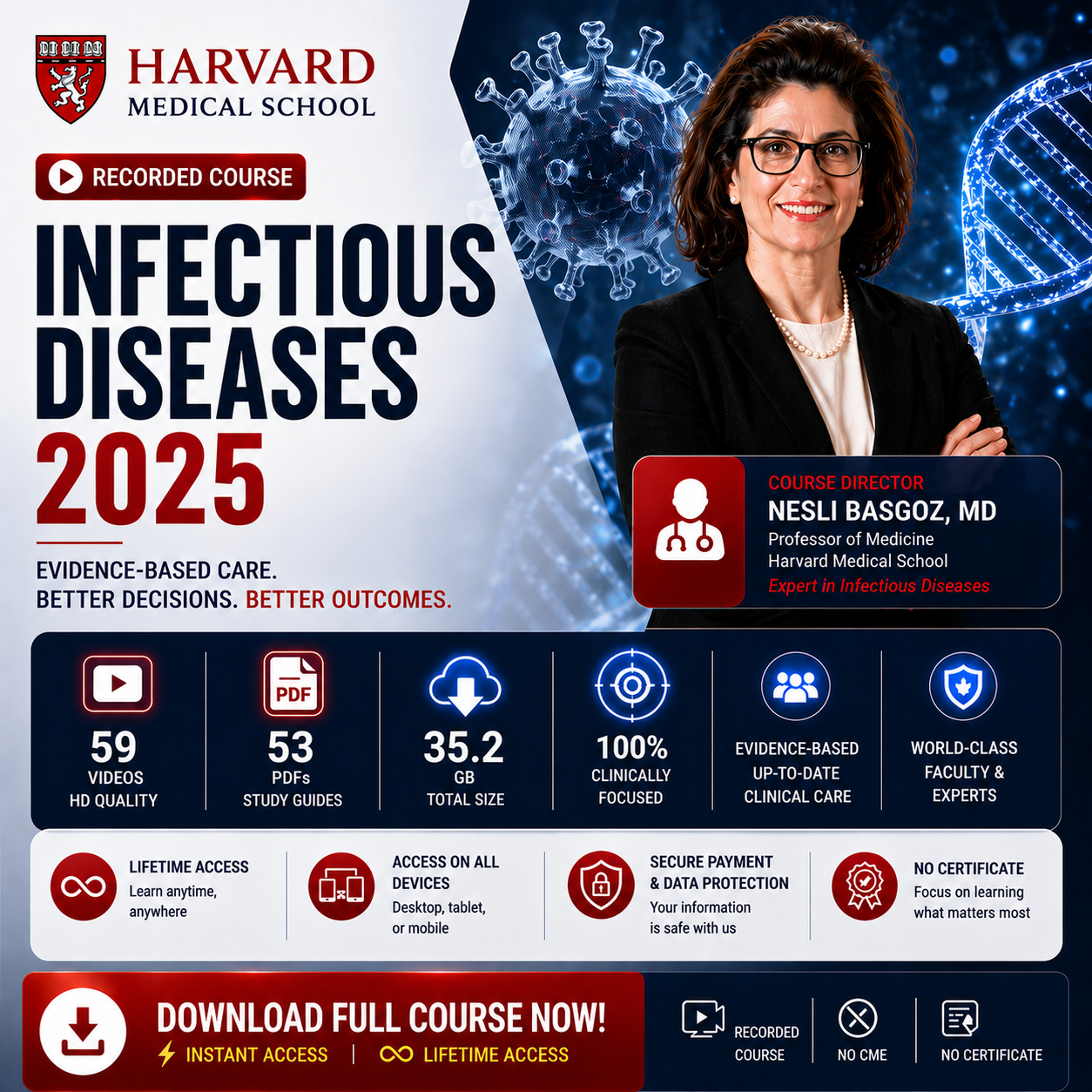
Harvard Infectious Diseases in Adults 2025
A comprehensive recorded infectious diseases course designed to help clinicians stay current with state-of-the-art approaches to prevention, diagnosis, and treatment of infectious diseases in adults, including antimicrobial therapy, resistant infections, immunocompromised hosts, HIV, COVID-19, vaccines, fungal infections, and complex clinical decision-making.
Course Details:
Harvard Infectious Diseases in Adults 2025 is a complete recorded learning package focused on practical updates, new guidelines, and clinical decision-making strategies for adult infectious disease care.
Focus: Antimicrobial therapy, antimicrobial stewardship, highly resistant infections, MRSA, ESBL, carbapenemase-producing organisms, VRE, fungal infections, Candida auris, NTM, COVID-19, long COVID, HIV prevention and management, vaccines, STI care, hepatitis, CNS infections, endocarditis, bone and joint infections, immunocompromised hosts, transplant infections, and global infectious diseases.
About This Course
Infectious diseases practice continues to evolve quickly with new pathogens, emerging resistance patterns, updated diagnostic tools, changing vaccine recommendations, and new treatment strategies for complex infections.
Harvard Infectious Diseases in Adults 2025 provides clinicians with a practical review of important updates in prevention, diagnosis, and treatment. The course emphasizes decision-making that can be applied in daily clinical practice, including when to start, narrow, stop, or adjust antimicrobial therapy.
The program also covers common infections, rare and emerging infections, highly resistant organisms, infections in immunocompromised hosts, HIV, hepatitis, COVID-19, fungal infections, infection control, and multidisciplinary care for complicated infectious disease cases.
Why Choose This Course
- Harvard 2025 infectious diseases update focused on adult clinical practice
- Includes 59 videos and 53 PDF files with a total size of 35.2 GB
- Comprehensive review of prevention, diagnosis, and treatment of infectious diseases
- Covers antimicrobial therapy, antimicrobial stewardship, infection control, and resistant organisms
- Includes updates on HIV, COVID-19, long COVID, hepatitis, vaccines, STI prevention, and respiratory viral infections
- Reviews infections in immunocompromised hosts, transplant patients, hematologic malignancy, and cancer therapy settings
- Designed for infectious disease specialists, internists, hospitalists, primary care physicians, emergency physicians, pharmacists, residents, fellows, NPs, PAs, and healthcare professionals involved in infection care
Core Learning Areas
Antimicrobials & Stewardship
Principles of antimicrobial therapy, stewardship strategies, allergy evaluation, empiric therapy decisions, and appropriate treatment duration.
Resistant & Complex Infections
MRSA, VISA, ESBL, carbapenemase-producing organisms, VRE, C. difficile, Candida auris, NTM, and complex bacterial infections.
Viral, HIV & Vaccine Updates
COVID-19, long COVID, respiratory viruses, HIV prevention and management, PrEP, PEP, STI prevention, hepatitis B and C, and vaccine recommendations.
Special Populations
Infections in immunocompromised hosts, transplant recipients, cancer patients, persons with substance use disorder, travelers, and foreign-born patients.
Complete Curriculum
- Principles of antimicrobial therapy
- Antimicrobial stewardship and resistance prevention
- Antibiotic allergy toolkit and practical prescribing considerations
- Infection control for the infectious disease clinician
- Optimizing empiric therapy: what to start and when to narrow or stop
- Choosing inpatient vs outpatient treatment and IV vs oral antimicrobials
- Early infectious disease consultation and strategies to improve outcomes
- Resistant gram-positive infections
- MRSA and VISA infections
- Vancomycin-resistant enterococci
- Resistant gram-negative infections
- ESBL-producing gram-negative organisms
- Carbapenemase-producing gram-negative rods, including NDM-1 organisms
- Clinical approaches to complex and highly resistant infectious disease cases
- Update on antifungal diagnostics and therapy
- Aspergillus and non-aspergillus mold infections
- Candida auris and emerging fungal threats
- Flummoxing cases in fungal infections
- Systemic fungal infections
- Fungal infections in immunocompromised patients
- Practical treatment strategies for complicated fungal disease
- Skin and soft tissue infections
- Respiratory viral infections including COVID-19
- Bronchiectasis, pneumonia, and NTM infections
- ENT and eye infections
- Complicated urinary tract infections
- Intra-abdominal infections and new guideline updates
- Clostridioides difficile infection, including recurrent and refractory disease
- Encephalitis and meningitis: newest guidelines and best practices
- Lyme disease, Ehrlichia, Anaplasma, Babesia, Rickettsia, and other tick-borne infections
- Bone and joint infections: clinical framework
- Native bone infections
- Orthopedic device infections and prosthetic joint infections
- Native and device-related orthopedic infections
- Diagnostic reasoning and treatment planning for musculoskeletal infections
- Endocarditis and cardiac device infections
- Native valve endocarditis, including cases in persons with substance use disorder
- Prosthetic valve endocarditis and multidisciplinary management
- Critical care infectious diseases
- Rapid detection and empiric treatment of life-threatening infections
- Multidisciplinary management of severe infectious disease cases
- Quality and safety considerations in infectious disease care
- What’s new in HIV care in 2025
- HIV prevention and management updates
- Pre-exposure and post-exposure prophylaxis for HIV and STIs
- State-of-the-art diagnosis and management of sexually transmitted infections
- Mpox and STI prevention updates
- Advances in viral hepatitis: HBV and HCV
- New vaccines, updated vaccine recommendations, and vaccine-preventable diseases
- Updates on COVID-19, including long COVID
- Latest on major respiratory viral infections
- New and emerging viruses
- Highly pathogenic avian influenza updates
- Rare and emerging infectious diseases, including Marburg virus
- Re-emergence of vaccine-preventable diseases including poliomyelitis
- Global infectious diseases of clinical importance
- Prevention and treatment of infections in immunocompromised hosts
- Infections related to solid organ transplant
- Infections related to non-oncologic immunomodulatory therapy
- Infections in hematologic malignancies and stem cell transplantation
- Cellular and immune-based therapies for cancer: what the ID clinician needs to know
- Complex infections in patients receiving advanced therapies
- Risk stratification and treatment planning in immunocompromised populations
- Infections in persons with substance use disorder
- Syndemic of substance use disorder and infection: updated approaches for 2025
- Strategies for managing infections in persons who inject drugs
- Tuberculosis update
- Pulmonary and extrapulmonary nontuberculous mycobacterial infections
- Tropical medicine review and update
- Cases in global infectious diseases and infections in travelers and foreign-born persons
Learning Objectives
- Apply updated strategies for prevention, diagnosis, and treatment of infectious diseases in adults
- Improve antimicrobial selection, duration, stewardship, and treatment optimization
- Recognize and manage highly resistant infections including MRSA, ESBL, carbapenemase-producing organisms, and VRE
- Use current approaches for fungal infections, antifungal diagnostics, and emerging fungal threats
- Apply updated recommendations for HIV prevention, HIV management, STI care, hepatitis, and vaccines
- Evaluate complex infections in immunocompromised hosts, transplant recipients, and cancer therapy patients
- Recognize emerging, re-emerging, rare, travel-related, and global infectious diseases
- Improve management of CNS infections, endocarditis, orthopedic infections, respiratory infections, and complicated UTIs
- Integrate infection control and safety strategies into clinical infectious disease practice
- Use case-based decision-making to improve outcomes in complex adult infectious disease care
Who Should Take This Course
This course is designed for infectious disease specialists, internists, hospitalists, primary care physicians, family physicians, emergency physicians, intensivists, pharmacists, infection control clinicians, residents, fellows, nurse practitioners, physician assistants, nurses, and healthcare professionals involved in the prevention, diagnosis, and treatment of infectious diseases in adults.
Delivery & Access
Recorded Course
Review the infectious disease sessions at your own pace.
Complete Package
Includes 59 videos and 53 PDF files.
2025 Updates
Updated adult infectious disease diagnosis, prevention, and treatment content.
Support
Reviews
Dr. Laura M.
A very comprehensive infectious disease update with practical coverage of antimicrobials, resistance, HIV, vaccines, and complex infections.
Dr. Daniel R.
Excellent for hospital-based clinicians. The sections on resistant organisms, stewardship, and immunocompromised hosts are very useful.
Dr. Sarah T.
Well-organized and clinically relevant. A strong course for updating adult infectious disease knowledge in daily practice.
FAQ
Who is this course best suited for?
This course is best suited for infectious disease specialists, internists, hospitalists, primary care physicians, emergency physicians, pharmacists, residents, fellows, NPs, PAs, and healthcare professionals involved in adult infectious disease care.
What is included in the course package?
The package includes 59 videos and 53 PDF files, with a total file size of 35.2 GB.
What topics are covered?
Topics include antimicrobial therapy, antimicrobial stewardship, resistant infections, MRSA, ESBL, VRE, fungal infections, Candida auris, NTM, C. difficile, HIV, STI care, hepatitis, COVID-19, long COVID, vaccines, endocarditis, CNS infections, bone and joint infections, transplant infections, immunocompromised hosts, TB, respiratory viruses, travel medicine, and global infectious diseases.
Is this course practical for daily clinical care?
Yes. The course focuses on clinical decision-making, treatment strategies, diagnostic updates, antimicrobial choices, resistant infections, and multidisciplinary management of complex infectious disease cases.
Does this product include CME or a certificate?
No. CME points and certificates are not included with this course.
Who can I contact for support?
You can contact support at [email protected].


Dr. Sarah K. –
“The recorded sessions were incredibly informative! Accessing them via Google Drive made it easy to revisit important topics.”
Dr. John M. –
“I appreciated the direct download link! The insights on infectious diseases are essential for my practice.”
Dr. Alex T. –
“This course provided valuable updates on emerging pathogens. Highly recommend it for anyone in infectious disease!”
Dr. Kevin J. –
“The emphasis on antibiotic resistance was crucial. The recorded format allowed me to absorb the material thoroughly.”
Dr. Jenna P. –
“The updates on vaccination strategies were invaluable. I’m grateful for this accessible resource!”
Dr. Peter F. –
“This course is a must for anyone involved in adult medicine. The downloadable content is a fantastic reference.”
Nurse Anna W.: –
“I learned so much about patient management in infectious diseases. The flexibility of the recordings made it easy to fit into my schedule.”
Dr. Brian H. –
“This course exceeded my expectations! The direct download made it convenient to start learning right away.”
Dr. Mark Z. –
“The direct download link was straightforward to use. I’m so glad I invested in this course—it’s worth every penny!”