
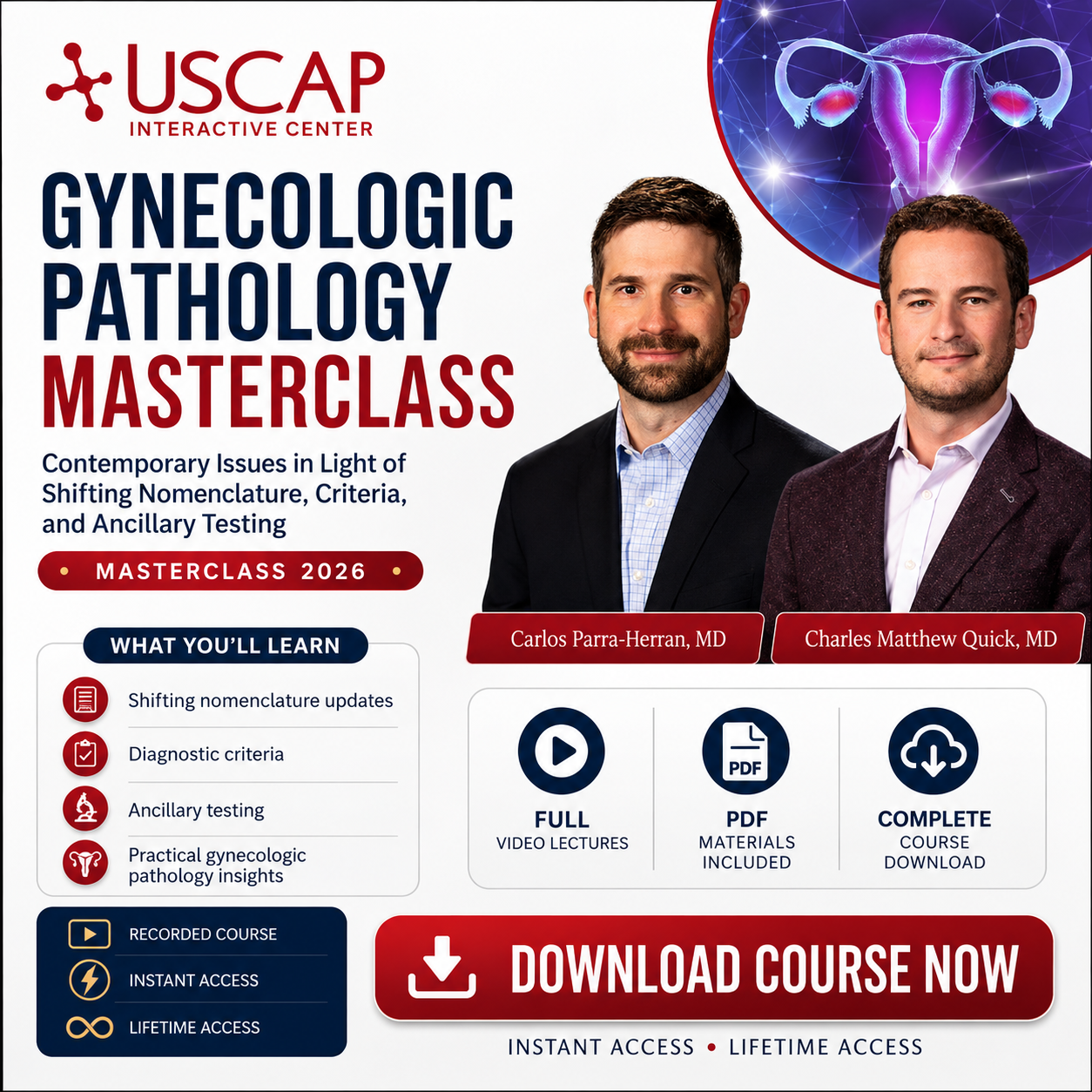





Gynecologic Pathology Masterclass: Contemporary Issues in Light of Shifting Nomenclature, Criteria, and Ancillary Testing
An in-depth gynecologic pathology course focused on evolving terminology, newly characterized entities, updated diagnostic and staging frameworks, molecular diagnostics, biomarker testing, and their impact on modern patient management.
Recorded Package Release: July 1, 2026
Course Co-Directors: Carlos Parra-Herran, MD, and Charles “Matt” Quick, MD
About This Course
Significant updates are occurring throughout the field of gynecologic pathology. The upcoming sixth edition of the World Health Organization Classification of Tumours of Female Reproductive Organs, together with updates to FIGO staging, International Collaboration on Cancer Reporting resources, and current clinical-management guidelines, makes a structured review especially valuable for modern diagnostic practice.
Practicing pathologists and trainees need to understand new terminology, recognize newly characterized entities, and adapt to evolving diagnostic criteria that may directly influence patient management.
Modern classification resources increasingly incorporate molecular markers and biomarker testing to improve diagnosis, risk stratification, prognosis, and targeted treatment selection.
This masterclass helps learners use essential diagnostic resources, interpret classification changes, recognize situations requiring molecular diagnostics, and integrate biomarker results into clinical decision-making.
Why Choose This Course
- Updates related to the sixth edition of the WHO classification
- Current FIGO staging systems, ICCR resources, and management frameworks
- New terminology and newly characterized gynecologic neoplasms
- Molecular diagnostics in ovarian, endometrial, mesenchymal, and gestational lesions
- Biomarker testing in ovarian, endometrial, and cervical cancer
- Practical approaches to non-epithelial and lower genital tract neoplasia
- Dedicated roundtable discussions addressing diagnostic grey areas
- Twenty recorded presentations and twenty course documents
Core Learning Areas
Classification & Staging
WHO classification, FIGO staging, ICCR reporting resources, evolving terminology, and current frameworks for gynecologic cancer diagnosis and management.
Ovarian & Endometrial Pathology
Ovarian epithelial tumors, endometrial pathology, molecular testing, diagnostic criteria, risk stratification, and challenging grey areas.
Non-Epithelial Neoplasia
Mesenchymal tumors, sex-cord stromal tumors, gestational trophoblastic lesions, molecular criteria, and diagnostic alternatives.
Lower Genital Tract Pathology
Cervical, vulvar, and vaginal pathology, modern nomenclature, biomarker testing, ancillary studies, and clinically relevant diagnostic challenges.
Learning Objectives
- Apply essential WHO classification concepts in daily gynecologic pathology practice
- Understand current FIGO staging systems, ICCR resources, and clinical-management guidelines
- Evaluate emerging information on endometrial, upper genital tract, and mesenchymal neoplasia
- Describe newer classification systems and recommended nomenclature for lower genital tract lesions
- Identify non-epithelial gynecologic tumors for which molecular testing is an essential diagnostic criterion
- Develop practical approaches when recommended molecular testing is unavailable
- Discuss biomarker testing in ovarian, endometrial, and cervical cancer
- Integrate molecular and biomarker findings into diagnosis, prognosis, and patient-management decisions
Meet the Faculty
Learn from distinguished specialists in gynecologic pathology, surgical pathology, molecular diagnostics, biomarker testing, and modern tumor classification.
 Course Co-Director
Carlos Parra-Herran, MD
Brigham and Women’s Hospital
Harvard Medical School
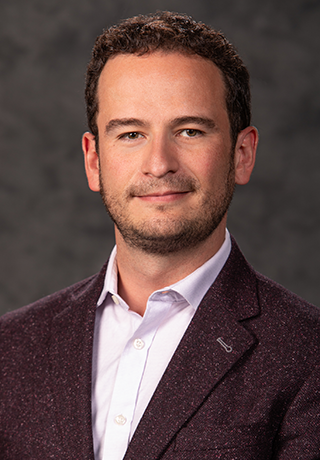
 Course Co-Director
Charles “Matt” Quick, MD
University of Arkansas
for Medical Sciences
 Faculty
C. Blake Gilks, MD
Vancouver General Hospital
University of British Columbia
 Faculty
Ian S. Hagemann, MD, PhD
Washington University
School of Medicine
 Faculty
Brooke E. Howitt, MD
Stanford University
School of Medicine
 Faculty
Marilyn A. Kinloch, MD, FRCPC
University of Saskatchewan
Saskatchewan Health Authority
 Faculty
Marisa R. Nucci, MD
Harvard Medical School
Dana-Farber Cancer Institute
Complete Curriculum
Pathology of Ovarian Epithelial Tumors
Molecular Testing in Ovarian Cancer
Endometrial Pathology
Molecular Testing in Endometrial Cancer
Roundtable: Grey Areas in Endometrial Pathology
Endometrium
Ovarian Epithelial Lesions
Molecular Testing in Mesenchymal and Gestational Trophoblastic Lesions
Biomarker Testing in Lower Genital Tract Neoplasia
Roundtable: Grey Areas in Ovarian Pathology
Ovarian Non-Epithelial Lesions
Mesenchymal Neoplasms
Pathology of Non-Epithelial Ovarian Tumors
Gynecologic Mesenchymal Neoplasia
Roundtable: Grey Areas in Non-Epithelial Gynecologic Neoplasia
Cervix
Vulva
Pathology of the Uterine Cervix
Vulvo-Vaginal Pathology
Roundtable: Grey Areas in Lower Genital Tract Pathology
Who Should Take This Course
This course is designed for practicing academic and community pathologists, gynecologic pathologists, surgical pathologists, pathology residents, fellows, and pathologists-in-training seeking a structured update on gynecologic tumor classification, molecular diagnostics, biomarker testing, and ancillary studies.
Delivery & Access
Recorded Course
Study the course presentations at your own pace through on-demand access.
20 Presentations
Complete sessions covering ovarian, endometrial, mesenchymal, cervical, vulvar, and vaginal pathology.
20 Course Documents
Accompanying educational documents are included with the course presentations.
Support
Reviews
Verified customer reviews for this course will appear here once they become available.


Dr. Sarah Mitchell, MD — Gynecologic Pathologist –
“This masterclass provides an excellent overview of the rapidly evolving terminology and classification systems in gynecologic pathology. The WHO and FIGO updates were especially relevant to my daily diagnostic practice.”
Dr. Michael Anderson, MD — Surgical Pathologist –
“The course offers a clear and practical approach to complex gynecologic specimens. I particularly valued the discussions on diagnostic criteria, ancillary testing, and challenging differential diagnoses.”
Dr. Emily Carter, MD — Academic Pathologist –
“A comprehensive and well-structured update. The integration of morphology, immunohistochemistry, molecular findings, and clinical implications made the lectures highly educational.”
Dr. Jessica Williams, MD — Anatomic Pathologist –
“This course helped clarify several recent changes in gynecologic tumor terminology. The practical examples and expert discussions made the new concepts easier to apply.”
Dr. James Wilson, MD — Community Pathologist –
“An extremely useful course for pathologists who encounter gynecologic specimens in general practice. The diagnostic guidance was practical, focused, and directly applicable.”
Dr. David Martinez, MD — Molecular Pathologist –
“The molecular diagnostics content was one of the strongest aspects of this program. I gained a clearer understanding of when molecular confirmation is useful and how results should be integrated into pathology reports.”
Dr. Rachel Bennett, MD — Cytopathologist –
“The cervical and lower genital tract sessions were particularly valuable. Updated terminology, biomarker interpretation, and challenging diagnostic patterns were presented clearly.”
Dr. Christopher Lee, MD — Diagnostic Pathologist –
“The roundtable discussions on diagnostic grey areas were excellent. Hearing how experienced specialists approach uncertain cases added significant practical value.”
Dr. Amanda Collins, MD — Gynecologic Pathology Fellow –
“This masterclass was an excellent resource for fellowship training. It combined foundational principles with current classification updates and complex case-based discussions.”
Dr. Robert Evans, MD — Surgical Pathology Consultant –
“The course provided a thoughtful review of modern gynecologic pathology reporting. The discussions on structured reporting and clinically meaningful findings were especially helpful.”
Dr. Lauren Parker, MD — Endometrial Pathology Specialist –
“The endometrial pathology lectures were detailed and highly practical. Molecular classification, biomarkers, staging considerations, and difficult morphologic patterns were explained exceptionally well.”
Dr. Matthew Harris, MD — Ovarian Tumor Pathologist –
“The ovarian epithelial tumor content offered an excellent balance between morphology and molecular testing. The faculty highlighted common pitfalls and important diagnostic distinctions.”
Dr. Sophia Turner, MD — Oncologic Pathologist –
“I appreciated the course’s emphasis on how pathology findings influence prognosis, risk stratification, and treatment planning. It strengthened the connection between diagnostic reporting and clinical management.”
Dr. Andrew Clark, MD — General Pathologist –
“This is a valuable update for general pathologists who want to remain current with changing gynecologic pathology criteria. The presentations were clear, focused, and easy to follow.”
Dr. Natalie Green, MD — Vulvar Pathology Specialist –
“The vulvar and vaginal pathology sessions addressed several challenging areas encountered in practice. Updated nomenclature and practical diagnostic strategies were particularly useful.”
Dr. Brian Cooper, MD — Laboratory Medicine Specialist –
“The program clearly demonstrated how ancillary studies can support difficult diagnoses. The discussions on appropriate test selection and result interpretation were clinically relevant.”
Dr. Jennifer Adams, MD — Pathology Resident –
“The lectures greatly improved my understanding of gynecologic tumor classification. The combination of expert explanations, visual examples, and diagnostic reasoning was extremely helpful.”
Dr. Mark Reynolds, MD — Soft Tissue Pathologist –
“The mesenchymal neoplasia sessions were especially valuable. The course provided a practical approach to morphology, immunohistochemistry, molecular alterations, and differential diagnosis.”
Dr. Jonathan Baker, MD — Molecular Oncology Pathologist –
“I valued the detailed discussion of biomarkers in ovarian, endometrial, and lower genital tract tumors. The course explained both their diagnostic role and their clinical significance.”
Dr. Melissa Scott, MD — Hospital-Based Pathologist –
“The emphasis on common diagnostic pitfalls made this course particularly useful. Several lectures addressed exactly the types of difficult cases encountered in routine hospital practice.”
Dr. Kevin Brooks, MD — Cervical Pathology Specialist –
“The cervical pathology content was current, focused, and clinically meaningful. The updated terminology and ancillary testing recommendations were presented with excellent clarity.”
Dr. Hannah Foster, MD — Surgical Pathology Fellow –
“This masterclass successfully combines evolving guidelines with practical diagnostic application. It is a valuable resource for anyone seeking a structured update in modern gynecologic pathology.”