
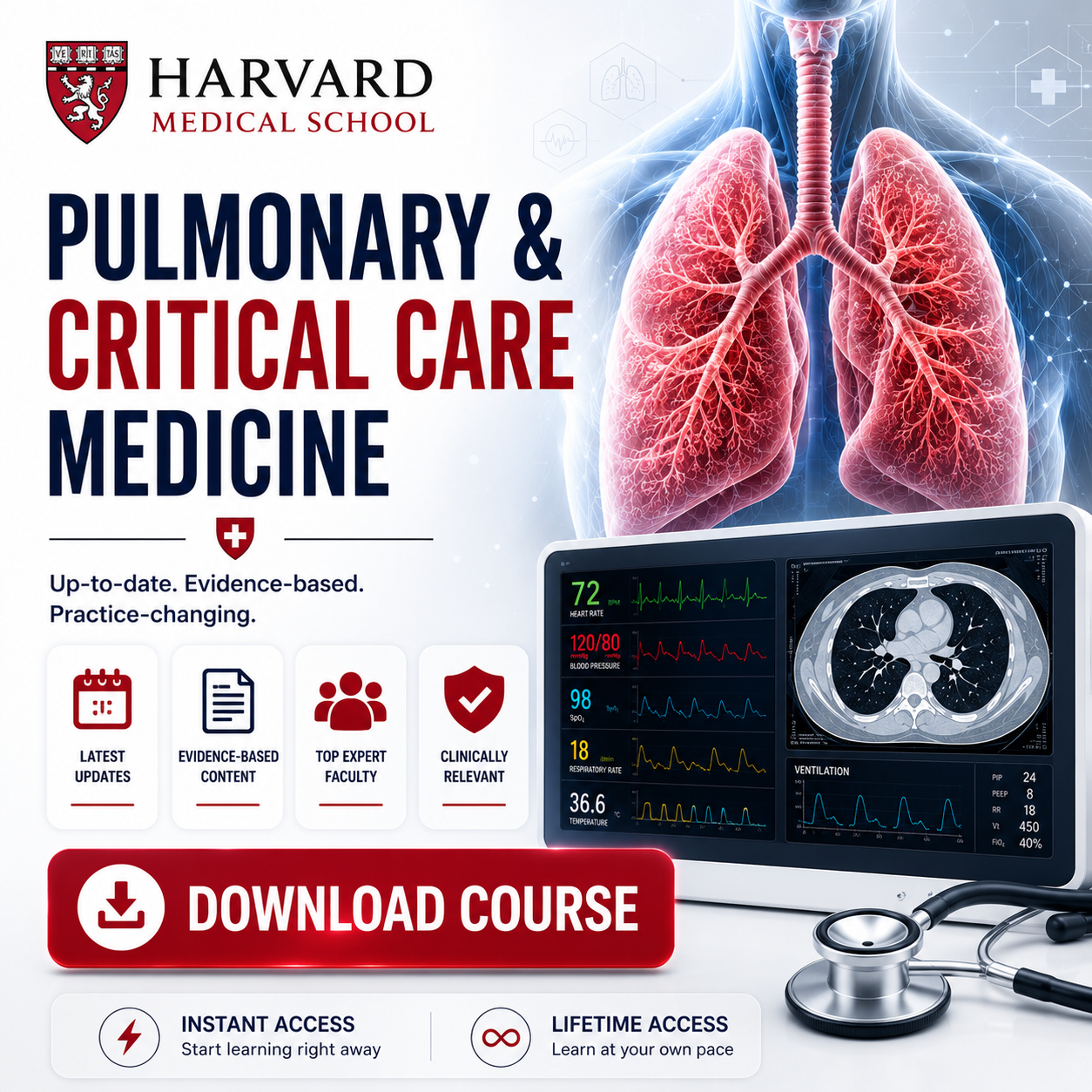
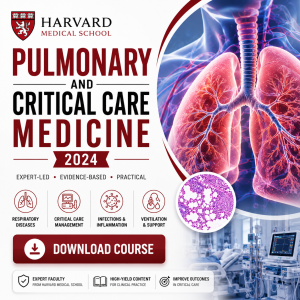
Harvard Pulmonary and Critical Care Medicine 2023
A comprehensive Harvard pulmonary and critical care medicine course focused on the diagnosis, treatment, procedures, and management of complex respiratory and ICU conditions, including post-acute COVID-19, chronic cough, COPD, asthma, lung nodules, lung cancer, sleep-disordered breathing, sepsis, ARDS, interstitial lung disease, pulmonary hypertension, and acute respiratory failure.
Course Details:
Harvard Pulmonary and Critical Care Medicine 2023 is a recorded comprehensive update designed to help clinicians optimize care for patients with pulmonary disease, complex respiratory symptoms, ICU illness, and life-threatening critical care presentations.
Focus: Post-acute sequelae of COVID-19, chronic cough, COPD, asthma, lung nodules, lung cancer, sleep-disordered breathing, GERD, sepsis, ARDS, sarcoidosis, IPF, pleural disease, pneumonia, tuberculosis, surgical emergencies, thromboembolism, lung transplantation, neurologic issues in the ICU, septic shock, interstitial lung disease, bronchiectasis, cystic fibrosis, atypical mycobacterial disease, pulmonary hypertension, cardiopulmonary disorders, cardiac arrest complications, hypersensitivity pneumonitis, occupational and environmental lung disease, acute respiratory failure, vaping-related lung disease, hemorrhage, and ANCA-associated disease.
About This Course
Pulmonary and critical care medicine requires clinicians to integrate evolving evidence, advanced diagnostics, procedural skills, ICU management, respiratory physiology, and multidisciplinary care for patients with complex and high-risk conditions.
Harvard Pulmonary and Critical Care Medicine 2023 provides a broad clinical review led by expert educators, with practical recommendations that clinicians can incorporate into patient care.
The course addresses common and advanced pulmonary conditions, critical care emergencies, new therapies, updated guidelines, procedural advances, and challenging clinical controversies in respiratory and ICU medicine.
Why Choose This Course
- Harvard 2023 comprehensive course in pulmonary and critical care medicine
- Covers both outpatient pulmonary care and high-acuity ICU management
- Includes post-acute COVID-19, chronic cough, COPD, asthma, lung nodules, lung cancer, sleep-disordered breathing, and GERD
- Reviews sepsis, septic shock, ARDS, acute respiratory failure, vasopressors, sedation, analgesia, early mobility, and critical care best practices
- Addresses interventional pulmonology, interventional bronchoscopy, pulmonary ultrasound, pleural disease, and procedural decision-making
- Includes advanced updates in IPF, ILD, sarcoidosis, hypersensitivity pneumonitis, pulmonary hypertension, thromboembolism, cystic fibrosis, and lung transplantation
- Useful for pulmonologists, intensivists, hospitalists, internists, emergency physicians, respiratory therapists, NPs, PAs, residents, fellows, and ICU care teams
Core Learning Areas
Critical Care & ICU Medicine
Sepsis, septic shock, ARDS, acute respiratory failure, vasopressors, sedation, analgesia, early mobility, neurologic emergencies, surgical emergencies, and cardiac arrest care.
Pulmonary Disease Updates
COPD, asthma, chronic cough, sleep-disordered breathing, GERD, bronchiectasis, cystic fibrosis, pneumonia, tuberculosis, atypical mycobacteria, and post-COVID lung disease.
Interstitial & Vascular Lung Disease
IPF, interstitial lung disease, sarcoidosis, hypersensitivity pneumonitis, pulmonary hypertension, thromboembolism, ANCA-associated disease, hemorrhage, and environmental lung disease.
Procedures & Advanced Therapies
Interventional pulmonology, bronchoscopy, point-of-care pulmonary ultrasound, lung nodules, lung cancer, pleural disease, lung transplantation, targeted therapies, and immunotherapies.
Complete Curriculum
- Most current guidelines for treating sepsis
- State-of-the-art management of the critically ill patient
- New concepts in the use of vasopressors in septic shock
- Recognition and treatment of shock physiology
- Escalation of care for unstable ICU patients
- Critical care decision-making in high-acuity settings
- Practical strategies to improve outcomes in septic shock and critical illness
- Evidence-based treatment of ARDS
- Management of acute respiratory failure
- High-flow oxygen therapy for respiratory failure
- Approach to severe hypoxemia and escalating oxygen needs
- Ventilation and oxygenation strategies in critical illness
- Respiratory support decisions in complex ICU patients
- Integrating pulmonary physiology into bedside management
- New evidence on sedation in the ICU
- Analgesia strategies for critically ill patients
- Early mobility and ICU recovery
- Reducing complications of prolonged ICU stay
- Balancing comfort, safety, delirium prevention, and ventilator synchrony
- Functional recovery after critical illness
- Practical approaches to ICU patient-centered care
- Complications from cardiac arrest
- Targeted temperature management updates
- Controversies surrounding therapeutic hypothermia
- Post-cardiac arrest prognosis
- Neurologic assessment after cardiac arrest
- Communication and decision-making in uncertain prognosis
- Critical care strategies for post-arrest patients
- Neurologic issues in the ICU
- Handling neurologic emergencies in medically complex ICU patients
- Surgical emergencies in the medical ICU
- Multisystem critical illness and emergency decision-making
- When to escalate to specialty consultation
- Coordinating urgent interventions in critically ill patients
- Practical ICU management of complex neurologic and surgical presentations
- New biologics for asthma
- Modern management of severe asthma
- COPD evaluation and treatment updates
- Bronchiectasis management principles
- New approaches that improve outcomes for patients with unexplained chronic cough
- Vaping-related lung disease updates
- Personalized treatment strategies for chronic respiratory symptoms
- COVID-19, post-acute sequelae of COVID-19, and emerging diseases
- Long-term respiratory symptoms after COVID-19
- Pneumonia updates in pulmonary and critical care medicine
- Tuberculosis recognition and treatment considerations
- Atypical mycobacterial diagnostics and therapy
- Distinguishing infection from inflammatory and chronic lung disease
- Clinical follow-up strategies for persistent pulmonary symptoms
- Prescribing medications for interstitial lung disease
- When and how to use the newest drugs in IPF
- Idiopathic pulmonary fibrosis updates
- Hypersensitivity pneumonitis diagnosis and treatment
- Steroid-sparing agents and treatment selection in ILD
- Monitoring disease progression and treatment response
- Clinical, radiologic, and pathologic correlation in ILD care
- Evaluation and management of sarcoidosis
- Pulmonary manifestations of systemic inflammatory disease
- Hemorrhage and ANCA-associated disease
- Recognition of pulmonary vasculitis presentations
- Differentiating inflammatory, infectious, and immune-mediated lung disease
- Clinical monitoring and treatment planning
- Practical approach to complex immune-mediated pulmonary disorders
- Evaluating occupational lung disease
- Evaluating environmental lung disease
- Exposure history and diagnostic reasoning
- Recognizing exposure-related pulmonary patterns
- Distinguishing inflammatory, fibrotic, and occupational lung disease
- When to pursue specialized testing or referral
- Practical counseling and management for exposure-related lung conditions
- New drugs and combinations in pulmonary hypertension
- Updated treatment strategies for pulmonary embolus
- Pulmonary embolus risk stratification and treatment selection
- Cardiopulmonary disorders and pulmonary vascular disease
- Right heart function and pulmonary vascular assessment
- Multidisciplinary care for pulmonary hypertension and thromboembolism
- Practical approaches to high-risk vascular lung disease
- Current guidelines for management of pulmonary nodules
- Lung cancer evaluation and diagnostic pathways
- Targeted therapies and immunotherapies for lung cancer
- Updates in pulmonary pathology
- Integrating imaging, pathology, and clinical findings
- Risk stratification for suspicious pulmonary lesions
- Multidisciplinary decision-making in lung cancer care
- Advanced techniques in interventional pulmonology
- State of the art in interventional bronchoscopy
- Procedural approaches to pulmonary diagnosis and therapy
- Pleural disease diagnosis and management
- Reducing procedural risk and improving diagnostic yield
- Patient selection for advanced pulmonary procedures
- Practical updates in procedural pulmonary medicine
- Point-of-care pulmonary ultrasound in the intensive care unit
- Using bedside ultrasound for pulmonary and critical care assessment
- Improving diagnostic confidence at the bedside
- Lung microbiome and emerging implications for lung health
- Modern tools for respiratory assessment and monitoring
- Technology-enhanced pulmonary and ICU decision-making
- Integrating emerging evidence into clinical practice
- New treatment options in cystic fibrosis
- Bronchiectasis and chronic airway infection considerations
- When to consider lung transplantation
- Lung transplant eligibility and referral considerations
- Pre-transplant and post-transplant pulmonary care
- Complex care coordination for advanced lung disease
- Improving outcomes for patients with severe chronic respiratory disease
- Sleep-disordered breathing evaluation and management
- Impact of sleep disorders on cardiopulmonary health
- GERD and respiratory symptom relationships
- Evaluation of unexplained chronic cough
- Approach to overlapping upper airway, reflux, and pulmonary symptoms
- Long-term strategies for persistent respiratory complaints
- Patient-centered care for chronic pulmonary symptoms
- Guidance to conduct end-of-life discussions
- Communication with patients and families in critical illness
- Shared decision-making in advanced pulmonary disease
- Balancing aggressive care with patient goals and prognosis
- Interdisciplinary collaboration in complex care decisions
- Case-based discussion of challenging pulmonary and ICU presentations
- Practical recommendations for compassionate, high-quality ICU care
Learning Objectives
- Apply updated approaches to sepsis, septic shock, ARDS, acute respiratory failure, and ICU management
- Use high-flow oxygen therapy and evidence-based respiratory support strategies for respiratory failure
- Recognize current treatment options in asthma, COPD, chronic cough, cystic fibrosis, and bronchiectasis
- Evaluate post-acute COVID-19 respiratory disease, vaping-related lung disease, pneumonia, tuberculosis, and atypical mycobacterial disease
- Manage interstitial lung disease, IPF, sarcoidosis, hypersensitivity pneumonitis, occupational lung disease, and environmental lung disease
- Use updated concepts in pulmonary hypertension, pulmonary embolus, thromboembolism, and cardiopulmonary disorders
- Apply current guidelines for pulmonary nodules and integrate targeted therapies and immunotherapies for lung cancer
- Incorporate interventional pulmonology, bronchoscopy, pleural disease management, pulmonary ultrasound, and lung microbiome concepts into practice
- Recognize neurologic emergencies, surgical emergencies, post-cardiac arrest complications, and therapeutic hypothermia controversies in the ICU
- Conduct more effective end-of-life and goals-of-care discussions in pulmonary and critical care settings
Who Should Take This Course
This course is designed for pulmonologists, critical care physicians, hospitalists, internists, emergency medicine clinicians, respiratory therapists, primary care physicians, physician assistants, nurse practitioners, residents, fellows, and healthcare professionals involved in pulmonary and ICU care.
It is especially useful for clinicians who care for patients with respiratory failure, sepsis, ARDS, asthma, COPD, chronic cough, post-COVID lung disease, pulmonary hypertension, lung cancer, lung nodules, ILD, pulmonary infections, thromboembolism, pleural disease, transplant-related issues, and complex ICU illness.
Delivery & Access
Recorded Course
Review the pulmonary and critical care sessions at your own pace.
2023 Edition
Comprehensive pulmonary and ICU medicine update from 2023.
30+ Topics
Broad coverage of respiratory disease, ICU care, procedures, and advanced therapies.
Support
Course Highlights
Comprehensive Pulmonary Review
Covers chronic cough, asthma, COPD, lung nodules, lung cancer, ILD, pulmonary hypertension, infections, post-COVID disease, and advanced lung care.
Critical Care Updates
Includes sepsis, septic shock, ARDS, respiratory failure, vasopressors, sedation, early mobility, cardiac arrest care, and ICU emergencies.
Practical Clinical Focus
Emphasizes expert recommendations, bedside decision-making, procedural updates, end-of-life communication, and multidisciplinary care.
FAQ
Who is this course best suited for?
This course is best suited for pulmonologists, critical care physicians, hospitalists, internists, emergency medicine clinicians, respiratory therapists, primary care physicians, physician assistants, nurse practitioners, residents, fellows, and ICU care teams.
What topics are covered?
Topics include post-acute sequelae of COVID-19, chronic cough, COPD, asthma, lung nodules, lung cancer, sleep-disordered breathing, GERD, sepsis, ARDS, sarcoidosis, IPF, pleural disease, pneumonia, tuberculosis, surgical emergencies, thromboembolism, lung transplantation, neurologic ICU issues, septic shock, ILD, bronchiectasis, cystic fibrosis, atypical mycobacterial disease, pulmonary hypertension, cardiopulmonary disorders, cardiac arrest complications, hypersensitivity pneumonitis, occupational and environmental lung disease, acute respiratory failure, vaping-related lung disease, hemorrhage, and ANCA-associated disease.
Does this course cover critical care updates?
Yes. The course covers sepsis guidelines, septic shock vasopressors, ARDS treatment, acute respiratory failure, high-flow oxygen therapy, sedation, analgesia, early mobility, neurologic ICU emergencies, surgical emergencies, cardiac arrest complications, and end-of-life discussions.
Does this course cover pulmonary medicine updates?
Yes. The course covers asthma, COPD, chronic cough, lung nodules, lung cancer, pulmonary infections, post-COVID lung disease, ILD, IPF, sarcoidosis, cystic fibrosis, bronchiectasis, pulmonary hypertension, pleural disease, and lung transplantation.
Is this a recorded course?
Yes. This product is provided as recorded course access so you can review the material at your own pace.
Does this course include CME or a certificate?
No. CME credits and certificates are not included with this course package.
Who can I contact for support?
You can contact support at [email protected].

Reviews
There are no reviews yet.