
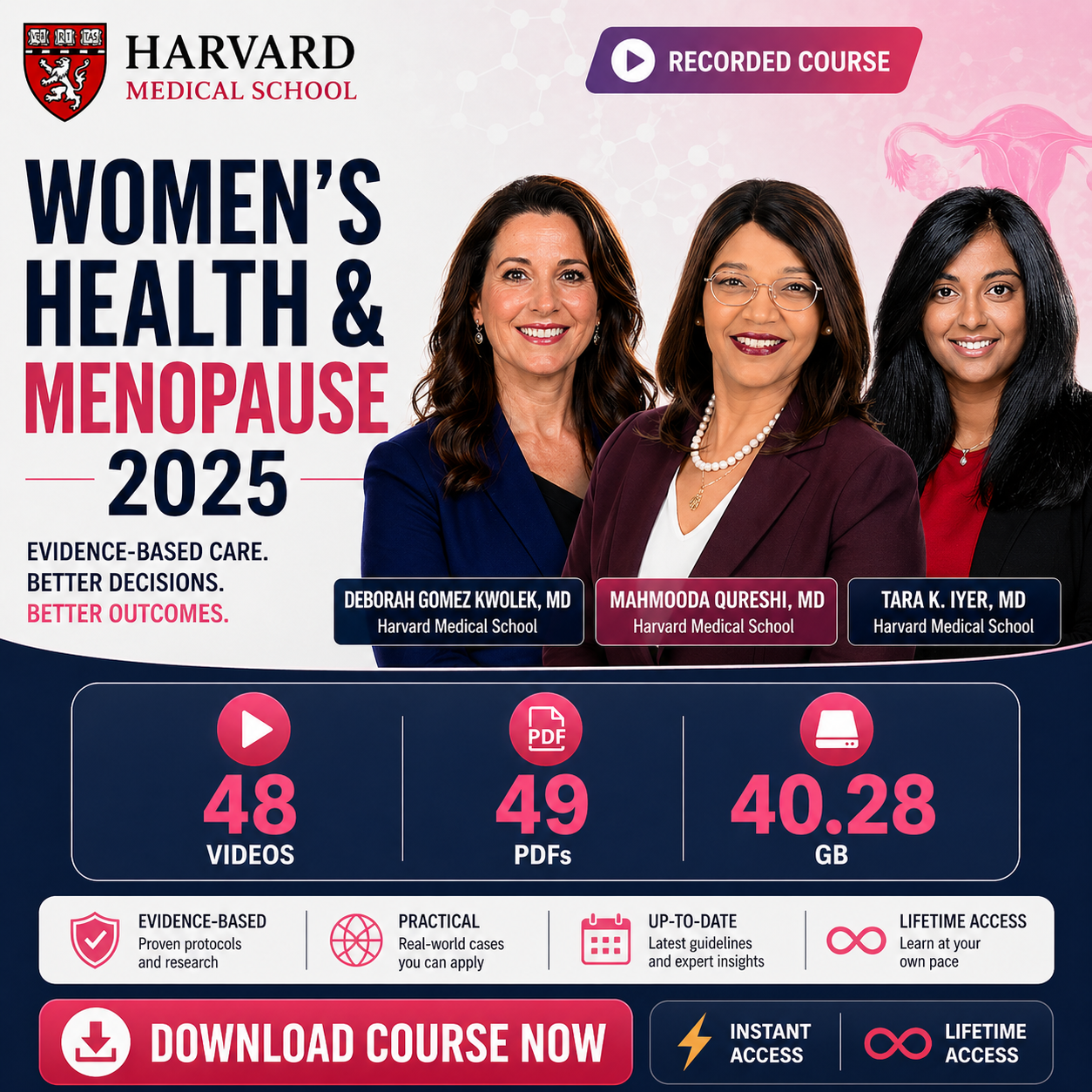
Harvard Women’s Health and Menopause 2025
A comprehensive women’s health and menopause course designed to strengthen clinical confidence in midlife women’s care, menopause management, hormone therapy, non-hormonal treatment options, lifestyle medicine, cardiometabolic health, brain health, sexual health, bone health, oncology-related issues, and inclusive care across the lifespan.
Harvard Women’s Health and Menopause 2025 is a comprehensive recorded learning package focused on women’s health, midlife care, perimenopause, menopause, hormonal and non-hormonal treatment options, and evidence-based clinical strategies for caring for women across the lifespan.
Focus: Perimenopause, menopause, estrogen, progesterone, testosterone, non-hormonal therapies, cardiometabolic health, brain health, sexual health, pelvic health, osteoporosis, weight gain, sleep, mental health, oncology, dermatology, gastroenterology, lifestyle medicine, and inclusive women’s care.
About This Course
Women’s health and menopause care require a broad understanding of hormonal transitions, symptom management, preventive care, cardiovascular risk, bone health, metabolic change, sexual health, mental health, sleep, and cancer-related considerations.
This course brings together expert perspectives on the comprehensive care of women in midlife and menopause. It is designed to help clinicians improve confidence, clinical reasoning, and treatment planning for patients experiencing hormonal changes, menopausal symptoms, and complex women’s health concerns.
Why Choose This Course
Key Highlights
- Harvard 2025 women’s health and menopause course
- Comprehensive review of perimenopause and menopause management
- Covers hormonal and non-hormonal treatment options
- Includes estrogen, progesterone, testosterone, and individualized hormone therapy strategies
- Reviews women’s cardiology, brain health, lifestyle medicine, sexual health, and pelvic health
- Includes case-based learning and practical clinical strategies
- Designed for internal medicine physicians, family medicine physicians, OB/GYN physicians, NPs, PAs, specialty physicians, nurses, social workers, and mental health professionals
Core Learning Areas
Complete Curriculum
Menopause Foundations and Hormonal Transitions
- Overview of a woman’s lifespan and hormonal phases
- Why estrogen matters
- The science of perimenopause and menopause
- Genitourinary syndrome of menopause
- Individualizing treatment to optimize health and quality of life
- Clinical reasoning around menopausal symptoms
- Developing practical management plans for midlife women
Hormone Therapy and Treatment Planning
- Prescribing hormone therapy and individualizing treatment
- Prescribing hormone therapy in perimenopause
- Hormone therapy for high-risk patients
- Hormone therapy adjustments and optimization
- Advanced cases in hormone treatment
- Estrogen, progesterone, and testosterone treatment considerations
- Safety, risks, benefits, and patient selection
Non-Hormonal Menopause Care
- Alternatives to hormone therapy for menopausal symptoms
- Symptom management for patients who cannot or prefer not to use hormone therapy
- Clinical strategies for vasomotor symptoms
- Patient-centered shared decision-making
- Managing complex symptom patterns
- Evidence-based counseling for menopause care
Women’s Cardiology and Cardiometabolic Health
- Migraines and hormones
- Menopausal cardiometabolic changes and treatment
- Cardiovascular disease in women
- Thrombosis in women and the effect of hormones
- Risk assessment across midlife and menopause
- Cardiovascular prevention and management strategies
- Sex-specific cardiovascular considerations
Lifestyle Medicine, Nutrition and Weight Management
- Stress reduction and coaching
- Exercise for women’s fitness and health
- Nutrition and culinary medicine in menopause and midlife
- Weight gain in menopause
- Prescribing weight loss medications
- Lifestyle medicine practices including nutrition, exercise, sleep, and stress management
- Healthy cooking for menopause
Bone Health, Fertility and Autoimmunity
- Osteoporosis and menopausal bone loss
- Bone health risk assessment and treatment strategies
- Infertility and assisted fertility
- Women’s health update 2025
- Rheumatic diseases and autoimmunity in women
- Musculoskeletal health in midlife
- Unique considerations for women with chronic autoimmune conditions
Brain Health, Mental Health and Sleep
- Mental health and menopause
- Estradiol and the impact of reproductive aging on the brain
- Sleep in women
- Brain fog, mood, cognition, and menopause-related concerns
- Trauma-informed care
- Survivors of human trafficking and clinical care considerations
- Psychiatric and neurologic considerations in women’s health
Comprehensive Women’s Healthcare
- Why sex and gender matter in comprehensive women’s healthcare
- Women’s health considerations in gastroenterology
- Allergy, immunology, and women’s health
- Skin care and aesthetics for women
- Hair loss and treatments in midlife
- Dermatologic, gastrointestinal, metabolic, psychiatric, and oncologic considerations
- Inclusive LGBTQ issues relevant to women’s health
Oncology, Survivorship and Hormones
- Breast cancer
- Menopausal symptom management in breast cancer survivors
- Lung cancer in women
- Gynecologic malignancies, hormones, and sexual health
- Hormone-related oncology considerations
- Supportive care for cancer survivors
- Risk-aware menopause treatment planning
Sexual Health, Pelvic Health and Intimacy
- Vaginal health and intimacy
- Approach to addressing sexual problems in women
- Navigating sexual pain through physical examination
- Pelvic physical therapy for painful sex and incontinence
- Arousal and orgasm: a systematic approach
- Testosterone and hypoactive sexual desire disorder
- Topical and systemic hormone use, counseling, and pelvic therapy
Sports Medicine, Orthopedics and Aesthetic Topics
- Sports medicine: sex and gender considerations
- Physical therapy orthopedic examination of the lumbar spine, pelvic girdle, and hip
- Cosmetic surgery and procedures
- Skin care and aesthetic considerations
- Hair loss and midlife treatment options
- Functional and quality-of-life concerns in midlife women
Learning Objectives
By Completing This Course, You Will Be Able To:
- Recognize hormonal phases across a woman’s lifespan
- Improve clinical reasoning around menopausal symptoms
- Develop a deeper understanding of perimenopause and its management
- Design individualized management plans for hormone therapies including estrogen, progesterone, and testosterone
- Understand weight gain in menopause and obesity treatment options
- Describe safety considerations and risks of menopausal hormone therapy
- Identify alternatives to hormone therapy for menopause symptoms
- Apply lifestyle medicine practices including nutrition, exercise, sleep, and stress management
- Discuss sexual health issues in women, including pelvic physical therapy, hormone use, and counseling
- Address unique women’s health considerations across cardiovascular, musculoskeletal, dermatologic, gastrointestinal, metabolic, psychiatric, and oncologic conditions
Who Should Take This Course
This course is designed for internal medicine physicians, family medicine physicians, OB/GYN physicians, nurse practitioners, specialty physicians, physician assistants, allied health professionals, nurses, social workers, mental health professionals, and clinicians involved in women’s health and menopause care.
Delivery & Access
This course package is provided for recorded learning access. No CME points are associated with this product.
Reviews
A very complete women’s health and menopause update. The hormone therapy, cardiometabolic health, and sexual health sections are especially practical.
Excellent course for clinicians caring for women in midlife. The case-based approach makes the content clinically useful and easy to apply.
Strong coverage of menopause, lifestyle medicine, brain health, oncology, pelvic health, and sexual wellness. Very helpful for daily practice.
FAQ
Who is this course best suited for?
It is ideal for internal medicine physicians, family medicine physicians, OB/GYN physicians, nurse practitioners, specialty physicians, physician assistants, nurses, social workers, mental health professionals, and clinicians involved in women’s health and menopause care.
What topics are covered?
The course covers perimenopause, menopause, hormone therapy, estrogen, progesterone, testosterone, non-hormonal therapies, lifestyle medicine, nutrition, exercise, stress reduction, weight gain, women’s cardiology, thrombosis, brain health, mental health, sleep, osteoporosis, sexual health, pelvic health, breast cancer, gynecologic malignancies, dermatology, gastroenterology, allergy and immunology, LGBTQ issues, and comprehensive women’s healthcare.
Is this course practical for clinical menopause care?
Yes. The course focuses on clinical reasoning, case-based learning, individualized hormone therapy decisions, symptom management, lifestyle counseling, and practical strategies for women’s health clinicians.
Does this product include CME?
No. This course package does not include CME points.
Who can I contact for support?
You can contact us at [email protected].


Dr. Eleanor Vance, Menopause Specialist, Boston, MA –
“An exceptional, comprehensive update. The 2025 deep dive on the latest data regarding hormone therapy timing, duration, and non-hormonal options for vasomotor symptoms was worth the entire course. The nuanced, evidence-based approach is invaluable.”
Marcus Thorne, ND, Naturopathic Physician, Los Angeles, CA –
“This course brilliantly bridges conventional and integrative medicine. The 2025 sessions on evaluating evidence for botanicals and supplements for menopausal symptoms, alongside pharmaceutical options, provide a holistic and practical toolkit for patient care.”
Dr. Ben Carter, Gynecologist, Baltimore, MD –
“The ultimate resource for any clinician providing menopause care. The 2025 algorithms for managing genitourinary syndrome of menopause (GSM) with both local and systemic therapies have revolutionized my practice and improved patient quality of life dramatically.”
Priya Sharma, MD, Primary Care Physician, Chicago, IL –
“This course empowers the PCP to be the first line of defense in menopause management. The 2025 practical guidelines for initiating conversations, risk assessment, and individualizing treatment plans are immediately applicable and desperately needed in primary care.”
Dr. Samuel Cohen, Cardiologist, Denver, CO –
“A masterclass in cardiometabolic health in midlife women. The 2025 updates on the impact of menopause on lipid profiles, vascular health, and the cardioprotective considerations of hormone therapy are essential knowledge for any cardiologist.”
Dr. Robert Yi, Endocrinologist, New York, NY –
“Incredibly valuable for managing the endocrine transition. The 2025 sessions on the interplay between thyroid disorders, diabetes, and menopause, and how to adjust management strategies, are directly relevant and practice-changing.”
Dr. Lisa Feldman, Psychiatrist, San Diego, CA –
“Essential for mental health. The 2025 lectures on differentiating menopausal mood disorders from primary psychiatric conditions, and the impact of sleep disruption on mental health, provide critical knowledge for effective diagnosis and treatment.”
David Chen, PharmD, BCPS, Clinical Pharmacy, Phoenix, AZ –
“The pharmacotherapy content is top-tier. The 2025 nuanced discussions on new formulations of hormone therapy, emerging non-hormonal agents for hot flashes, and osteoporosis management provide the depth I need for collaborative drug therapy management.”
Dr. Maria Flores, Rheumatologist, Houston, TX –
“An excellent update on bone health and beyond. The 2025 data on sequential and combination therapy for osteoporosis, alongside managing musculoskeletal pain and autoimmune flares during the menopausal transition, is presented masterfully.”
Jonathan Reid, PA-C, Orthopedics, Minneapolis, MN –
“This provides the essential foundation in women’s musculoskeletal health. The 2025 reviews of preventing and treating osteoporosis and the connections between menopause, arthritis, and fracture risk are directly relevant to improving my patient outcomes.”
Dr. Aaron Wilcox, Urologist, Philadelphia, PA –
“Highly relevant for any urologist. The 2025 protocols for evaluating and treating urogenital atrophy, recurrent UTIs, and overactive bladder in the menopausal patient are presented with a clear, actionable focus that is vital for comprehensive care.”
Dr. Irene Kostas, Oncologist, Cleveland, OH –
“Crucial for any oncologist. The 2025 guidance on managing menopausal symptoms in cancer survivors, including non-hormonal strategies and the safe use of local hormones, is an essential part of providing holistic survivorship care.”
Dr. Mark Williams, Family Medicine, Miami, FL –
“Extremely practical and directly applicable to my high-volume practice. The 2025 treatment algorithms and conversation guides are efficient and effective, enhancing my ability to provide compassionate and informed care to my menopausal patients.”
Sarah Brennan, RD, Registered Dietitian, Portland, OR –
“This provides a superb medical foundation for my nutritional counseling. The 2025 sessions on nutrition for bone health, managing weight gain, and mitigating symptoms through diet provide the context I need to create effective, personalized plans.”
Dr. Neil Gupta, Gastroenterologist, Dallas, TX –
“A very informative cross-disciplinary update. The 2025 lectures on the gut microbiome’s potential role in menopausal symptoms and managing GI issues that can be exacerbated by hormonal shifts provide a valuable broader perspective.”
Anika Sharma, LCSW, Therapist, Washington, D.C. –
“This course provides invaluable medical context for my therapy practice. Understanding the physiological drivers of mood swings, anxiety, and ‘brain fog’ in perimenopause allows me to provide more integrated and effective support to my clients.”
Dr. Thomas Reed, Retired Gynecologist, Sarasota, FL –
“A superb way to stay current on the remarkable advances in women’s health. The 2025 data refines many of the concepts we pioneered, presented with the clarity and authority expected from Harvard. A fantastic update.”
Dr. Zoe Turner, MD/MPH, Public Health, Chapel Hill, NC –
“A brilliant clinical update that provides essential context for public health initiatives focused on the long-term health of an aging female population, from bone health to heart disease prevention and cognitive function.”
Dr. Kenji Tanaka, Internist, Honolulu, HI –
“The Harvard faculty delivers this complex and vital topic with unmatched clarity and practicality. This format is an excellent way for internists to ensure our knowledge of women’s health is comprehensive, current, and compassionate.”
Dr. Evan Pierce, Rural Family Medicine, Rochester, MN –
“This course is a critical resource for providing comprehensive care without immediate specialist access. The 2025 guidelines for managing common and complex menopausal concerns are a lifeline for my practice and my patients.”
Maya Reddy, Pre-Med Student, Berkeley, CA –
“An incredible, in-depth look at a half-century of a woman’s life that is often overlooked in medical education. It has profoundly increased my appreciation for the need for knowledgeable and empathetic providers in this space.”
Dr. Zoe Turner, MD/MPH, Public Health, Chapel Hill, NC –
“A brilliant clinical update that provides essential context for public health initiatives focused on the long-term health of an aging female population, from bone health to heart disease prevention and cognitive function.”