
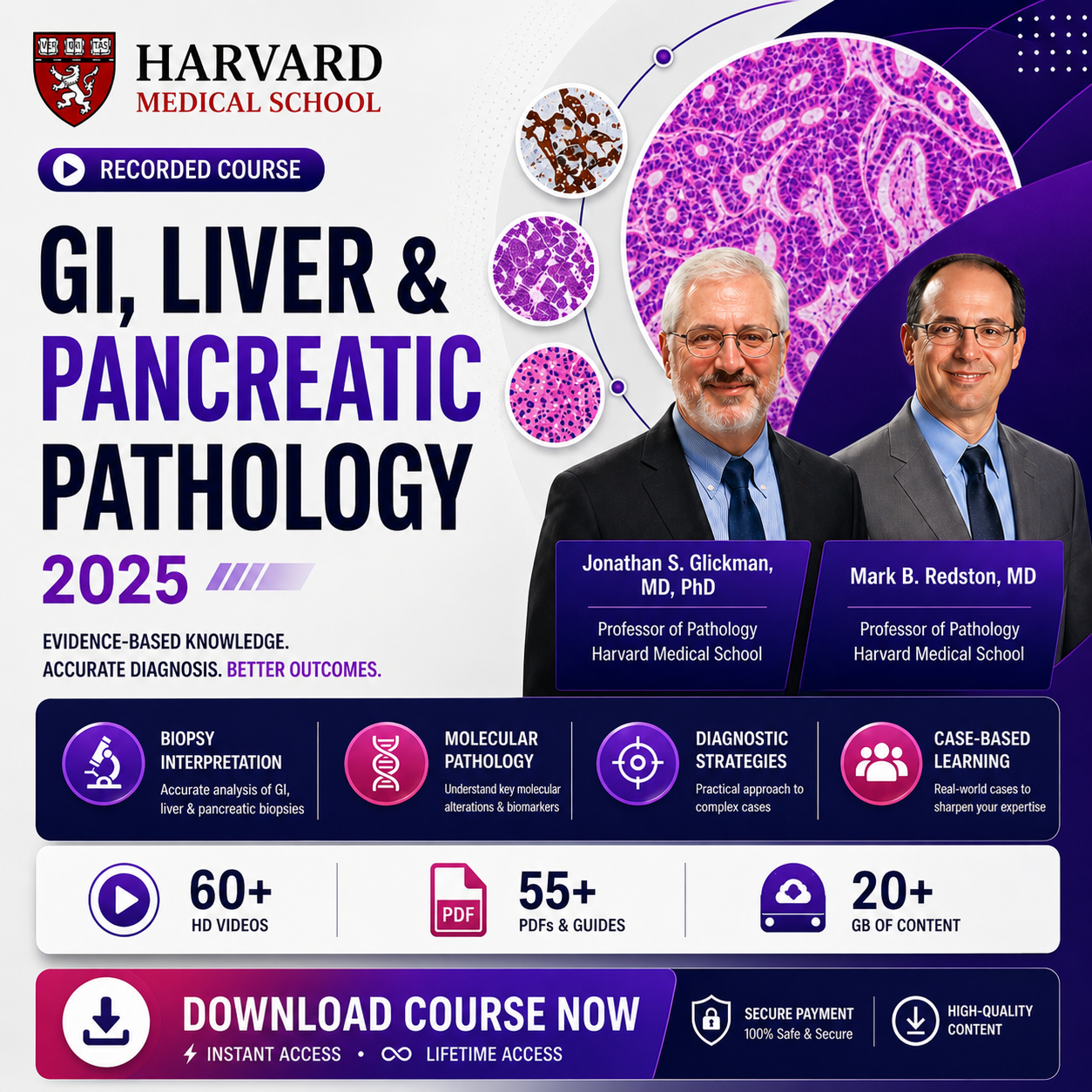
Harvard Gastrointestinal, Liver, and Pancreatic Pathology 2025
A comprehensive pathology course focused on gastrointestinal, liver, and pancreatic disease, with practical updates in biopsy interpretation, resection specimens, molecular pathology, immunohistochemistry, tumor classification, biomarkers, and diagnostic strategies for daily pathology practice.
Harvard Gastrointestinal, Liver, and Pancreatic Pathology 2025 is a recorded medical course package focused on diagnostic pathology, biopsy and resection interpretation, slide-based learning, ancillary testing, molecular pathology, and practical case-based strategies.
Included: 29 videos, 29 audio files, 28 PDF resources, total size 53 GB.
About This Course
This course provides a comprehensive update in gastrointestinal, pancreas, and liver pathology, with emphasis on new entities, recent advances, and practical diagnostic strategies relevant to trainees, community pathologists, and academic pathologists.
The curriculum emphasizes systematic interpretation of biopsy and resection specimens using standard gross and microscopic techniques, with judicious use of ancillary methods including immunohistochemistry and molecular pathology.
Why Choose This Course
Key Highlights
- Focused update in gastrointestinal, liver, and pancreatic pathology
- 29 recorded video sessions, 29 audio files, and 28 PDF learning resources
- Practical emphasis on biopsy and resection specimen interpretation
- Covers WHO tumor classification, biomarkers, molecular testing, and ancillary techniques
- Includes slide seminars, case discussions, and clinically relevant diagnostic frameworks
Core Learning Areas
Complete Curriculum
Upper GI & Inflammatory Disorders
- Barrett’s Esophagus and Associated Neoplasia
- Upper GI Inflammatory Conditions
- Celiac Disease and its Differential Diagnosis
- Gastric Polyps and Precursor Lesions
- Clinician’s Perspective: Upper GI Tract
- Slide Seminar on Upper GI Tract
Lower GI, IBD & Colorectal Pathology
- Biopsy Diagnosis of Colitis
- IBD Controversies and Challenges
- Colon Polyps and Polyposis
- Challenges in Colon Cancer Pathology and Staging
- Anal Pathology Overview and Update
- Appendiceal Tumors
- Slide Seminar: Lower GI
GI Tumors, Lymphomas & Molecular Diagnostics
- GI Lymphomas
- Gastrointestinal Stromal Tumors
- Endocrine Tumors of the Tubal Gut
- Mesenchymal Tumors and Mesenchymal Polyps
- Molecular Diagnostics in GI Tract Malignancies
- Intraoperative Consultations in GI Pathology
Pancreatic & Biliary Pathology
- Surgical Pathology of Pancreatic Tumors
- Cytology and Small Biopsy Diagnosis of Pancreatic Neoplasms
- Slide Seminar: Instructive Cases in Pancreatic Pathology
- Gallbladder and Biliary Tract Pathology
- Benign and Neoplastic Pancreatic Disorders
- Proper Nomenclature and Prognostic Reporting
Liver Pathology & Hepatic Disease
- Approach to Chronic Hepatitis
- Case Seminar: Challenging Liver Cases
- Clinician’s Perspective on Liver Biopsies
- Drug-Related Liver Injury
- Granulomatous Disease in the Liver
- Common and Uncommon Hepatic Tumors
- Morphologic Patterns in Liver Biopsy Interpretation
Diagnostic Strategy, Biomarkers & Classification
- Updates in WHO Classification of Digestive System Tumors
- Newly Described Entities in GI Inflammatory Disorders
- Pre-Neoplastic Lesions of the GI Tract
- Use of Immunohistochemistry and Molecular Methods
- Heritable Cancer Screening Methods
- Standard-of-Care Biomarkers for Targeted Therapy
- Application and Limitations of Staging and Grading Systems
Learning Objectives
By Completing This Course, You Will Be Able To:
- Discuss updates in WHO classification of tumors of the digestive system
- Identify newly described entities in inflammatory disorders of the GI tract
- Evaluate morphological criteria and ancillary techniques in pre-neoplastic GI lesions
- Use screening methods for heritable cancers and biomarkers for targeted therapy
- Interpret liver biopsy patterns and integrate findings with clinical information
- Apply disease staging and grading systems appropriately
- Recognize common and uncommon hepatic tumors
- Interpret pancreatic biopsy patterns and report prognostic findings accurately
Who Should Take This Course
This course is designed for pathology trainees, community pathologists, academic pathologists, specialty physicians, nurse practitioners, pathology assistants, and clinicians involved in the diagnosis and management of gastrointestinal, liver, biliary, and pancreatic diseases.
Delivery & Access
This course package is provided for recorded learning access. No CME points or certificate are associated with this product.
Support: [email protected]
Reviews
Excellent review of GI, liver, and pancreatic pathology. The biopsy interpretation and molecular diagnostics sections were especially useful.
Very practical and well organized. The liver biopsy and pancreatic pathology discussions helped clarify several challenging diagnostic areas.
A strong resource for trainees and practicing pathologists. The slide seminars and case-based structure make the content easy to revisit.
FAQ
Who is this course best suited for?
It is ideal for pathology trainees, community pathologists, academic pathologists, specialty physicians, nurse practitioners, pathology assistants, and clinicians involved in digestive system pathology.
What is included in the course package?
The package includes 29 videos, 29 audio files, and 28 PDF resources, with a total size of 53 GB.
What topics are covered?
The course covers Barrett’s esophagus, colitis, celiac disease, colon cancer staging, GI lymphomas, GIST, pancreatic tumors, biliary pathology, chronic hepatitis, liver biopsies, molecular diagnostics, immunohistochemistry, biomarkers, and WHO tumor classification updates.
Does this product include CME or a certificate?
No. This course package does not include CME points or a certificate.
Who can I contact for support?
You can contact us at [email protected].


Sarah Johnson –
“An exceptional course! The depth of information on gastrointestinal and liver pathology was impressive. Highly recommend for pathologists!”
Michael Lee –
“This course provided invaluable insights into pancreatic pathology. The faculty were experts in their field and made complex topics accessible.”
Emily Davis –
“I appreciated the thorough coverage of liver diseases. The case studies were particularly enlightening and applicable to my practice.”
David Martinez –
“A must-take for anyone in pathology! The interactive sessions kept me engaged, and the content was highly relevant.”
Jessica Brown –
“The updates on diagnostic techniques were fantastic. I feel much more confident in interpreting pathology slides after this course.”
Robert Wilson –
“This course exceeded my expectations. The quality of the materials and the expertise of the instructors were outstanding.”
Karen Thompson –
“I found the lectures on gastrointestinal cancers particularly helpful. The practical applications were excellent for my clinical work.”
Chris Garcia –
“The format was user-friendly, and the access to resources was seamless. I appreciated being able to revisit key lectures easily.”
Laura Harris –
“A fantastic learning experience! The combination of lectures and discussions enriched my understanding of complex pathologies.”
James Robinson –
“The course provided practical insights that I can apply immediately. It’s essential for anyone involved in gastrointestinal pathology.”
Olivia Clark –
“The faculty’s expertise shone through in every session. I learned so much about liver and pancreatic diseases that I can use in my practice.”