
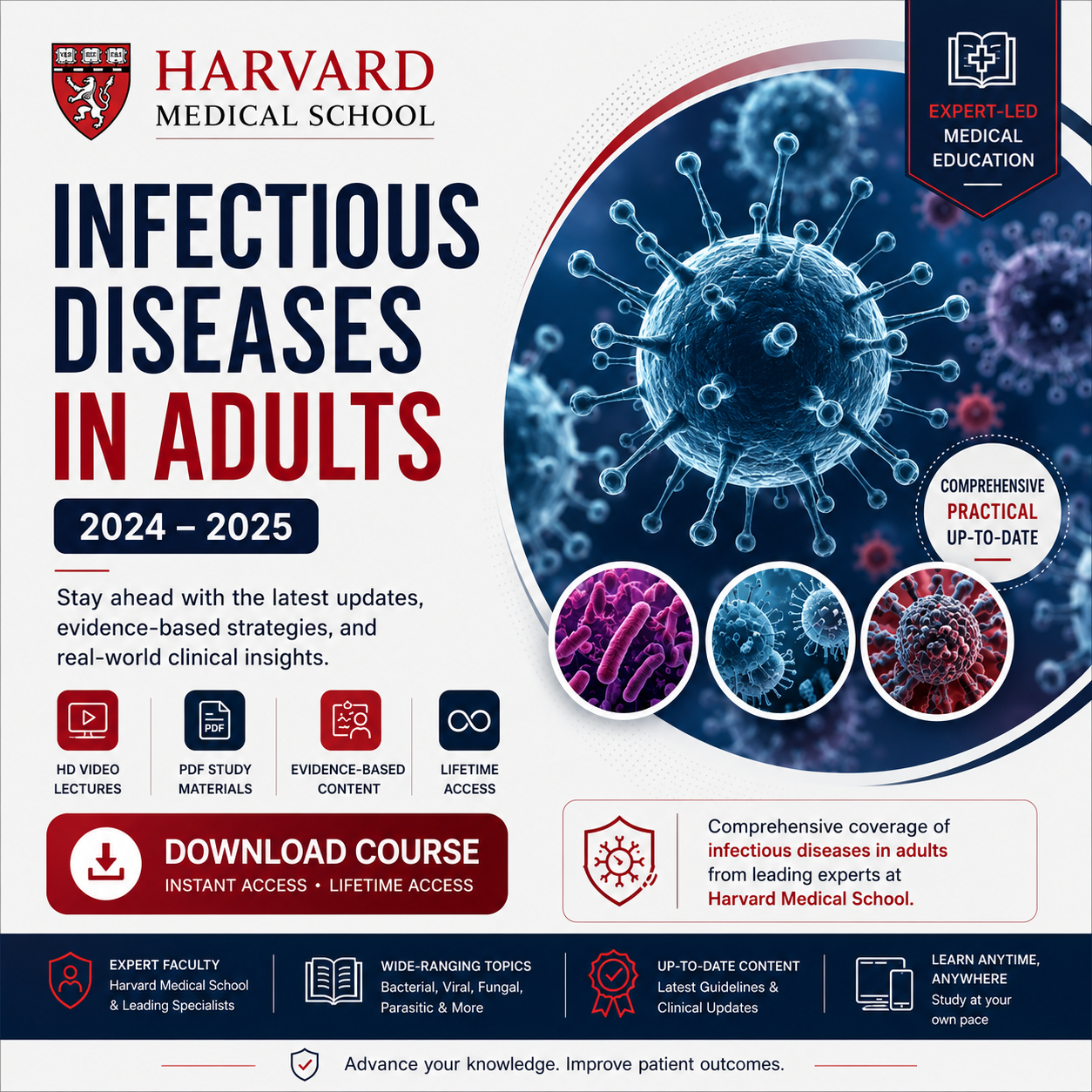
Harvard Infectious Diseases in Adults 2024/2025
A complete two-edition Harvard infectious diseases bundle designed to help clinicians stay current with state-of-the-art approaches to prevention, diagnosis, treatment, antimicrobial decision-making, resistant infections, HIV, STIs, viral infections, fungal disease, immunocompromised hosts, emerging pathogens, and complex adult infectious diseases.
Course Details:
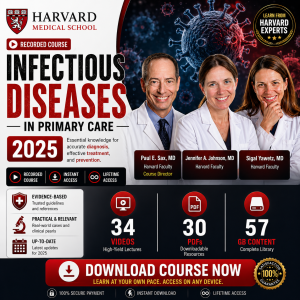
Harvard Infectious Diseases in Adults 2024/2025 includes both the 2024 and 2025 editions in one recorded course bundle, with 70+ HD video lectures, 80+ clinical resources, guidelines, treatment protocols, and practical adult infectious diseases updates.
Focus: Antimicrobial therapy, antimicrobial stewardship, infection control, highly resistant gram-positive and gram-negative infections, MRSA, VISA, ESBL organisms, carbapenemase-producing organisms, VRE, Candida auris, fungal disease, C. difficile, HIV prevention and management, PrEP, PEP, STIs, mpox, hepatitis B and C, COVID-19 and long COVID, respiratory viral infections, pneumonia, bronchiectasis, tuberculosis, NTM, CNS infections, endocarditis, orthopedic infections, complicated UTI, intra-abdominal infections, immunocompromised hosts, transplant-related infections, infections in persons with substance use disorder, travel medicine, global infections, and emerging infectious diseases.
About This Course
Infectious diseases practice continues to evolve quickly with emerging pathogens, changing resistance patterns, updated treatment guidelines, new diagnostic tests, novel antimicrobials, vaccine developments, and expanding strategies for prevention and infection control.
This 2024/2025 bundle gives clinicians access to two complete Harvard infectious diseases updates, providing a broader review of adult ID care across outpatient, inpatient, immunocompromised, travel-related, substance-use-related, and complex multidisciplinary settings.
The program is practical and results-driven, helping clinicians translate updated guidelines and expert recommendations into daily decision-making for prevention, diagnosis, antimicrobial selection, treatment duration, empiric therapy, de-escalation, and management of complex infections.
Why Choose This Bundle
- Includes both Harvard Infectious Diseases in Adults 2024 and 2025 editions
- 70+ recorded HD video lectures covering more than 40 hours of infectious diseases education
- 80+ clinical resources including PDFs, treatment protocols, practice guidance, and learning materials
- Covers prevention, diagnosis, and treatment of common, complex, rare, resistant, emerging, and “don’t-miss” adult infections
- Reviews newer antimicrobials and treatment strategies for highly resistant infections
- Includes practical updates in HIV, STIs, viral hepatitis, COVID-19, long COVID, respiratory viral infections, vaccines, fungal disease, and immunocompromised hosts
- Strong focus on antimicrobial stewardship, infection control, empiric therapy, IV-to-oral transition, duration of therapy, and multidisciplinary case management
- Useful for infectious disease specialists, internists, hospitalists, primary care physicians, emergency physicians, pharmacists, residents, fellows, NPs, PAs, and infection control teams
Core Learning Areas
Resistant Infections
MRSA, VISA, ESBL-producing gram-negative rods, carbapenemase-producing organisms, NDM-1 organisms, VRE, Candida auris, resistant molds, and NTM.
Common Adult Infections
Pneumonia, respiratory viruses, C. difficile, complicated UTI, intra-abdominal infections, skin and soft tissue infections, ENT/eye infections, CNS infections, and orthopedic infections.
HIV, Viral & Global ID
HIV care, PrEP, PEP, STIs, mpox, hepatitis B and C, COVID-19, long COVID, vaccines, travel medicine, tick-borne disease, mosquito-borne disease, and emerging infections.
Stewardship & ID Decisions
Antimicrobial selection, treatment duration, empiric therapy, de-escalation, IV-to-oral transition, infection control, ID consultation, and quality improvement.
Complete Curriculum
- Complete Harvard Infectious Diseases in Adults 2024 edition
- Complete Harvard Infectious Diseases in Adults 2025 edition
- Two years of adult infectious diseases updates in one package
- 70+ HD video lectures and 80+ clinical resources
- More than 40 hours of adult infectious diseases teaching
- Guideline-focused and case-based clinical education
- Practical updates for immediate application in clinical practice
- Prevention, diagnosis, and treatment of adult infectious diseases
- New guidelines and best practices in adult ID care
- Optimal clinical decision-making for common and complex infections
- Rapid detection and empiric treatment of life-threatening infections
- Choosing inpatient versus outpatient treatment
- Choosing intravenous versus oral antimicrobial therapy
- When to narrow, stop, or change antimicrobial therapy
- Principles of antimicrobial therapy
- Antimicrobial selection and treatment duration
- Optimizing empiric antimicrobial therapy
- When to start, narrow, stop, or escalate therapy
- Antimicrobial stewardship to reduce resistance and improve safety
- Antibiotic allergy evaluation and practical allergy toolkit concepts
- Early inpatient infectious disease consultation to improve outcomes
- MRSA and VISA infections
- Extended-spectrum beta-lactamase producing gram-negative rods
- Carbapenemase-producing gram-negative organisms
- NDM-1 metallo-beta-lactamase organisms
- Vancomycin-resistant enterococci
- Difficult resistant gram-positive and gram-negative infections
- Practical treatment strategies for highly resistant organisms
- Antifungal diagnostics and therapy updates
- Systemic fungal infections
- Aspergillus and non-aspergillus mold infections
- Candida auris and difficult Candida infections
- Fungal infections in immunocompromised hosts
- Complex and unusual fungal infection cases
- Practical diagnostic and treatment strategies for invasive fungal disease
- Clostridioides difficile infection
- Recurrent and refractory C. difficile disease
- Novel approaches to C. difficile management
- Skin and soft tissue infections
- Cellulitis and complicated soft tissue infection decision-making
- Resistant pathogens in skin and soft tissue infections
- Practical treatment and prevention strategies for common adult infections
- Respiratory viral infections including COVID-19
- Updates on COVID-19 and long COVID
- Major respiratory viral infections
- Bronchiectasis and pneumonia
- Clinical approach to viral and bacterial respiratory infections
- Prevention and treatment strategies for respiratory infections
- Complex pulmonary infectious disease presentations
- What’s new in HIV prevention and management
- Care of people with HIV
- HIV infectious and noninfectious complications
- Pre-exposure prophylaxis for HIV prevention
- Post-exposure prophylaxis after HIV exposure
- HIV-associated opportunistic infections
- Clinical updates for long-term HIV care and prevention
- State-of-the-art diagnosis and management of sexually transmitted infections
- STIs including mpox
- PEP for prevention of STIs
- Hepatitis B infection
- Hepatitis C infection
- Prevention strategies for high-risk populations
- Practical sexual health prevention and treatment updates
- New and updated vaccines
- Adult vaccination recommendations
- Vaccine-preventable disease prevention
- Re-emergence of vaccine-preventable diseases including poliomyelitis
- Vaccination in immunocompromised hosts
- Public health protection through vaccines
- Practical vaccine counseling and implementation in clinical practice
- Prevention and treatment of infections in immunocompromised hosts
- Infections related to solid organ transplantation
- Infections in hematologic malignancies
- Stem cell transplantation infectious complications
- Infections related to non-oncologic immunomodulatory therapy
- Cellular and immune-based cancer therapies and infectious risk
- Multidisciplinary management of complex immunocompromised patients
- Endocarditis updates
- Native valve endocarditis
- Prosthetic valve endocarditis
- Cardiac device infections
- Endocarditis in persons with substance use disorder
- Multidisciplinary management with cardiology, surgery, radiology, and ID teams
- Diagnosis, antimicrobial therapy, procedural decision-making, and follow-up planning
- Bone and joint infections
- Native bone infections
- Musculoskeletal infections
- Native and device-related orthopedic infections
- Prosthetic joint infections
- Staphylococcus aureus infection updates
- Multidisciplinary approaches to orthopedic infection management
- Complicated urinary tract infections
- Complex UTI management and treatment decisions
- Intra-abdominal infections
- New guidelines for intra-abdominal infection care
- Antibiotic selection and duration for complex infections
- Source control and multidisciplinary surgical decision-making
- Case-based management of complicated adult infections
- Central nervous system infections
- Encephalitis and meningitis guideline updates
- Rapid evaluation and treatment of neurologic infections
- ENT infections in adults
- Eye infections and related complications
- Recognition of “don’t-miss” neurologic and head/neck infections
- Practical diagnostic and empiric treatment strategies
- Tuberculosis updates
- Pulmonary and extrapulmonary nontuberculous mycobacterial infections
- Mycobacterium abscessus and difficult NTM disease
- Bronchiectasis-associated NTM infections
- Diagnostic and treatment considerations for mycobacterial disease
- Long-term follow-up and multidrug therapy issues
- Clinical approaches to complex pulmonary infectious disease
- Travel-related infections
- Infections in foreign-born persons
- Tick-borne infections including Lyme disease, ehrlichia, anaplasma, babesiosis, and rickettsial disease
- Mosquito-borne infections
- Global infectious diseases of clinical importance
- Prevention, diagnosis, and treatment of travel-associated syndromes
- Clinical recognition of imported and regionally emerging infections
- New, evolving, emerging, and re-emerging infectious diseases
- Rare and emerging infectious diseases
- Highly pathogenic avian influenza
- Marburg virus and other high-consequence infections
- Rift Valley Fever and global infectious threats
- Re-emergence of vaccine-preventable infections
- Clinical preparedness for evolving infectious disease threats
- Infections in persons with substance use disorder
- Infections in persons who inject drugs
- Endocarditis and bloodstream infection considerations
- Strategies for improving infection care in PWID
- Antimicrobial treatment decisions and follow-up challenges
- Coordination with addiction medicine and multidisciplinary teams
- Quality improvement and harm-reduction focused infection care
- Infection control for the ID clinician
- Reducing transmission in healthcare settings
- Safety, quality, and practice improvement in infectious diseases
- Reducing antimicrobial resistance through stewardship
- Improving outcomes with timely ID consultation
- Care coordination across pharmacy, surgery, radiology, cardiology, pulmonology, and addiction medicine
- Practical systems-based approaches to adult infection management
Learning Objectives
- Apply updated approaches to prevention, diagnosis, and treatment of adult infectious diseases
- Select appropriate antimicrobial therapy and treatment duration for common and complex infections
- Use current strategies for highly resistant bacterial, fungal, viral, and mycobacterial infections
- Improve diagnosis and treatment of infections in immunocompromised hosts, transplant recipients, and patients receiving immune-based therapies
- Incorporate updates in COVID-19, long COVID, HIV, STIs, hepatitis, vaccines, and global infectious diseases
- Recognize complex, rare, emerging, re-emerging, and “don’t-miss” infections in adult patients
- Apply antimicrobial stewardship, infection control, and quality improvement principles in clinical practice
- Improve management of endocarditis, orthopedic infections, complicated UTI, intra-abdominal infections, CNS infections, and C. difficile infection
- Use multidisciplinary approaches for complex infections involving surgery, pharmacy, radiology, cardiology, pulmonology, and addiction medicine
- Translate two years of Harvard infectious diseases updates into practical clinical decisions for adult patients
Who Should Take This Course
This bundle is designed for infectious disease specialists, internists, hospitalists, primary care physicians, family physicians, emergency physicians, pharmacists, infection control professionals, residents, fellows, nurse practitioners, physician assistants, and healthcare professionals who manage adult infections.
It is especially useful for clinicians who want two complete editions of adult infectious diseases updates covering resistant organisms, antimicrobial stewardship, HIV, STIs, hepatitis, COVID-19, fungal disease, immunocompromised hosts, complex inpatient infections, global infections, and emerging infectious diseases.
Delivery & Access
2 Full Editions
Includes both the 2024 and 2025 Harvard Infectious Diseases in Adults courses.
70+ Videos
Recorded HD video lectures covering more than 40 hours of adult infectious diseases education.
80+ Resources
Clinical resources, PDFs, guidelines, and treatment protocol materials included.
Support
Course Highlights
Two Complete Editions
Includes both 2024 and 2025 infectious diseases updates for a broader, more complete clinical review.
Resistant Infection Focus
Strong coverage of MRSA, VISA, ESBL organisms, carbapenemase-producing organisms, VRE, Candida auris, resistant molds, and NTM.
Practical ID Decisions
Emphasizes antimicrobial selection, treatment duration, IV-to-oral transition, de-escalation, stewardship, infection control, and complex case management.
FAQ
What is included in this bundle?
This bundle includes both Harvard Infectious Diseases in Adults 2024 and Harvard Infectious Diseases in Adults 2025, with 70+ HD video lectures, 80+ clinical resources, PDFs, guidelines, and treatment protocol materials.
Who is this course best suited for?
This course is best suited for infectious disease specialists, internists, hospitalists, primary care physicians, family physicians, emergency physicians, pharmacists, infection control professionals, residents, fellows, nurse practitioners, physician assistants, and healthcare professionals who manage adult infections.
What topics are covered?
Topics include antimicrobial therapy, antimicrobial stewardship, resistant infections, MRSA, VISA, ESBL organisms, carbapenemase-producing organisms, VRE, Candida auris, fungal infections, C. difficile, HIV, PrEP, PEP, STIs, mpox, hepatitis B and C, COVID-19, long COVID, respiratory viral infections, pneumonia, TB, NTM, CNS infections, endocarditis, orthopedic infections, complicated UTI, intra-abdominal infections, transplant-related infections, immunocompromised hosts, travel infections, global infections, emerging pathogens, and infection control.
Does this bundle cover resistant infections?
Yes. The bundle includes resistant gram-positive infections, resistant gram-negative infections, MRSA, VISA, ESBL organisms, carbapenemase-producing organisms, NDM-1 organisms, VRE, Candida auris, resistant molds, and nontuberculous mycobacteria.
Does this course cover HIV, STIs and hepatitis?
Yes. The course covers HIV prevention and management, PrEP, PEP, STIs including mpox, prevention strategies, hepatitis B, hepatitis C, and infectious and noninfectious complications of HIV.
Is this course practical for daily infectious diseases practice?
Yes. The course is focused on practical decision-making, treatment protocols, antimicrobial selection, duration of therapy, empiric therapy, stewardship, infection control, and multidisciplinary management of complex adult infections.
Is this a recorded course bundle?
Yes. This product is provided as recorded course access so you can review the material at your own pace.
Does this course include CME or a certificate?
No. CME credits and certificates are not included with this course package.
Who can I contact for support?
You can contact support at [email protected].

Reviews
There are no reviews yet.