

Overview
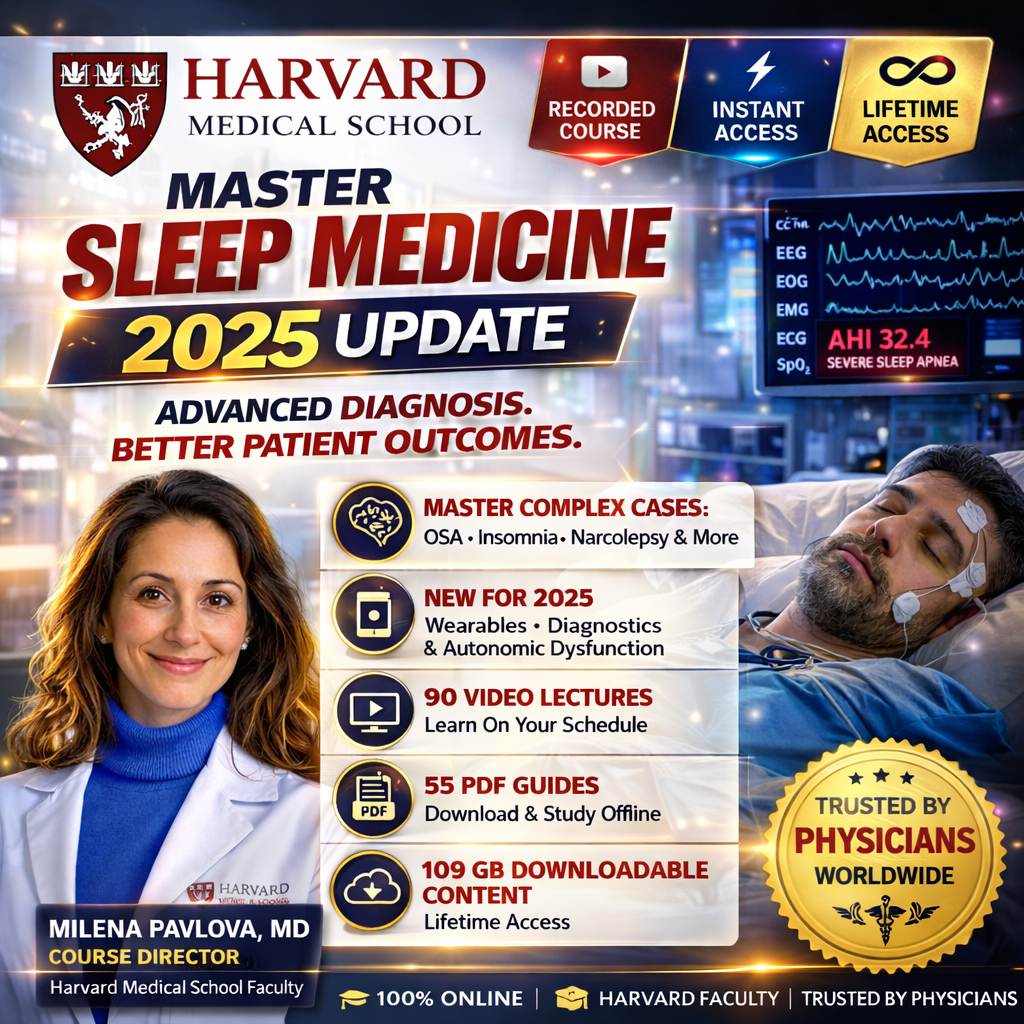
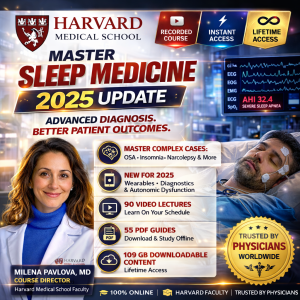
Sleep Medicine 2025 will be delivered online this year through live streaming, interactive Q&A sessions, and other remote learning tools. This dynamic program will explore the critical role of sleep in both medical and psychiatric conditions and address the ongoing gap in formal sleep education during medical training. With rapidly evolving treatment options and updated practice guidelines, the field of sleep medicine remains an essential and timely focus for continuing medical education. Participants will have the opportunity to engage directly with leading experts in the field throughout the course.
This comprehensive course provides education and updates to optimize your care of patients. The following topics will be covered:
- Sleep Physiology
- Circadian Control of Sleep
- Dreaming
- Obstructive Sleep Apnea
- Central Sleep Apnea
- Insomnia
- Narcolepsy
- Idiopathic Hypersomnia and other rare hypersomnias
- Sleep and Autonomic Dysfunction
- Sleep and Memory
- Sleep, the Blood-Brain Barrier and Glymphatic Function
- Periodic Limb Movements of Sleep and Restless Legs Syndrome
- Pain, Opiates and Sleep
- Parasomnias
- Sleep, Lifestyle and Weight
- Sleep and Exercise
- Sleep, Climate and Disease – Are they related?
- Wearables in the assessment of sleep pattern
- Sleep and Music
Learning Objectives
- Recognize sleep disorders.
- Initiate evaluation for common sleep disorders.
- Interpret information from sleep tests.
- Initiate up-to-date treatment for common sleep disorders.
Thursday, October 9, 2025
Sleep Evaluation and Basic Sleep Physiology
8:00-8:45 am
Circadian Control of Sleep
8:45-9:30 am
Dreaming
9:30-10:00 am
Question and Answer Session
10:00-10:30 am
Break
10:30-10:45 am
Obstructive Sleep Apnea – Presentation and PAP treatment
10:45-11:30 am
Central Sleep Apnea
11:30 am-12:00 pm
Question and Answer Session
12:00-12:15 pm
Lunch Break
12:15-1:00 pm
Surgical Treatment for OSA
1:00-1:30 pm
Insomnia – Clinical Presentation and Treatment Options
1:30-2:15 pm
Question and Answer Session
2:15-2:45 pm
Break
2:45-3:00 pm
Dental Sleep Medicine (Not eligible for CE credit)
3:00-3:15 pm
Parasomnias – RBD and NREM Parasomnias
3:15-3:45 pm
Narcolepsy – Diagnosis and Treatment
3:45-4:30 pm
Idiopathic Hypersomnia and Other Rare Hypersomnias
4:30-5:15 pm
Question and Answer Session
5:15-5:45 pm
Friday, October 10, 2025
Sleep and Autonomic Dysfunction
8:00-8:45 am
Sleep and Memory
8:45-9:30 am
Sleep, the Blood-Brain Barrier, and Glymphatic Function
9:30-10:00 am
Question and Answer Session
10:00-10:30 am
Break
10:30-11:00 am
Updates on Periodic Limb Movements of Sleep and Restless Legs Syndrome
11:00-11:30 am
Pain, Opiates, and Sleep – How to Navigate a Complex Circle
11:30 am-12:00 pm
Question and Answer Session
12:00-12:15 pm
Lunch Break
12:15-1:00 pm
Circadian Rhythms and Metabolism
1:00-1:45 pm
Sleep, Lifestyle, and Weight
1:45-2:15 pm
Sleep and Exercise
2:15-2:45 pm
Question and Answer Session
2:45-3:00 pm
Break
3:00-3:15 pm
“Sleep, climate and disease” are they related?
3:15-3:45 pm
Wearables in the Assessment of Sleep Pattern – Limitations and Promises
3:45-4:15 pm
Sleep and Music
4:15-4:45 pm


Dr. Michael Harrington, MD – Pulmonology –
This is one of the most comprehensive sleep medicine updates I’ve completed in years. The recorded format allowed me to review the complex sleep apnea algorithms multiple times and immediately refine my patient management.
Dr. Sarah Whitman, MD – Psychiatry –
The integration of insomnia with mood and anxiety disorders was exceptionally well presented. I appreciated the flexibility of accessing the sessions on Google Drive and learning at my own pace.
Dr. Daniel Brooks, MD – Neurology –
The neurophysiology content was detailed yet clinically applicable. I’ve already incorporated several diagnostic refinements into my practice.
Dr. Laura McKenzie, MD – Family Medicine –
Clear, structured, and highly practical. The ability to pause and revisit key segments made this course especially valuable.
Dr. Ahmed Farouk, MD – Sleep Medicine Specialist –
An excellent update on refractory sleep apnea and advanced therapies. The case-based discussions were particularly strong.
Dr. Olivia Grant, MD – Internal Medicine –
The cardiovascular implications of sleep disorders were explained with impressive clarity. Very relevant for primary care.
Dr. James O’Neill, MD – Psychiatry –
The insomnia pharmacology review was balanced and evidence-based. The on-demand access made it easy to complete around my clinic schedule.
Dr. Kevin Marshall, MD – Neurology –
The sections on REM behavior disorder and neurodegenerative risk were outstanding.
Dr. Hannah Rosen, MD – Primary Care –
This course gave me a structured framework for managing chronic insomnia more confidently.
Dr. Robert Klein, MD – Sleep Medicine –
Comprehensive, current, and clinically focused. I appreciated being able to revisit complex lectures through the recorded format.
Dr. Fatima Zahra Benali, MD – Psychiatry –
The overlap between sleep and psychiatric illness was addressed with remarkable depth.
Dr. William Carter, MD – Pulmonology –
The detailed breakdown of sleep-disordered breathing management was extremely useful in complex cases.
Dr. Sophia Lang, MD – Neurology –
Well organized and clinically rich. The circadian rhythm content was particularly valuable.
Dr. Thomas Nguyen, MD – Family Medicine –
Practical takeaways I could implement immediately. The flexibility of Google Drive access was a major advantage.
Dr. Nadia Karim, MD – Psychiatry –
The discussion on medication safety and dependency risk was nuanced and balanced.
Dr. Andrew Collins, MD – Internal Medicine –
Very high-quality presentations with real-world clinical application.
Dr. Lucas Moreno, MD – Pulmonology –
An advanced yet clear review of sleep apnea therapies and emerging treatments.
Dr. Claire Dubois, MD – Neurology –
The neurobiological explanations were directly tied to patient care decisions.
Dr. Mark Thompson, MD – Sleep Specialist –
The case discussions elevated this course above most sleep updates I’ve taken.
Dr. Layla Hassan, MD – Family Medicine –
The structured approach to sleep assessment has improved my consultations significantly.
Dr. Emily Carter, MD – Psychiatry –
A strong balance between research updates and practical application.
Dr. Elena Petrova, MD – Internal Medicine –
Very practical insights for managing elderly patients with sleep complaints.
Dr. Brian Sullivan, MD – Neurology –
Comprehensive and academically rigorous while remaining clinically useful.