
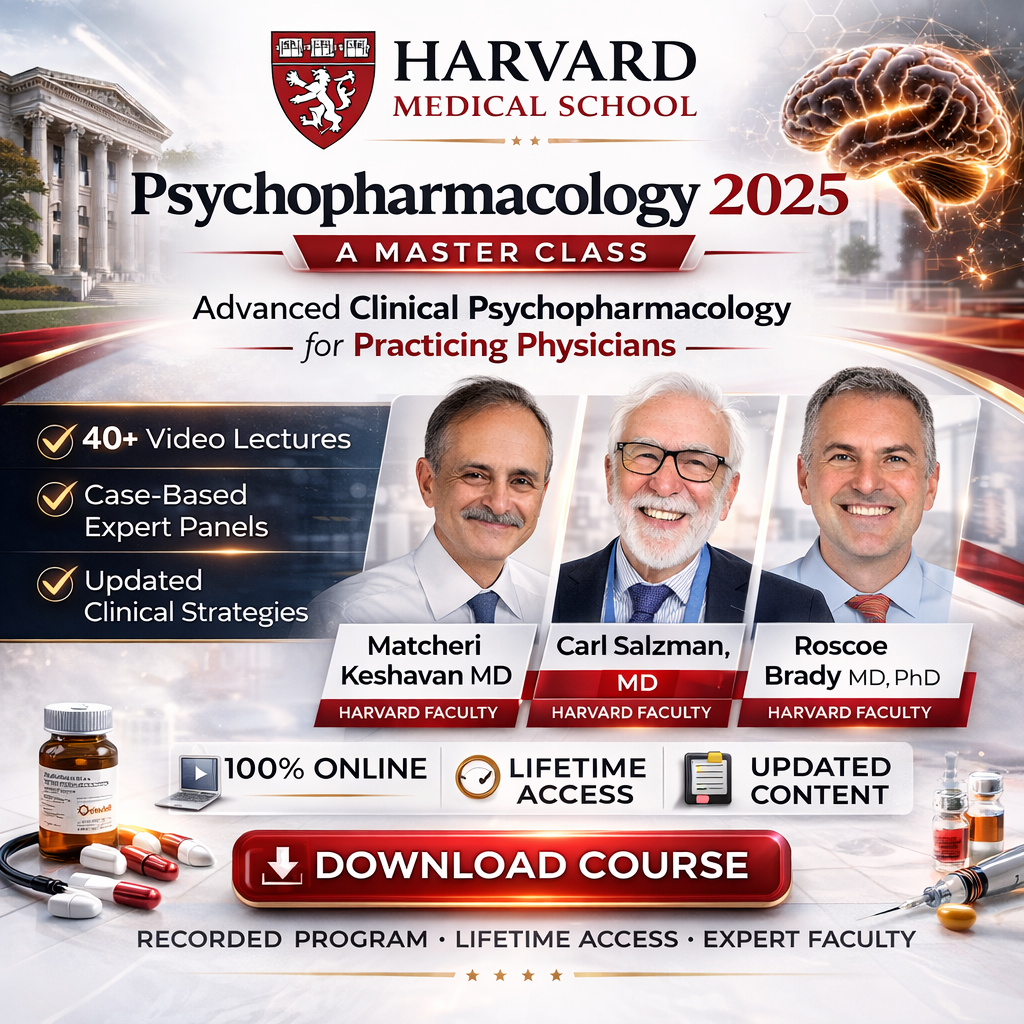
Harvard Psychopharmacology 2025: A Master Class
A comprehensive Harvard psychopharmacology master class designed for practicing clinicians, clinical researchers, and psychiatry trainees who want updated, evidence-based strategies for managing complex psychiatric patients, treatment-resistant conditions, and modern psychotropic medication decisions.
Course Details:
Harvard Psychopharmacology 2025: A Master Class is a complete recorded learning package focused on advanced psychiatric medication management, new treatments, developing treatment strategies, and difficult-to-treat psychiatric patients.
Focus: Neurobiology, neurotransmitter circuits, psychotropic medications, schizophrenia, bipolar disorder, treatment-resistant depression, ketamine, ECT, TMS, psychedelics, anxiety disorders, PTSD, women’s mental health, sleep disorders, substance use disorders, child and adolescent psychopharmacology, geriatric psychopharmacology, neuropsychiatry, autism spectrum disorders, and the therapeutic alliance.
About This Course
Psychopharmacology continues to evolve with new research, new medication strategies, and expanding treatment options for patients with complex psychiatric presentations. This course provides an advanced clinical review for clinicians who manage difficult-to-treat or treatment-resistant psychiatric patients.
The program reviews the neurobiological foundations of psychiatric treatment, including neurotransmitter circuits, transmitters, receptors, synaptic function, gene transcription, and the interaction between genes and the environment.
It also explores modern approaches to schizophrenia, bipolar disorder, treatment-resistant depression, anxiety, PTSD, women’s mental health, sleep disorders, substance use disorders, child and adolescent affective disorders, geriatric psychopharmacology, neuropsychiatry, and autism spectrum disorders.
Why Choose This Course
- Harvard 2025 psychopharmacology master class for advanced psychiatric medication management
- Focused on typical psychiatric patients with emphasis on difficult-to-treat and treatment-resistant presentations
- Covers neurobiology, neurotransmission, receptors, synaptic function, genetics, and clinical relevance
- Reviews schizophrenia, bipolar disorder, depression, anxiety-spectrum disorders, PTSD, and neuropsychiatric conditions
- Includes newer and emerging therapies such as ketamine, ECT, TMS, psychedelics, and augmentation strategies
- Addresses women’s mental health, sleep, substance use, child and adolescent psychiatry, geriatric care, and autism spectrum disorders
- Designed for psychiatrists, physicians, pharmacists, nurse practitioners, physician assistants, nurses, psychologists, social workers, residents, medical students, and trainees
Core Learning Areas
Neurobiology & Brain Function
Neurotransmitter circuits, receptors, synaptic function, gene-environment interaction, brain circuitry, and research findings relevant to clinical prescribing.
Mood & Psychotic Disorders
Schizophrenia, prodromal symptoms, first episode care, bipolar disorder, lithium, depression, treatment-resistant depression, and maintenance strategies.
Anxiety, PTSD & Trauma
Panic disorder, social anxiety disorder, generalized anxiety disorder, benzodiazepine data, trauma-related disorders, PTSD, ketamine, and psychedelics.
Special Populations
Women’s mental health, pregnancy, lactation, postpartum disorders, sleep disorders, substance use, child/adolescent care, geriatric psychiatry, and autism.
Complete Curriculum
- Updated neurobiology for the practicing clinician
- Understanding brain function and its clinical relevance
- Neurotransmitter circuits, transmitters, receptors, and synaptic function
- Gene transcription and interaction between genes and the environment
- Clinical relevance of brain circuitry for psychiatric treatment
- New neurobiological research findings that influence clinical practice
- Treatment-resistant depression update
- New antidepressants and modern pharmacologic strategies
- Polypharmacy and augmentation strategies
- Ketamine, psychedelics, ECT, and TMS in treatment-resistant depression
- Treatment of bipolar disorders and clinical directions
- Revival of lithium and updated mood stabilizer considerations
- Bipolar depression and long-term maintenance strategies
- Treatment for schizophrenia: prodrome, first episode, relapse, and new treatment possibilities
- Pharmacologic treatment of schizophrenia across illness stages
- Long-term maintenance treatment strategies
- Treatment-resistant psychotic disorders
- New antipsychotic medications and treatment augmentation
- Therapeutic approaches to the difficult psychiatric patient
- Importance of the therapeutic alliance when prescribing psychotropic medications
- Treatment of anxiety-spectrum disorders
- Panic disorder, social anxiety disorder, and generalized anxiety disorder
- New data on the risks and benefits of benzodiazepines
- Psychopharmacology of trauma-related disorders
- Etiology and standard pharmacological treatment of PTSD
- Clinical use of psychedelics and ketamine for PTSD
- Evidence-informed treatment planning for trauma-related psychiatric illness
- Psychopharmacology of the reproductive life cycle
- Premenstrual symptoms and psychiatric medication considerations
- Psychotropic medication use during pregnancy
- Lactation and nursing considerations
- Postpartum psychiatric disorders
- Menopause-related psychiatric and medication considerations
- Women’s mental health treatment updates and clinical risk-benefit planning
- Psychopharmacologic approaches in childhood affective disorders
- Basic neurobiological and pharmacological factors in child and adolescent treatment
- Depression and bipolar disorder in childhood and adolescence
- Latest advances in geriatric psychopharmacology
- Psychopharmacology in geriatrics and neuropsychiatry
- Age-specific medication risks, benefits, and clinical considerations
- Treatment problems and practical strategies in older populations
- Neurobiology and treatment of sleep in psychiatric disorders
- Effective treatment of substance use disorders
- Alcohol, cannabis, opiates, and other substance-related disorders
- Psychopharmacology in patients with comorbid psychiatric and substance use disorders
- Clinical treatment strategies for complex dual-diagnosis patients
- Neurobiology and pharmacology of addiction-related disorders
- Digital phenotyping in psychiatry and psychopharmacology
- Role of artificial intelligence in psychiatric care and clinical decision-making
- Emerging technologies in psychiatric assessment and monitoring
- Latest advances in diagnosis and pharmacological treatment of autism spectrum disorders
- Practical implications of new research for modern psychiatric practice
- Future directions in psychopharmacology and mental health treatment
Learning Objectives
- Evaluate the effects of neurotransmitters, neurocircuits, and genes on psychotropic drug treatment
- Describe pharmacologic treatment of schizophrenia with attention to prodromal and first episode presentations
- Outline emerging theories and treatments for bipolar disorder, depression, treatment-resistant depression, anxiety, PTSD, and neuropsychiatric disorders
- Discuss psychopharmacologic management of depression and bipolar disorder in childhood and adolescence
- Identify benefits and risks of ketamine and psychedelics, including potential use in PTSD
- Discuss psychotropic medications in women’s mental health, including PMS, pregnancy, nursing, and postpartum care
- Explain the role of psychopharmacology in substance use disorders, including alcohol, opiates, and cannabis
- Recognize advances and clinical challenges in geriatric psychopharmacology and neuropsychiatry
- Apply updated psychopharmacology knowledge to complex and treatment-resistant psychiatric patients
- Use evidence-based strategies to improve medication selection, augmentation, and long-term patient management
Who Should Take This Course
This course is designed for psychiatrists, physicians, pharmacists, nurse practitioners, physician assistants, nurses, psychologists, social workers, medical students, residents, fellows, trainees, clinical researchers, and healthcare professionals involved in psychiatric medication management and mental health care.
Delivery & Access
Recorded Course
Review the sessions at your own pace.
2025 Edition
Updated psychopharmacology and psychiatric treatment content.
Clinical Focus
Depression, bipolar disorder, schizophrenia, anxiety, PTSD, substance use, and special populations.
Support
Reviews
Sarah Johnson
An exceptional master class with impressive depth of knowledge in psychopharmacology.
Michael Lee
Outstanding faculty and clear explanations that make complex psychiatric treatment topics easier to apply.
Emily Davis
Practical discussions and clinically useful insights for psychiatric medication management.
FAQ
Who is this course best suited for?
This course is best suited for psychiatrists, physicians, pharmacists, nurse practitioners, physician assistants, psychologists, social workers, residents, fellows, medical students, and trainees involved in mental health care and psychiatric medication management.
What topics are covered?
Topics include neurobiology, schizophrenia, bipolar disorder, depression, treatment-resistant depression, ketamine, ECT, TMS, psychedelics, anxiety disorders, PTSD, women’s mental health, sleep disorders, substance use disorders, child and adolescent psychopharmacology, geriatric psychopharmacology, neuropsychiatry, autism spectrum disorders, digital phenotyping, and AI in psychiatry.
Is this course practical for clinical psychiatry?
Yes. The course focuses on practical psychopharmacology strategies for difficult-to-treat psychiatric patients, treatment-resistant conditions, medication selection, augmentation, and real-world clinical decision-making.
Does this product include CME?
No. CME points and certificates are not included with this course.
Is this a recorded course?
Yes. This product is provided as recorded course access so you can review the material at your own pace.
Who can I contact for support?
You can contact support at [email protected].


Sarah Johnson –
“An exceptional master class! The depth of knowledge shared about psychopharmacology was impressive.”
Michael Lee –
“The faculty were outstanding. Their expertise made complex topics easy to understand and apply.”
Emily Davis –
“I loved the interactive discussions. The case studies offered practical insights that I can use in my practice.”
David Martinez –
“A must-attend for anyone in mental health! The latest research presented was enlightening.”
Jessica Brown –
“The course covered a wide range of topics, from medication management to emerging therapies. Highly recommend!”
Robert Wilson –
“I was impressed by the quality of the presentations. Every session was engaging and informative.”
Chris Garcia –
“The curriculum was well-structured and easy to follow. I felt fully engaged throughout the course.”
Laura Harris –
“The updates on treatment protocols were invaluable. I feel more confident in my prescribing practices now.”
James Robinson –
“This master class provided practical tools that I can implement immediately in my work.”
Olivia Clark –
“The focus on evidence-based practices was particularly enlightening. I learned so much!”
Timothy Young –
“The course was well-paced, and the information was relevant to my practice. Highly recommend!”
Megan Hall –
“Incredible experience! The discussions on neurobiology and pharmacology were particularly useful.”
Joshua King –
“I left feeling inspired and better prepared for my practice. Thank you to the faculty!”
Benjamin Lopez –
“The case discussions were interactive and insightful. I learned a lot from my peers.”
Samantha Hill –
“This master class was a game-changer for my approach to psychopharmacology. I highly recommend it!”