
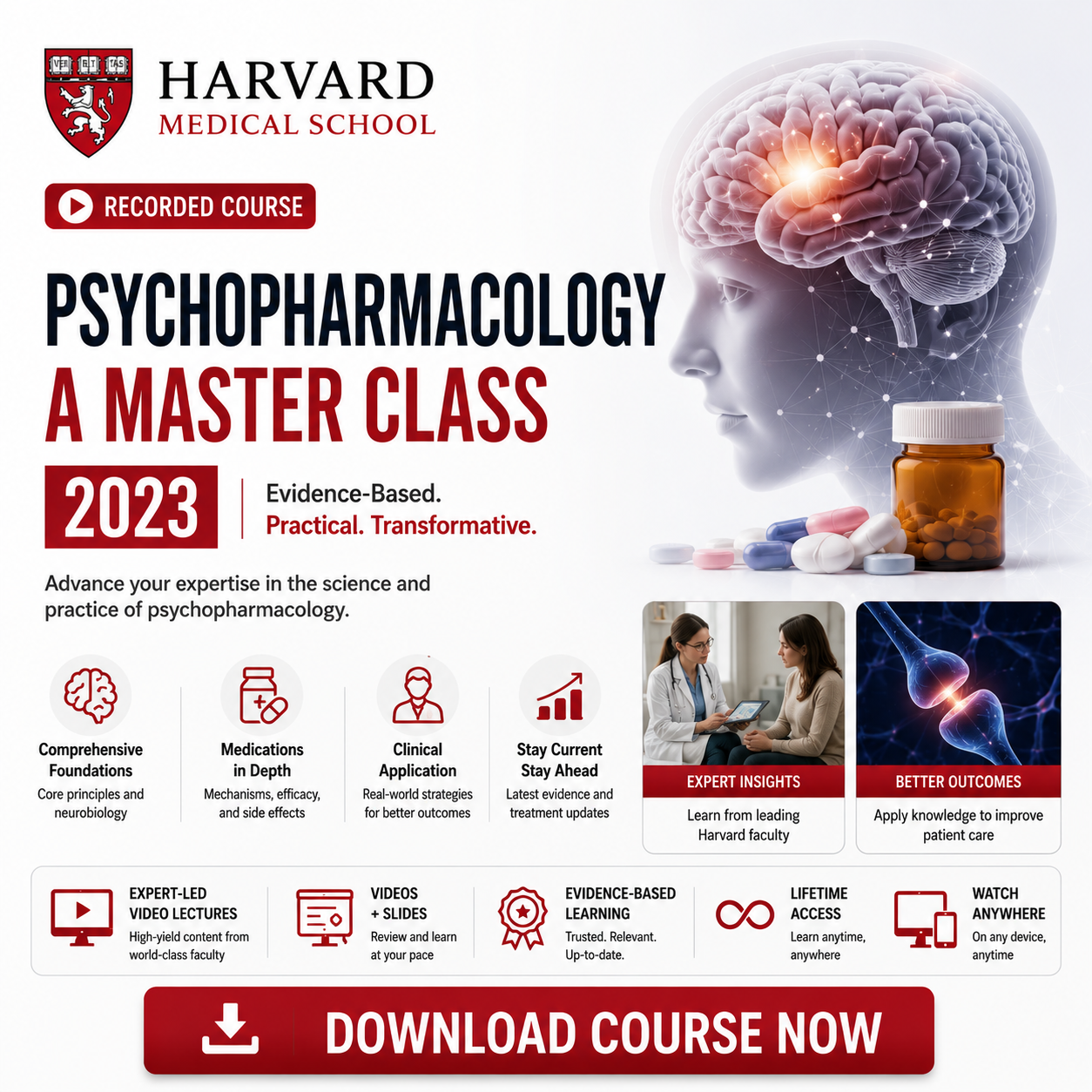
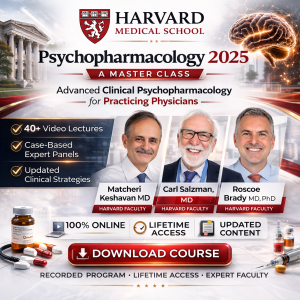
Harvard Psychopharmacology: A Master Class 2023
A comprehensive psychopharmacology master class designed for clinicians, researchers, and psychiatry trainees seeking advanced updates on psychiatric medication strategies, treatment-resistant disorders, neurobiology, emerging therapies, and practical prescribing decisions for complex psychiatric patients.
Harvard Psychopharmacology: A Master Class 2023 is a recorded medical course focused on modern psychiatric medication treatment, difficult-to-treat psychiatric patients, neurobiology, genetic influences, blood level measurements, drug combinations, treatment-resistant disorders, and emerging therapeutic strategies.
Focus: Neurobiology, neurotransmission, schizophrenia, bipolar disorder, depression, anxiety, OCD, PTSD, eating disorders, borderline personality disorder, ketamine, ECT, TMS, psychedelics, benzodiazepines, women’s mental health, sleep disorders, substance use disorders, geriatric psychopharmacology, child and adolescent psychopharmacology, polypharmacy, and digital phenotype tools.
About This Course
Psychopharmacology is a rapidly evolving field. Clinicians are increasingly asked to manage complex psychiatric presentations, treatment resistance, medication interactions, partial response, comorbid medical illness, and new treatment options while maintaining a strong therapeutic alliance with patients.
This course provides an advanced update on psychotropic medications and treatment strategies, with emphasis on difficult-to-treat patients, treatment-resistant depression, bipolar depression, schizophrenia, anxiety disorders, PTSD, substance use disorders, and psychiatric care across the lifespan.
Why Choose This Course
Key Highlights
- Harvard 2023 psychopharmacology master class for advanced clinical practice
- Designed for practicing clinicians, clinical researchers, and psychiatry trainees
- Focuses on typical psychiatric patients with emphasis on difficult-to-treat and treatment-resistant cases
- Reviews newer treatments and developing treatment strategies
- Covers genetic testing, blood level measurements, drug combinations, and augmentation strategies
- Includes ketamine, ECT, TMS, psychedelics, antidepressants, antipsychotics, mood stabilizers, and benzodiazepines
- Useful for psychiatrists, researchers, pharmacists, nurses, NPs, primary care physicians, psychologists, PAs, and mental health clinicians
Core Learning Areas
Complete Curriculum
Neurobiology, Genetics and Psychotropic Treatment
- Updated review of neurobiology and brain function
- Neurotransmitter circuits, transmitters, and receptors
- Synaptic function and gene transcription
- Interaction between genes and environment
- Effects of neurotransmitters and genes on psychotropic drug treatment
- Interface between neurology and psychiatry
- Use of genetic tests and blood level measurements in treatment planning
Schizophrenia and Psychotic Disorders
- Drug treatment of schizophrenia
- Prodromal symptoms and early intervention
- First episode psychosis treatment considerations
- Long-term maintenance strategies
- Treatment-resistant schizophrenia
- New antipsychotic medications
- Treatment augmentation and medication combinations
Bipolar Disorder, Depression and Treatment Resistance
- Emerging theories and treatments of bipolar disorder
- Neurobiological mechanisms of depression
- Genetic and epigenetic contributions to depression
- Role of inflammation in depression
- Treatment-resistant depression
- Bipolar depression
- Potential new uses for mood stabilizers
Advanced Depression Treatments
- Modern use of antidepressants based on current clinical findings
- Ketamine: benefits and risks
- ECT in treatment-resistant psychiatric illness
- TMS and neuromodulation strategies
- Psychedelics and emerging treatment directions
- Augmentation strategies for treatment-resistant depression
- Medication combinations for resistant psychiatric disorders
Anxiety, OCD, PTSD and Related Disorders
- Anxiety and anxiety-spectrum disorders
- Panic disorder
- Social anxiety disorder
- Generalized anxiety disorder
- New concepts and treatments of obsessive-compulsive disorder
- Etiology and treatment of PTSD
- Emerging treatments for PTSD
Borderline Personality Disorder, Eating Disorders and Benzodiazepines
- Diagnosis and treatment of borderline personality disorder
- Pharmacological treatment of borderline personality disorder
- Eating disorder patients and medication-related considerations
- Risks and benefits of benzodiazepines
- Standard psychopharmacologic treatments shown to be ineffective
- Clinical decision-making in complex psychiatric patients
Women’s Mental Health
- Psychopharmacological treatment of women’s mental health issues
- PMS and premenstrual symptom management
- Medication considerations during pregnancy
- Medication considerations during nursing
- Perinatal and postpartum disorders
- Treatment-resistant PTSD in women’s mental health
- Balancing maternal mental health and medication safety
Sleep, Substance Use and Special Populations
- Neurobiology and treatment of sleep disorders in psychiatry
- Role of psychopharmacology in sleep disorder treatment
- Alcohol use disorders
- Opiate use disorders
- Cannabis and other substance use disorders
- Child and adolescent psychopharmacology
- Geriatric psychopharmacology updates and treatment challenges
Polypharmacy, Drug Interactions and Digital Tools
- Potential hazards and benefits of polypharmacy
- Drug interaction risks in psychopharmacology
- Use of blood levels and dosing strategies
- Innovative medication combinations in resistant psychiatric disorders
- Therapeutic alliance when prescribing psychotropic medications
- Digital phenotype tools in psychiatric disorder management
- Applying emerging tools to psychopharmacologic care
Learning Objectives
By Completing This Course, You Will Be Able To:
- Evaluate the effects of neurotransmitters and genes on psychotropic drug treatment
- Study the interface between neurology and psychiatry
- Describe pharmacologic treatment of schizophrenia, including prodromal and first episode presentations
- Review emerging theories and treatments for bipolar disorder, depression, treatment-resistant depression, bipolar depression, stress, and anxiety disorders
- Identify the benefits and risks of ketamine
- Discuss the role of psychotropic medications in women’s mental health, including PMS, pregnancy, nursing, and postpartum disorders
- Identify emerging treatments for PTSD
- Explain the role of psychopharmacology in substance use disorders, including alcohol, opiates, and cannabis
- Recognize advances and challenges in geriatric psychopharmacology
- Apply digital phenotype tools in psychopharmacologic management of psychiatric disorders
Who Should Take This Course
This course is designed for psychiatrists, researchers in psychopharmacology and neuroscience, substance abuse and mental health clinicians, pharmacists, nurses, nurse practitioners, primary care physicians, specialty physicians, psychologists, physician assistants, psychiatry trainees, and clinicians who prescribe or manage psychotropic medications.
Delivery & Access
This course package is provided for recorded learning access. No CME points are associated with this product.
Reviews
A strong psychopharmacology update with excellent coverage of treatment-resistant depression, bipolar disorder, anxiety disorders, and medication combinations.
Very useful for clinical psychiatry practice. The sections on ketamine, ECT, TMS, benzodiazepines, and polypharmacy are especially practical.
Excellent master class for psychiatrists and mental health clinicians. The women’s mental health, substance use, and geriatric psychopharmacology sections are clear and clinically relevant.
FAQ
Who is this course best suited for?
It is ideal for psychiatrists, psychopharmacology researchers, mental health clinicians, pharmacists, nurses, NPs, primary care physicians, specialty physicians, psychologists, PAs, psychiatry trainees, and clinicians involved in psychiatric medication management.
What topics are covered?
The course covers neurobiology, neurotransmitters, genetics, schizophrenia, bipolar disorder, depression, treatment-resistant depression, bipolar depression, anxiety disorders, OCD, PTSD, borderline personality disorder, eating disorders, ketamine, ECT, TMS, psychedelics, antidepressants, antipsychotics, mood stabilizers, benzodiazepines, women’s mental health, sleep disorders, substance use disorders, child and adolescent psychopharmacology, geriatric psychopharmacology, polypharmacy, drug interactions, and digital phenotype tools.
Is this course practical for clinical prescribing?
Yes. The course focuses on practical psychopharmacology, difficult-to-treat patients, resistant psychiatric disorders, drug combinations, blood level measurements, medication risks, and clinical decision-making.
Does this product include CME?
No. This course package does not include CME points.
Who can I contact for support?
You can contact us at [email protected].

Reviews
There are no reviews yet.